Skip to content

Gettysburg Chronicles

History Explained

  • Home
  • Gettysburg
    • History of Adams County
    • Samuel Gettys
    • Call to Arms
    • Days Before The Battle
  • Tales of War
    • Photographs
    • July 5th: Tillie Pierce Tale
    • 57th Pa.: Letter to Mother
    • 24th Mich.: Abel Peck
    • 24th Mich.: Charles Bellore
    • 1st Rifles: Colonel Taylor
    • 7th Mich.: Allen Zacharias
    • 1st Mich.: Amos Ladd
  • Monuments & Artillery
    • First Shot Marker
    • Artillery
      • Different Ammunition
      • Real vs. Fake Cannons
      • Six Pound Shot Cannon
      • Cannons at Devil’s Den
      • Rochester Union Grays
      • Fallen Rochester Grays
    • Michigan
      • 24th Joins Iron Brigade
        • 24th Before Fredericksburg
        • 24th Mich. to Gettysburg
        • 24th Michigan – July 1st
        • 24th Michigan Losses
      • 1st Michigan Infantry
        • 1st Michigan Arrives
        • Michigan Pulls Back
        • First Michigan
      • 3rd Michigan
        • Lost soldiers of the 3rd
      • 4th Michigan
        • Harrison Jeffords
        • Defending the Flag
        • Lost Wolverines
      • Michigan Cavalry
      • Farnsworth’s Cavalry
      • 9th Michigan Battery
      • 7th Michigan Infantry
    • Confederate
      • South Carolina
      • Mississippi Monuments
      • Florida’s Involvement
      • Spirit of Alabama
      • Louisiana Secedes
      • Lonestar State
      • North Carolina
      • Virginia Secedes
      • Arkansas
      • Tennessee – Last to Join
      • Maryland – Border State
      • Georgia – The Peach State
  • Lost Commanders
    • Abraham Lincoln
      • Lincoln Visits Antietam
      • Emancipation Proclamation
      • November 1863
      • Gettysburg Address
      • John Wilkes Booth
      • The Kidnapping Plan
      • Ford’s Theatre
      • Death of Abraham Lincoln
      • Death of an Actor
      • Tribunal Results
    • Stonewall Jackson
      • Spring of 1862
      • Fall of 1862
      • Winter of 1862
      • Family
      • Life After Stonewall
      • Descendants of Jackson
      • Stonewall’s Grandson Tree
    • John F. Reynolds
      • California Love
      • Reynolds Arrives
      • Morning of July 1st
      • July 1st to July 3rd
      • Ms. Mary “Kate” Hewitt
      • Daughters of Charity
  • Railroads
    • Lincoln’s Train Station
    • G&H Railroad
    • Western Maryland Railroad
    • Location of the Spur
    • Gettysburg Electric Trolley
    • Trolley South of Town
    • Railroad to Round-Tops
  • Anniversaries
    • Battlefield Walks
    • 150th Anniversary – 2013
    • 152nd Anniversary – 2015
    • 157th Anniversary – 2020
    • 158th Anniversary – 2021
    • 162nd Anniversary – 2025
    • 163rd Anniversary – 2026
    • Scorching Heat – 2026
  • Other Battles
    • Crampton’s Gap, Md.
    • Fox’s Gap, Md.
    • Turner’s Gap, Md.
    • Andersonville, Ga.
    • Navy – Hampton Roads, Va.
  • Families
    • Wade’s Lineage
      • Thaddeus Filby
      • Rise of the Captain
      • Trouble with the Law
      • Jennie Wade
      • Newspaper Articles
      • Gravesites of Jennie Wade
      • Samuel and Harry Wade
      • James John “Jack” Wade
    • Georgeanna McClellan
      • Extended McClellan’s
      • Iowa Family – Lewis
      • World War II POW
      • Jennie Wade McClellan
      • Nellie McClellan
      • John McClellan
    • Jim B. McClellan
      • Georgia W. McClellan
      • Dallas Schwarzenbach
      • Schwarzenbach’s Children
      • Donald Schwarzenbach
      • Nellie Glady McClellan
      • Mary Wade McClellan
      • Martha McClellan and Children
      • Sarah Isobel Holland
      • Glady Elizabeth Holland
      • Beese Everyln McClellan
      • Sons of Jim Britton
      • Military Ancestors
    • Thorn’s Lineage
      • Evergreen Cemetery: August 1862 to June 1863
      • Gettysburg: June 26, 1863
      • Evergreen Gatehouse
      • Thorn’s Family Tree
      • Descendants of the Thorns
      • Aftermath of Battle
      • Thorn Important Locations
    • Pierce Lineage
      • McCurdy to Pierce Tree
      • James Shaw Pierce
      • William H. Pierce
      • Tillie Pierce
        • Last Week of June 1863
        • Tillie’s Accounts – July 1st
        • Wounded Everywhere
        • Hospital – Pierce House
        • Alleman’s Family
    • Garlach’s Lineage
      • Soldier Hiding with Pigs
      • Anna Garlach
    • Shriver’s Lineage
      • Weikert’s Connection
      • Union Calvary Disaster
      • Father’s Death
      • Henrietta’s New Life
    • Leister’s Lineage
      • Lydia Study Leister
      • July 1st – Lydia’s Home
      • Leister’s House
    • Dobbin’s Lineage
      • Dobbin’s Owns House
      • Miller’s Legacy
      • Brother vs. Brother
      • Snyder’s Legacy
  • Buildings
    • Cashtown
      • July 1863 in Cashtown
      • Cashtown: Since 1863
    • Soldier’s Orphanage
      • Brickyard Fight
      • 154th New York
      • Amos Humiston
      • Rosa Carmichael
    • Houses of the Wades
    • Field Hospitals
      • St. Francis Xavier Church
      • St. James Lutheran Church
    • The House on the Hill
      • Louisiana Tigers
    • Sach’s Bridge
    • Weikert Family Farms
    • Welty House
    • Farnsworth House
    • Winebrenner History
  • Paranormal
    • Paranormal Equipment
    • Spirits at the Cashtown Inn
    • Pictures on the Bridge
    • Live: Sachs Covered Bridge
    • Haunted Orphanage
    • McClellan’s Duplex Kitchen
    • Spirits at the Farnsworth
    • Spirits at Tillie Pierce Inn
  • Questions
  • Toggle search form

Category: President

Alumni House – Baugher

Posted on September 27, 2026 By BD No Comments on Alumni House – Baugher

The history of Pennsylvania College is quite elaborate with buildings, personal backgrounds, and the paranormal. The very first building built on campus is Pennsylvania Hall, which was built in 1838. It is still being used today and is the center-point of the university. New underclassmen and graduates pass through this building to witness history and explore the future with their walk on the very first and last day on campus. Let’s explore the unique history of the college.
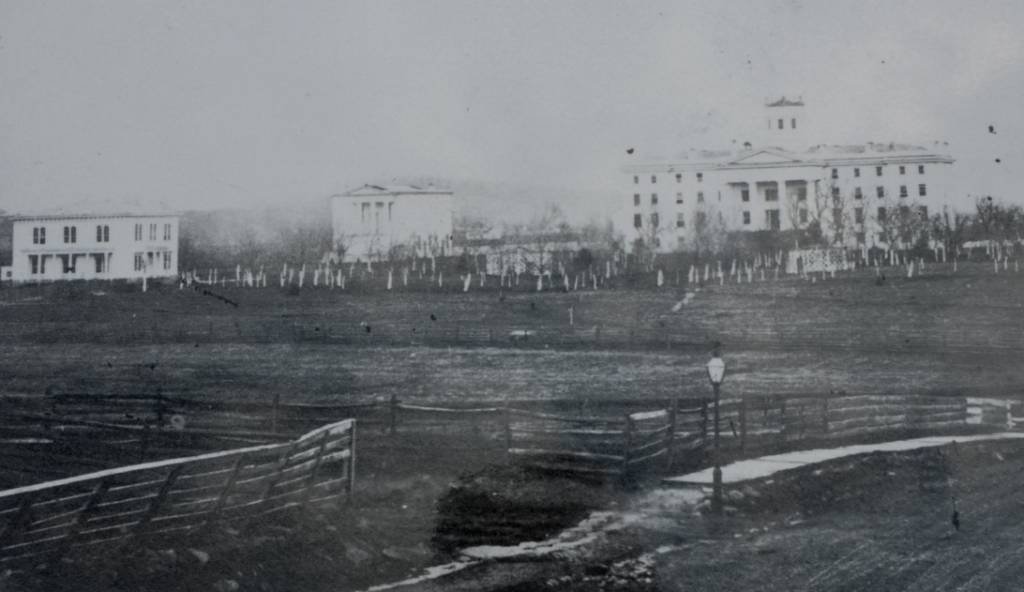
Courtesy of the American Battlefield Trust – Gettysburg College

In 1860, the now known Alumni House served at the residence of the second president of the Pennsylvania College. The second president of the college was Henry L. Baugher. According to his past, he didn’t want to stay within Pennsylvania Hall with the students. The “white house” of the campus was just right next door. Even though the Civil War didn’t arrive into Gettysburg till the end of June and early July 1863, the war had already affected the family of the college.

Their son, Alexander Nesbitt Baugher, graduated from Pennsylvania college in 1853 prior to his move to Illinois. He was a lawyer there, and married to his wife, Martha. The war started in April 1861, and he signed up for the Union army. He joined as a member of Company B within the 45th Illinois infantry in August 1861. However, less than a year into the war, in April 1862, the battle of Shiloh, Tennessee occurred. Here, D. Nesbitt Baugher was wounded seven times during the battle. He was taken to a civil war hospital in Quincy, Illinois, and died on May 12. His father, Henry Baugher, traveled to Quincy, picked up his body, and brought it back to Gettysburg. He is buried within Evergreen Cemetery, along with his wife Martha Ann.
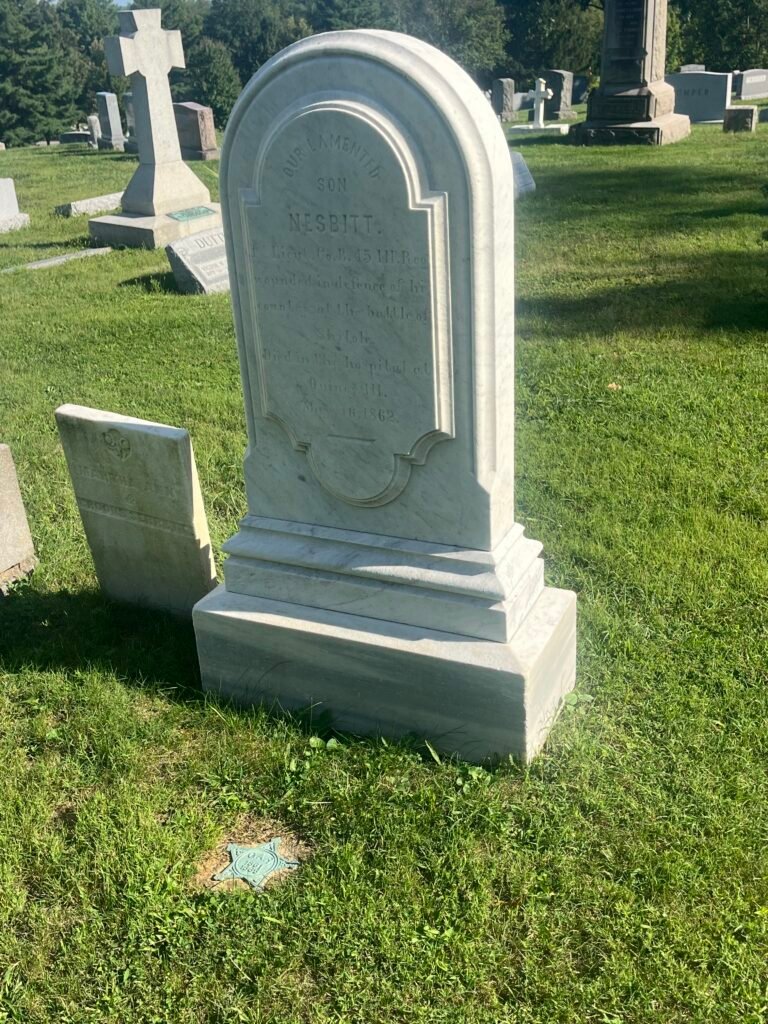
During the Battle of Gettysburg, Baugher and his family cared for 18 wounded Union soldiers in their home and successfully hid one officer from Confederate searches during the town’s occupation. Both Mr. and Mrs. Baugher are buried in Evergreen Cemetery, next to their beloved son.
Evergreen Cemetery, Field Hospitals, Gettysburg, Gettysburg College, President

Gettysburg College

Posted on September 22, 2026September 13, 2026 By BD No Comments on Gettysburg College

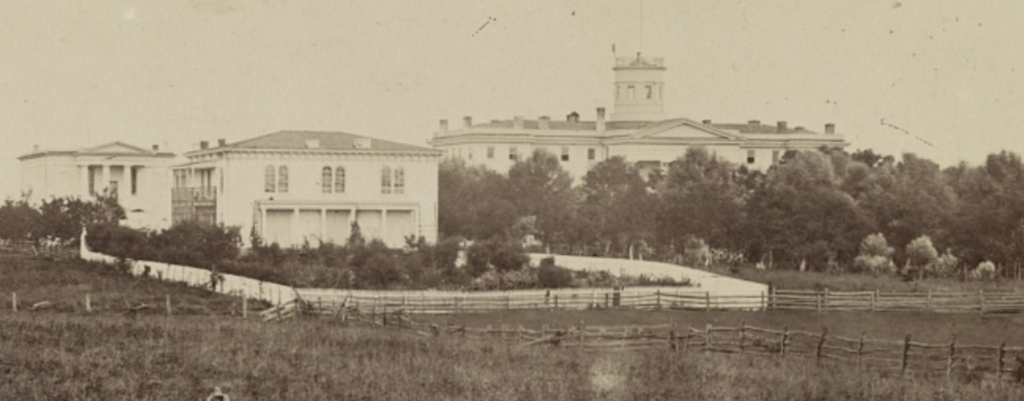
Just north of downtown in the square, there lies a college that saw the Battle of Gettysburg outside their windows. The college was founded in 1832, originally known as Pennsylvania College. It didn’t change it’s name to Gettysburg College till 1921. Shown below is a picture of the three buildings on the campus that were here during the Civil War.

Courtesy of the Library of Congress – Pennsylvania College

The first president of Pennsylvania College was Charles P. Krauth. He served for sixteen years between 1834 and 1850. He and his family lived within Pennsylvania Hall during his entire tenure, and acted like a guardian for the students who resided there. The second President of the College was that of Henry L. Baugher. He would be the president that served during the Civil War and offered the benediction on November 19, 1863 at the Soldier’s National Cemetery prior to the Abraham Lincoln delivering the Gettysburg Address.

The building with the cupula on the top is Pennsylvania Hall. For the first decade of the exitance of the college, this Hall was the only academic building on campus. It also contained the living quarters, offices, and relaxing rooms. The second building was started in 1846 and ended construction in 1860. Linnean Hall was used for scientific studies. The third and last building that stood on campus was the president’s house which was constructed in 1860. This is where the Baugher family resided during the Civil War.

During the battle of Gettysburg, Union signal officers used the cupola on June 30 and on July 1st, before the Confederates overran the northern side of town. Confederate generals used it on July 2nd and 3rd. The wounded were treated around the campus through the end of July before being transferred to Camp Letterman. After the battle, bullets, bones, and human remains continued to be found around the campus for multiple years.

Confederate, Field Hospitals, Gettysburg, Gettysburg College, Maryland, President, Union

Antietam – Bloody Lane

Posted on September 14, 2026September 13, 2026 By BD No Comments on Antietam – Bloody Lane

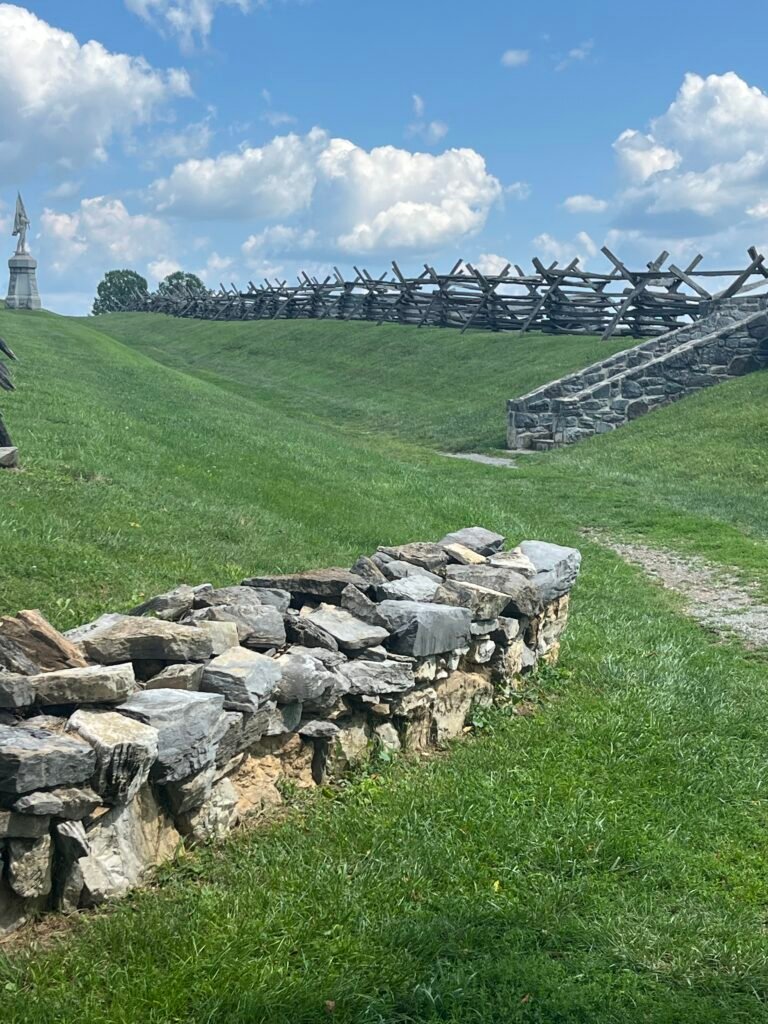
As the northern portions of the battlefield ease, the concentrate of the Confederacy takes their position along the Sunken Lane. This farmer’s road was used so often that it sank into the terrain. Between the Mumma’s Farm and the Sunken Road, both forces would command their soldiers to most certain death. The Confederate troops were in line from the Dunker Church to the Lane, while the Union Troops made a half semicircle formation from the North Woods through the East Woods and towards the Sunken Road.

Terrain of the Sunken Road – The Bloody Lane –

One of the most famous generals of the Confederacy was near Dunker Church under the command of General Stonewall Jackson. To prevent Union sharpshooters, the Rebels set fire to the Mumma farmhouse. The rebels were positioned along the lane and they ducked down to not be seen. They waited for the Union soldiers to attack and not fire till they “saw the white in their eyes”.

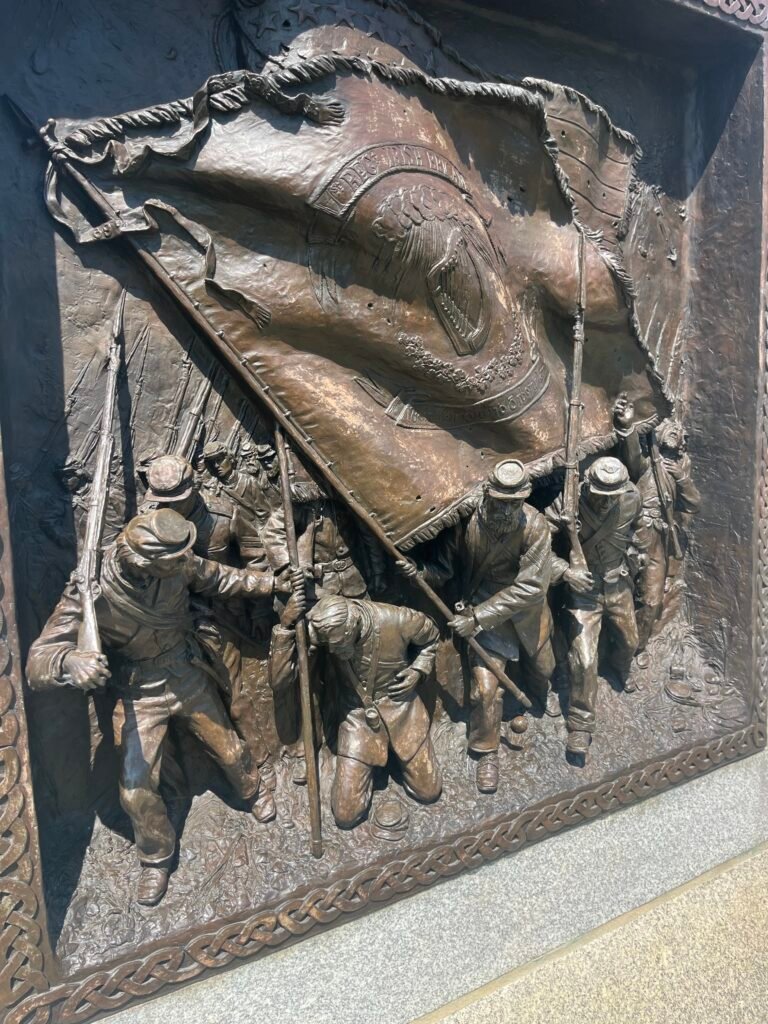
Courtesy of the Author – Irish Brigade – Sunken Road –

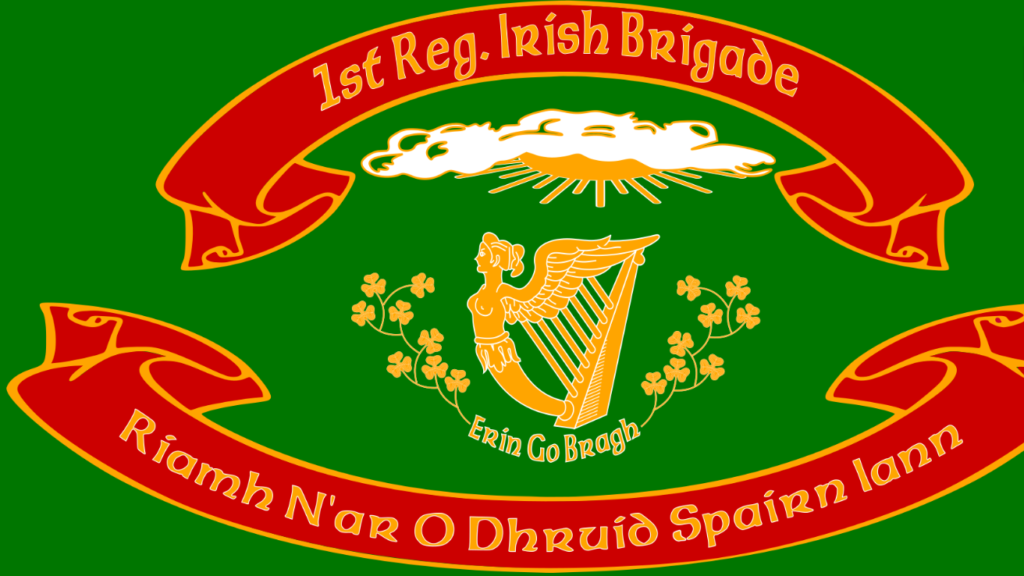
One of the most known brigade of the location is the Irish Brigade. The brigade consisted of the 63rd, 69th, and 88th New York. They were led by the emerald green banners. They started the day with 1000 soldiers and officers. At the end of the day, over 600 were killed and or wounded. This flag below was one of the banners.

Green Ensign of the 1st Regiment (69th N. Y. Volunteer Infantry), Irish Brigade

Their fighting war cry from the 69th New York was the following: “Faugh a Ballagh” – Clear the Way!

Antietam, Artillery, Confederate, Gettysburg, Irish Brigade, Lost Orders, Maryland, McClellan, President, Sunken Road, Union

Antietam – Morning Phase

Posted on September 13, 2026September 13, 2026 By BD No Comments on Antietam – Morning Phase

After three small battles at Crampton, Fox, and Turner’s Gap, the Union and Confederate army converged on the biggest battle of the Maryland Campaign. Both armies moved towards this little town. Confederates called it the battle of Sharpsburg, while the Union called it the battle of Antietam. With the Rebel forces divided with some of it attacking Harpers Ferry and capturing the Union garrison, the other half is here preparing for battle against most of the Union forces. Even before the battle began, here are the facts:

  • Union soldiers numbered 84,000 with approximately 244 cannons
  • Confederate soldiers numbered 55,000 with approximately 148 cannons

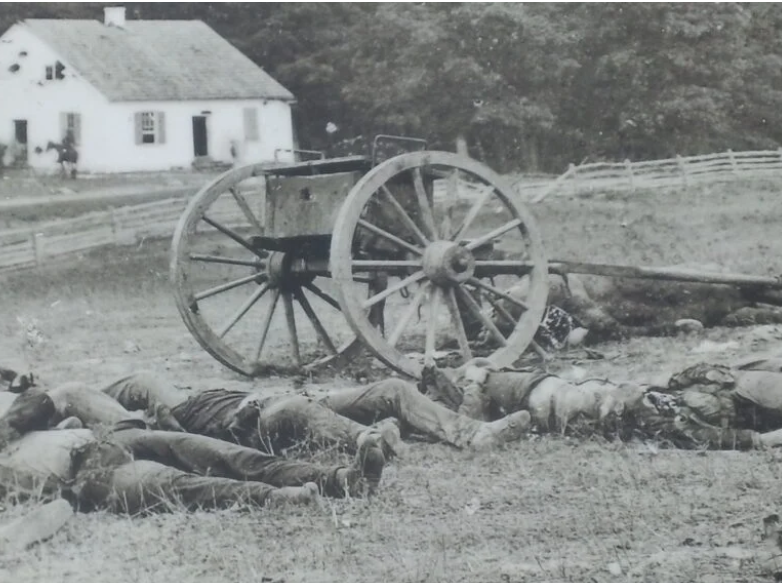
This picture that is located in front of the Antietam’s Visitor Center shows the aftermath of the battle. It shows the cannon ball damage to the Dunker Church, and those soldiers killed on the field.

Courtesy of the Antietam National Battlefield wayside markers

On September 17th, the bloodiest battle of the Civil War began. Three phases of the morning, afternoon, and early evening occurred with significance in each time frame. The morning action that was between 5 to 9 a.m. happened on the northern part of the battlefield that included the West Woods, North and East Woods, and the Cornfield. When the fighting eased around 9 a.m., the Confederates retreated towards the West Woods.

There was over 8,000 casualties that were either killed or wounded. This fighting occurred on 24 acres of land. Some regiments of both armies were cut to pieces in less than 30 minutes. As an example, the 12th Massachusetts brought 334 soldiers to the morning fighting. As the fighting eased, less than 100 soldiers remained. It was the highest casualty rate of any Union regiment at Antietam.

Antietam, Artillery, Confederate, Gettysburg, Maryland, McClellan, President, Union

Lost Orders No. 191

Posted on September 6, 2026September 3, 2026 By BD No Comments on Lost Orders No. 191

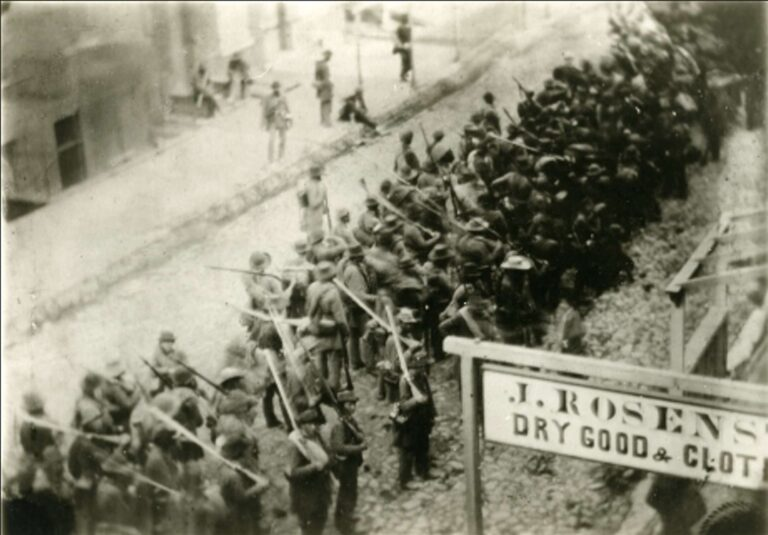
Confederate General Robert E. Lee began the first invasion of the North on September 4th, 1862. They moved across the Potomac River and traveled into Mary-land and towards Frederick. As they crossed the Potomac, the Union was on their tails from being centered outside Washington D.C. They were now in enemy territory. Even though the farmlands were rich and green with food, they moved at a snail pace. As they approached Frederick, Maryland on September 9th, portions of the army were captured in town in the picture below.

Courtesy of the Library of Congress – Confederates walking through Frederick, Maryland – Sept. 1862

The signage of Jacob Rosenstock’s Rosen’s Dry Good and Clothing store is the clue. This location was on Patrick Street in the downtown Frederick on September 12, 1862. This is the only known picture of Confederates marching in columns of fours.

As the soldiers arrived into the city, Confederate generals gathered and conversed about the next move. Having cigars near the fire was a common thing for the leaders to do. Somehow, though, after the Confederates have moved to the west towards Boonesboro and Harpers Ferry, was that the orders were left on the ground. Lee wanted to crush the Union garrison at Harper’s Ferry, so the orders had the army divide and hopefully accomplish the objective.

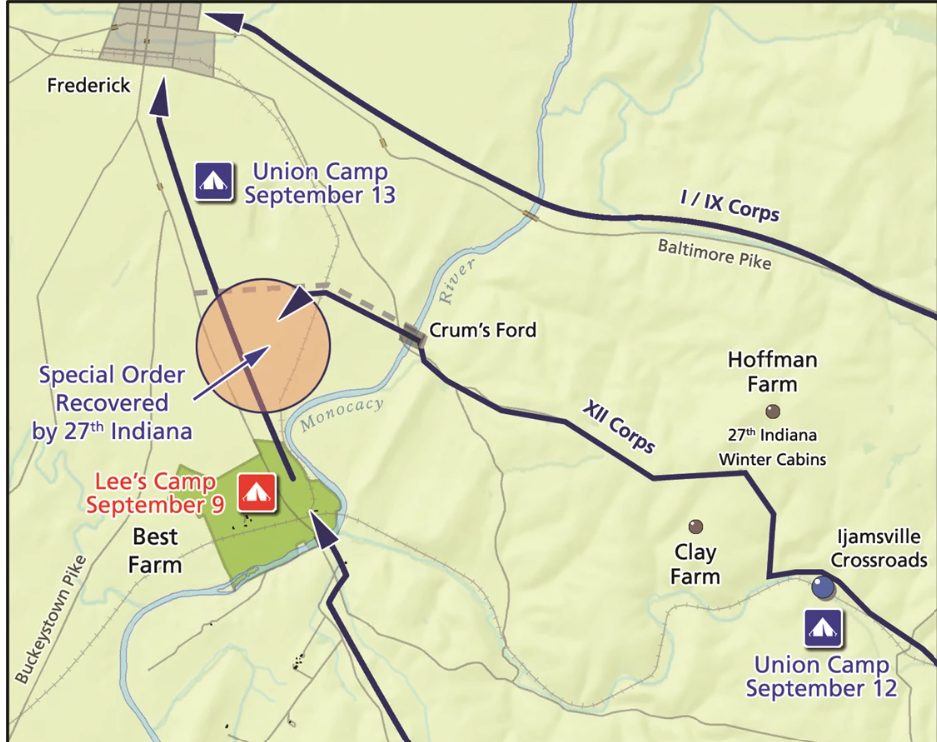
The Union was about a day behind the Confederate soldiers. Around 12 p.m. on September 13th, portions of the 12th Union Corps arrived into Frederick. As they moved towards the town, portions of the regiments walked through old campgrounds that were still smoking from the previous army.

Courtesy of the Monocacy National Battlefield – Frederick, Maryland

In one of these campgrounds, Corporal Barton W. Mitchell of the 27th Indiana Volunteers discovered cigars wrapped in a piece of paper lying in the grass. He handed the paperwork of the important document up the line of command. As the paperwork continued to go up the line of leadership within the Corps, it was read by the following:

  • Sergeant – John M. Bloss
  • Regimental Commander – Colonel Silas Colgrove
  • Aide to Camp – Samuel Pitman
  • 12th Corps Commander – Alpheus S. Williams
  • General of the Union Army in 1862 – George McClellan

George McClellan was overwhelmed with happiness since he knew where the Confederates direction and objective. He yelled out in glee, “Now I know what to do!”.

Antietam, Confederate, Frederick, Gettysburg, Lost Orders, Maryland, Monocacy, President, Union

Maryland Campaign 1862

Posted on September 1, 2026August 30, 2026 By BD No Comments on Maryland Campaign 1862

The start of the 164th anniversary of the Antietam/Maryland Campaign begins. Remembering the soldiers trekking through the wilderness northward to give farmers some time to recover from warn-torn Virginia would have been a sight to see. Multiple battles were fought throughout Virginia in 1861 and 1862, and the Confederate Army needed to give their citizens a brief break. This would be Confederate Robert E. Lee’s first invasion of the North.

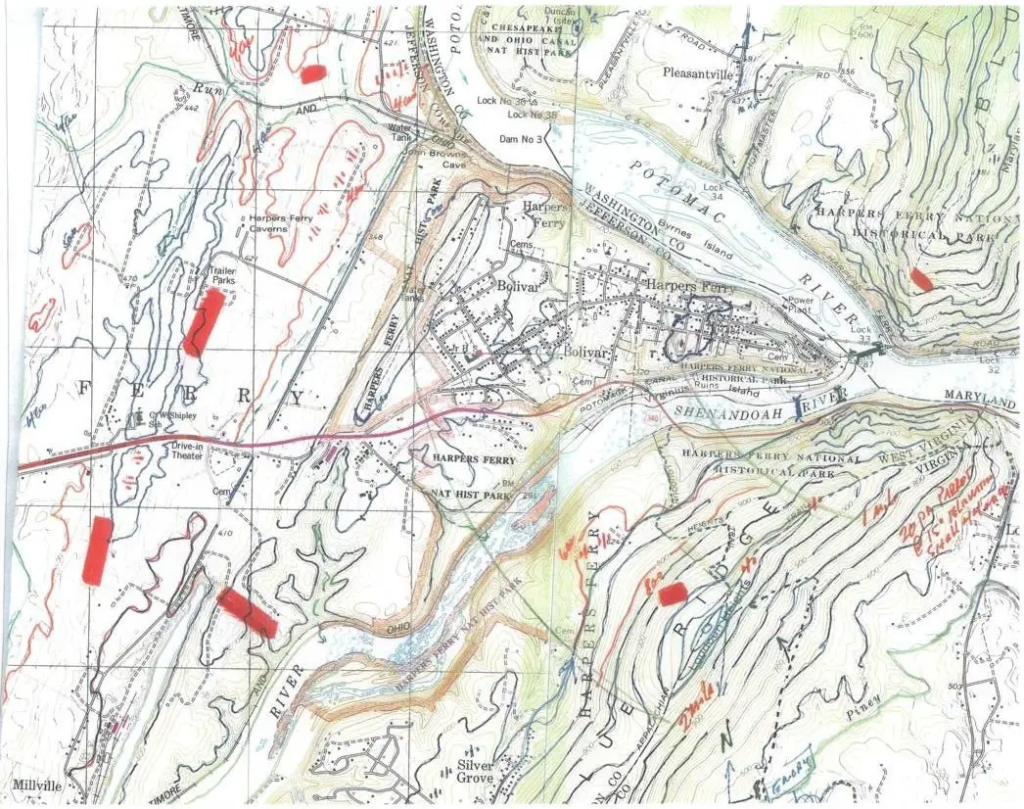
Courtesy of the American Civil War webpage – Topographic map of Harpers Ferry and Loudoun’s Heights

The Confederate army containing approximately 55,000 soldiers traveled across the Potomac River on September 4, 1862, into the vast lustfulness of Mary-land. On their heels were the Union under the commander of General George McClellan and his army of around 84,000 soldiers at his disposal. Lee’s goal was to move into Pennsylvania, but the Union had other plans. The Union garrison that was within Harper’s Ferry was close enough to Virginia that they may threaten the supply lines and telegraph system that would be supporting the Confederate advances.

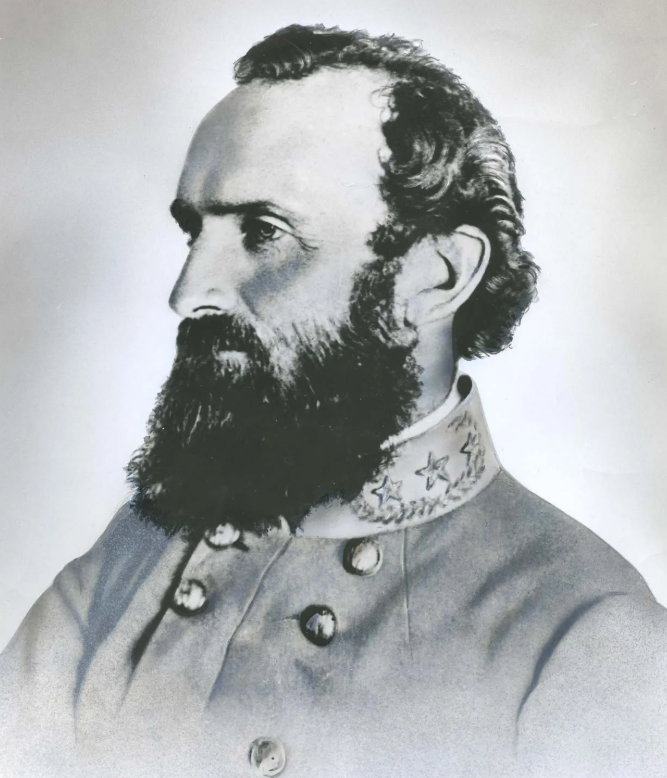
Confederate forces surrounded the town and captured the Union garrison stationed there. Overall, the Union forces surrendered 73 artillery cannons, 13,000 rifles, and approximately 12,000 soldiers. The commanding officer of the Confederacy at Harper’s Ferry was General Stonewall Jackson. His victory was one of the greatest of his storied career and resulted in the largest surrender of Union soldiers during the war.

Courtesy of the Library of Congress – General Stonewall Jackson

Three other battles occurred in Mary-land prior to the battle of Antietam that happened on September 17th. They were the battles of Crampton, Fox, and Turner’s Gap which are also known as the Battle of South Mountain. These battles happened only three days before the Antietam. The battle of South Mountain halted the Confederate invasion of the North, and began for General Lee to concentrate his forces around Antietam.

Antietam, Confederate, Gettysburg, McClellan, President, Union

June 29th, 1863

Posted on June 28, 2026August 10, 2026 By BD No Comments on June 29th, 1863

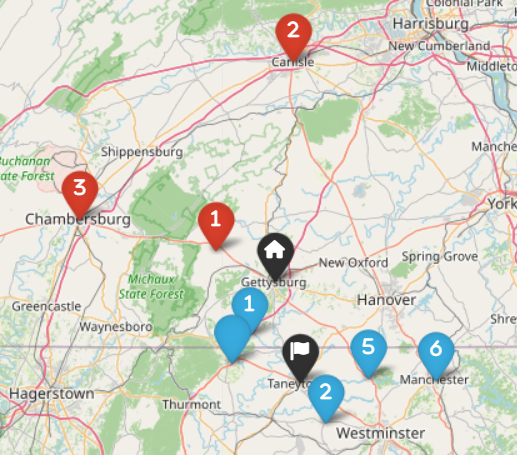
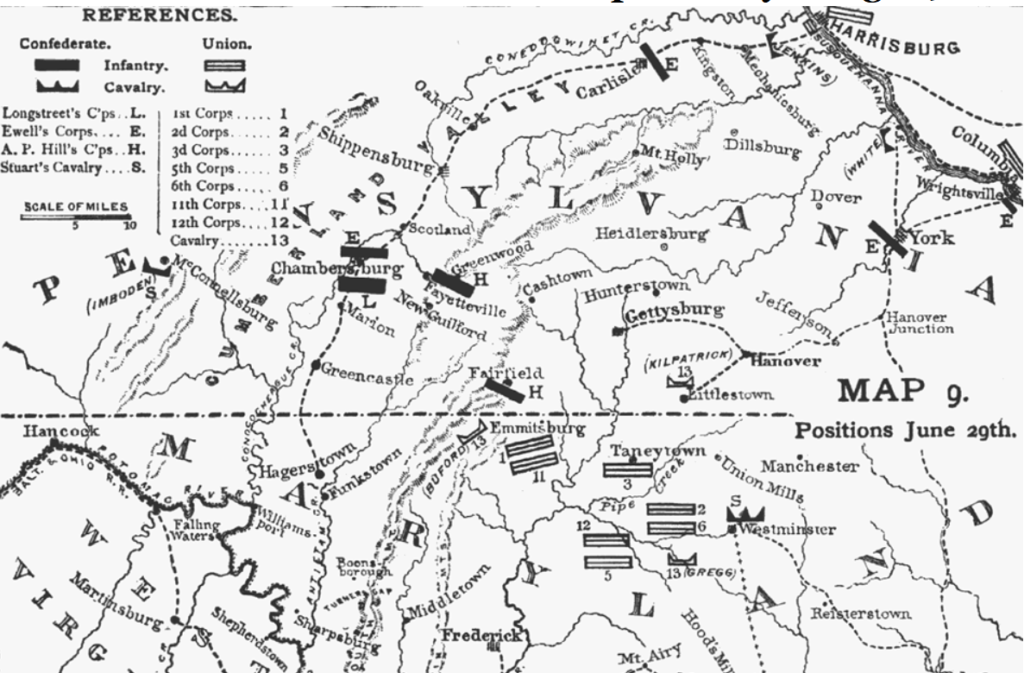
The locations of the Confederate and Union Corps on June 29th. However, that’s not the main story. The temperatures are brutal across the Mid-Atlantic ranging between 90 to 100 degrees and evening thunderstorms with the heat. With traveling on muddy and backroads, it was a very difficult to travel from one place to another.

Meanwhile, the Confederate forces were spread out across Pennsylvania, but had plenty of access roads to combine forces if need be. The 1st Corps was in Chambersburg and commanded by Lieutenant General James Longstreet. The 2nd Corps was in Carlisle and was commanded by Lieutenant General Robert S. Ewell, and the 3rd Corps was commanded by Lieutenant General Ambrose Hill that was stationed outside Cashtown.

Here are some of the distances that the Union Corps had to march on June 29th.

  • 1st and 11th Corps (blank icon) marched from Frederick to Emmitsburg – 23 miles
  • 2nd Corps marched from Monocacy to Uniontown – 26 miles
  • 3rd Corps marched from Woodsborough to Taneytown – 12 miles
  • 5th Corps marched from Frederick to Libertytown – 11 miles
  • 6th Corps marched from Hyattstown to New Windsor – 26 miles
  • 12th Corps marched from Taneytown to Frederick – 23 miles
  • Bufford’s Cavalry rode from Middletown to Fairfied – 8 miles
  • Gregg’s Cavalry rode from New Market to New Windsor – 21 miles
  • Kilpatrick’s Cavalry rode from Frederick to Littlestown – 31 miles

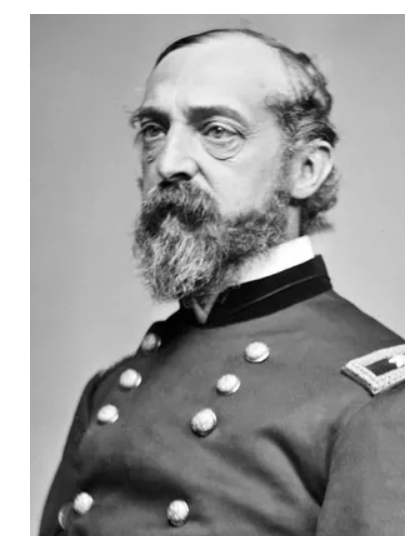
Newly appointed general of the Union Federal Army was Major General George Gordon Meade. He wanted the Union army to deploy between Middlestown to Taneytown to Manchester. He wanted to have strong fallback positions in northern Maryland. He wanted to protect Washington D.C. and Baltimore, and wanted to defend Mary-land, not Pennsylvania.

Confederate, Gettysburg, President, Union, Wade Family

June 27, 1863

Posted on June 28, 2026August 10, 2026 By BD No Comments on June 27, 1863

The battle of Gettysburg is less than a week away. However, it’s only been less than 24 hours since Major General George Gordon Meade received orders that he is now the commander of the Army of the Potomac. Meade then directs and informs Major General Joseph Hooker of his relief from command.

George Gordon Meade is now the 5th man to command the Army of the Potomac in less than a year. General Meade learns that the Confederates are in southern Pennsylvania ransacking communities and terrifying citizens on the frontier. He commands the Union army to slowly drift north to see if they can draw the Rebels to fight them in Mary-land.

Courtesy of the novel – Battles and Leaders of the Civil War: III: Retreat from Gettysburg, page 266

His orders are to keep the Union army protecting Washington D.C. from the Confederates to the North.

Artillery, Confederate, Gettysburg, President, Railroad Maps, Union

Battle of Chancellorsville

Posted on May 2, 2026August 10, 2026 By BD No Comments on Battle of Chancellorsville

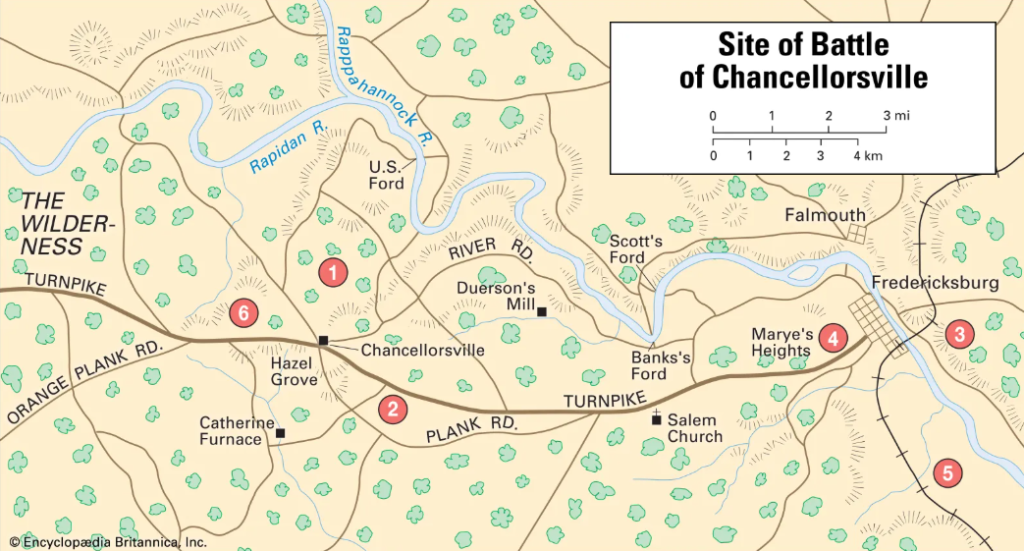
This battle that occurred in Virginia was considered one of General Robert E. Lee’s greatest battles. According to the historians, this was the fifth deadliest battle of the Civil War. However, even though this battle was a complete success against the Union, it came with a cost. General Stonewall Jackson, Lee’s right hand man, was mortally wounded by friendly fire on the evening of May 2nd.

Overall at Chancellorsville, the Union army had around 97,000 soldiers with 1700 being killed, 9700 wounded, and 6000 soldiers were missing. On the other hand, the Confederates had around 57,000 soldiers, approximately 1725 killed, 9200 wounded, and 2500 missing. Across this battlefield, there is more signage and wayside markers than monuments.

The grand plan that Lee and Jackson developed was to attack the Union’s right flank. Lee had approximately 13,000 soldiers and a huge artillery battalion, while Jackson had nearly 28,000 soldiers and had to march twelve miles out of view behind the Union lines.

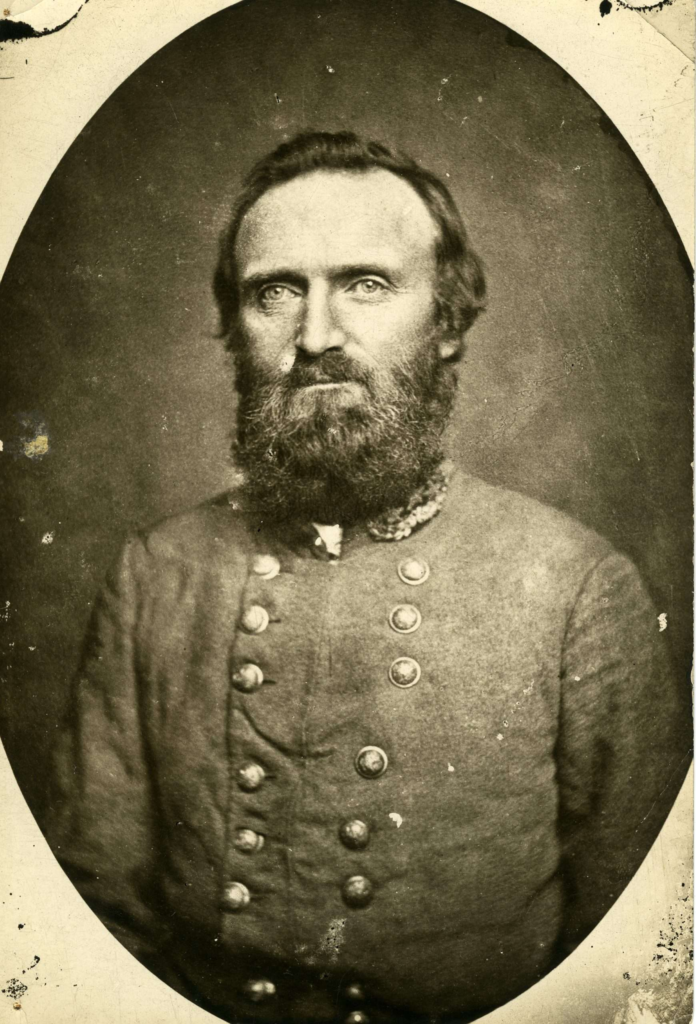
Confederate General Thomas “Stonewall” Jackson portrait taken at Nathaniel Routzahn’s photography gallery in Winchester in November 1862.

The attack began around 5 p.m. on the afternoon of May 2nd and attacked the 11th Corps, which was commanded by Union General Oliver O. Howard. As I have mentioned within the first day battle in Gettysburg, the 11th Corps were called the “Flying Dutchmen”. This is where they obtained that nickname. The 11th Corps were surprised attacked by the Confederates and fled more than 2 miles before General Hooker dug in and awaited the Confederates near the Chancellor’s House.

His amputated arm is buried at Ellwood Manor, Virginia

Darkness fell and around 8 p.m. General Stonewall Jackson and his commanders on horseback were possibly near enemy lines. They were unsure about their location of their troops and the enemy. The 33rd North Carolina skirmish line fires into the group. Jackson is hit three times: one in the right hand, the second in the left shoulder blade, and the other in the left elbow. Jackson’s horse runs off and Jackson is put into a stretcher and taken to a field hospital. During the shooting and the field hospital, Jackson would fall off the stretcher three times, and have bandages on his shoulder and elbow. His own physician, Hunter McGuire, would see Jackson in the field hospital. On the morning of May 3rd, his left arm was amputated. From the bullet that was taken out of his amputated arm, it was a smooth-bore bullet, which came from the 33rd North Carolina regiment. Around the same time, General Robert E. Lee learns that Stonewall Jackson was shot.

Robert E. Lee was quoted as saying, “He has lost his left arm, but I have lost my right.”

Artillery, Confederate, Gettysburg, McClellan, President, Union

President Abraham Lincoln Dies

Posted on April 19, 2026April 19, 2026 By BD No Comments on President Abraham Lincoln Dies
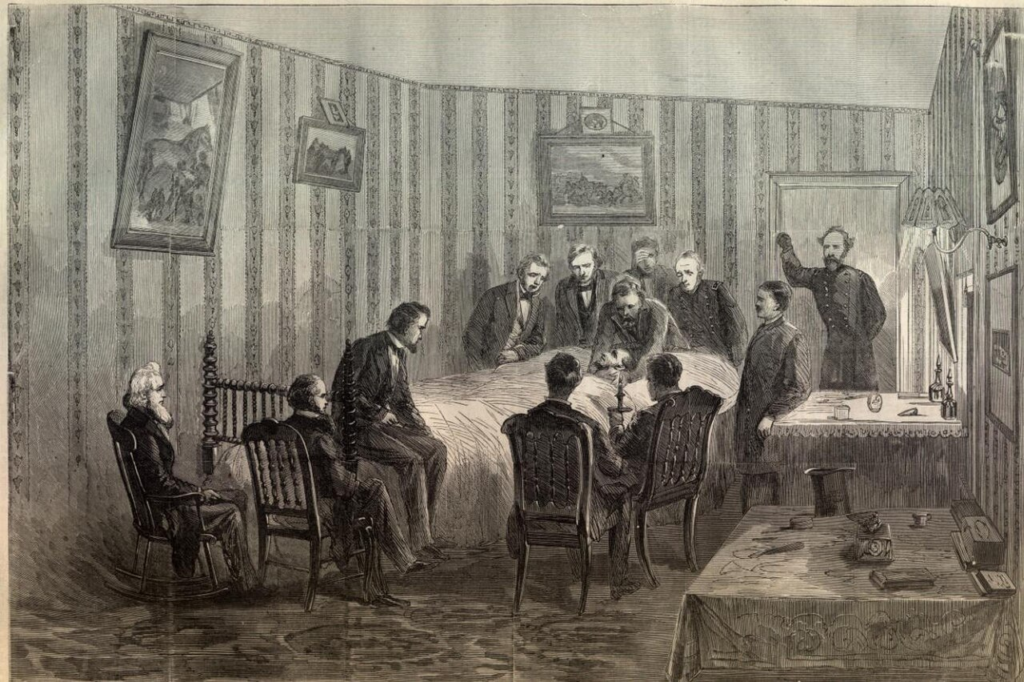
Courtesy of Harper’s Weekly – Lincoln on his deathbed (created May 6, 1865)

Sadly, on April 15, 1865, Abraham Lincoln died at 7:22 a.m. on Saturday morning. He died at the young age of 56 years old. A silence fell over the room, and Mary Todd Lincoln was weeping with her son, Robert. His War Secretary, Stanton, finally broke the silence and said the following:

“Now “He” Belongs to the Ages.”

Gettysburg, Newspaper Articles, President

Posts pagination

1 2 Next
  • Battlefield Map
  • Gettysburg Museums & Hotels
  • Union History
  • Confederate History
  • Author's History
  • October 2026
  • September 2026
  • August 2026
  • July 2026
  • June 2026
  • May 2026
  • April 2026
  • March 2026
  • February 2026
  • January 2026

Recent Posts

  • Paranormal in Gettysburg
  • Georgia Wade McClellan’s Duplex
  • Alumni House – Baugher
  • Gettysburg College
  • Comments or Questions

Recent Comments

No comments to show.

@ 2026 Gettysburg Chronicles

Powered by PressBook WordPress theme