
Confederate General Robert E. Lee began the first invasion of the North on September 4th, 1862. They moved across the Potomac River and traveled into Mary-land and towards Frederick. As they crossed the Potomac, the Union was on their tails from being centered outside Washington D.C. They were now in enemy territory. Even though the farmlands were rich and green with food, they moved at a snail pace. As they approached Frederick, Maryland on September 9th, portions of the army were captured in town in the picture below.
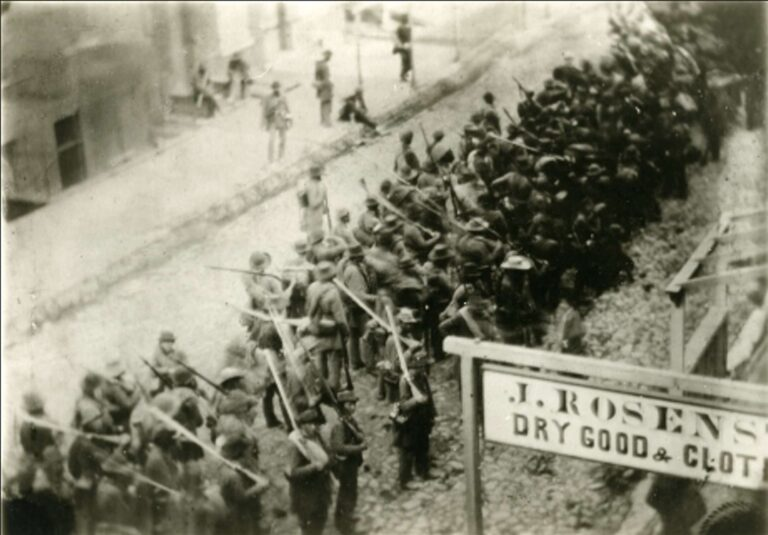
The signage of Jacob Rosenstock’s Rosen’s Dry Good and Clothing store is the clue. This location was on Patrick Street in the downtown Frederick on September 12, 1862. This is the only known picture of Confederates marching in columns of fours.
As the soldiers arrived into the city, Confederate generals gathered and conversed about the next move. Having cigars near the fire was a common thing for the leaders to do. Somehow, though, after the Confederates have moved to the west towards Boonesboro and Harpers Ferry, was that the orders were left on the ground. Lee wanted to crush the Union garrison at Harper’s Ferry, so the orders had the army divide and hopefully accomplish the objective.
The Union was about a day behind the Confederate soldiers. Around 12 p.m. on September 13th, portions of the 12th Union Corps arrived into Frederick. As they moved towards the town, portions of the regiments walked through old campgrounds that were still smoking from the previous army.
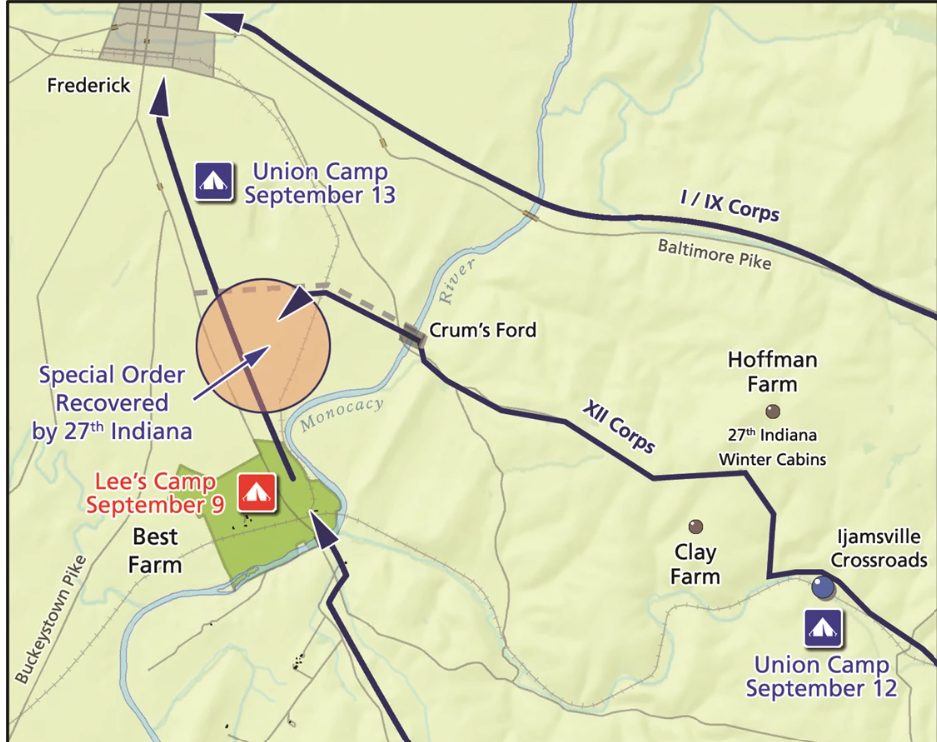
In one of these campgrounds, Corporal Barton W. Mitchell of the 27th Indiana Volunteers discovered cigars wrapped in a piece of paper lying in the grass. He handed the paperwork of the important document up the line of command. As the paperwork continued to go up the line of leadership within the Corps, it was read by the following:
- Sergeant – John M. Bloss
- Regimental Commander – Colonel Silas Colgrove
- Aide to Camp – Samuel Pitman
- 12th Corps Commander – Alpheus S. Williams
- General of the Union Army in 1862 – George McClellan
George McClellan was overwhelmed with happiness since he knew where the Confederates direction and objective. He yelled out in glee, “Now I know what to do!”.