
Skip to content

Gettysburg Chronicles

History Explained

  • Home
  • Gettysburg
    • History of Adams County
    • Samuel Gettys
    • Call to Arms
    • Days Before The Battle
  • Tales to War
    • July 5th: Tillie Pierce Tale
    • 57th Pa.: Letter to Mother
    • 24th Mich.: Abel Peck
    • 24th Mich.: Charles Bellore
    • 1st Rifles: Colonel Taylor
    • 7th Mich.: Allen Zacharias
    • 1st Michigan: Amos Ladd
  • Confederate
    • South Carolina
    • Mississippi Monuments
    • Florida’s Involvement
    • Spirit of Alabama
    • Georgia – The Peach State
    • Louisiana Secedes
    • Lonestar State
    • North Carolina
    • Virginia Secedes
    • Arkansas
    • Tennessee – Last to Join
    • Maryland – Border State
  • Union
    • First Shot Marker
  • Michigan
    • Michigan Cavalry
    • Farnsworth’s Cavalry
    • 9th Michigan Battery
    • 24th Joins Iron Brigade
      • 24th Before Fredericksburg
      • 24th Mich. to Gettysburg
      • 24th Michigan – July 1st
      • 24th Michigan Losses
    • 7th Michigan Infantry
    • 1st Michigan Infantry
      • 1st Michigan Arrives
      • Michigan Pulls Back
      • First Michigan
  • Artillery
    • Different Ammunition
    • Real vs. Fake Cannons
    • Six Pound Shot Cannon
    • Cannons at Devil’s Den
    • Rochester Union Grays
    • Fallen Rochester Grays
  • Civil War Locations
    • Crampton’s Gap, Md.
    • Fox’s Gap, Md.
    • Turner’s Gap, Md.
    • Andersonville, Ga.
    • Navy – Hampton Roads, Va.
  • Photographs
  • Abraham Lincoln
    • Lincoln Visits Antietam
    • Emancipation Proclamation
    • November 1863
    • Gettysburg Address
    • John Wilkes Booth
    • The Kidnapping Plan
    • Ford’s Theatre
    • Death of Abraham Lincoln
    • Death of an Actor
    • Tribunal Results
  • Lost Commanders
    • Stonewall Jackson
      • Spring of 1862
      • Fall of 1862
      • Winter of 1862
      • Family
      • Life After Stonewall
      • Descendants of Jackson
      • Stonewall’s Grandson Tree
    • John F. Reynolds
      • California Love
      • Reynolds Arrives
      • Morning of July 1st
      • July 1st to July 3rd
      • Ms. Mary “Kate” Hewitt
      • Daughters of Charity
  • Anniversaries
    • Battlefield Walks
    • 150th Anniversary – 2013
    • 152nd Anniversary – 2015
    • 157th Anniversary – 2020
    • 158th Anniversary – 2021
    • 162nd Anniversary – 2025
    • 163rd Anniversary – 2026
    • Scorching Heat – 2026
  • Buildings
    • Cashtown
      • July 1863 in Cashtown
      • Cashtown: Since 1863
    • Sach’s Bridge
    • The House on the Hill
      • Louisiana Tigers
    • Weikert Family Farms
    • Houses of the Wades
    • Soldier’s Orphanage
      • Brickyard Fight
      • 154th New York
      • Amos Humiston
      • Rosa Carmichael
    • Welty House
    • Farnsworth House
    • Winebrenner History
  • Field Hospitals
    • St. Francis Xavier Church
    • St. James Lutheran Church
  • Railroads
    • G&H Railroad
    • Western Maryland Railroad
    • Location of the Spur
    • Gettysburg Electric Trolley
    • Trolley South of Town
    • Railroad to Round-Tops
  • Paranormal
    • Paranormal Equipment
    • Spirits at the Cashtown Inn
    • Pictures on the Bridge
    • Live: Sachs Covered Bridge
    • Haunted Orphanage
    • McClellan’s Duplex Kitchen
    • Spirits at the Farnsworth
    • Spirits at Tillie Pierce Inn
  • Wade Family
    • Thaddeus Filby
    • Rise of the Captain
    • Trouble with the Law
    • Jennie Wade
    • Newspaper Articles
    • Gravesites of Jennie Wade
    • Samuel and Harry Wade
    • James John “Jack” Wade
  • Georgeanna McClellan
    • Extended McClellan’s
    • Iowa Family – Lewis
    • World War II POW
    • Jennie Wade McClellan
    • Nellie McClellan
    • John McClellan
  • Jim B. McClellan
    • Georgia W. McClellan
      • Dallas Schwarzenbach
        • Children of Dallas
        • Donald Schwarzenbach
    • Nellie Glady McClellan
    • Mary Wade McClellan
    • Martha B. McClellan
      • Sarah Isobel Holland
      • Martha’s Other Children
      • Glady Elizabeth Holland
    • Beese Everyln McClellan
    • Sons of Jim Britton
    • Military Ancestors
  • Families
    • Thorns
      • Evergreen Cemetery: August 1862 to June 1863
      • Gettysburg: June 26, 1863
      • Evergreen Gatehouse
      • Thorn’s Family Tree
      • Descendants of the Thorns
      • Aftermath of Battle
      • Thorn Important Locations
    • Pierce Lineage
      • McCurdy to Pierce Tree
      • James Shaw Pierce
      • William H. Pierce
      • Tillie Pierce
        • Last Week of June 1863
        • Tillie’s Accounts – July 1st
        • Wounded Everywhere
        • Hospital – Pierce House
        • Alleman’s Family
    • Garlach Family
      • Soldier Hiding with Pigs
      • Anna Garlach
    • Shriver Family
      • Weikert’s Connection
      • Union Calvary Disaster
      • Father’s Death
      • Henrietta’s New Life
    • Leister Family Origins
      • Lydia Study Leister
      • July 1st – Lydia’s Home
      • Leister’s House
  • Questions
  • Toggle search form

24th Michigan Prior to Fredericksburg

The main portion of the Iron Brigade at Gettysburg was the 24th Michigan. However, they had a long journey to get here. Here is some of the history prior to Gettysburg of the 24th Michigan.

The 24th Michigan was organized in Detroit, Michigan in August 1862. At the time of the munster in Detroit as soldiers signed up for duty within the regiment, the commanders of the 24th was understanding who was signing up to serve for the Union. This regiment was full of fathers, uncles, nephews, cousins, brothers, and sons. Within this regiment, it was considered one large family. There is 135 sets of brothers. However, a set could be two sons, or three brothers, or a father and a son. Even though there was 135 sets, it doesn’t mean that there was 270 men. It was probably much larger than that.
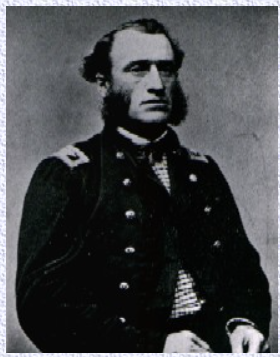
Henry A. Morrow

Regiments usually contained 10 companies, which consisted of 100 to 150 soldiers in each. There was approximately 1030 soldiers and officers that were recruited by July 26th within the 24th Michigan. Henry A. Morrow, who was the Judge of the Recorder’s Court in Detroit, was appointed Colonel. Colonel Morrow was to be the only Colonel of the 24th Michigan regiment. His other commanders were Lieutenant Colonel Mark Flannigan, Major Henry Nall, who was a Captain of the 7th Michigan Volunteer Infantry. The unit received their first colors on August 26th in Detroit, which was a beautiful flag donated by F. Buhl & Co. and made by Tiffany & Co. of New York City. The regiment departed for Washington D.C. on August 28th, 1862.

Below is a map of how the 24th Michigan left Detroit and arrived in Washington D.C. four days later in early September 1862.
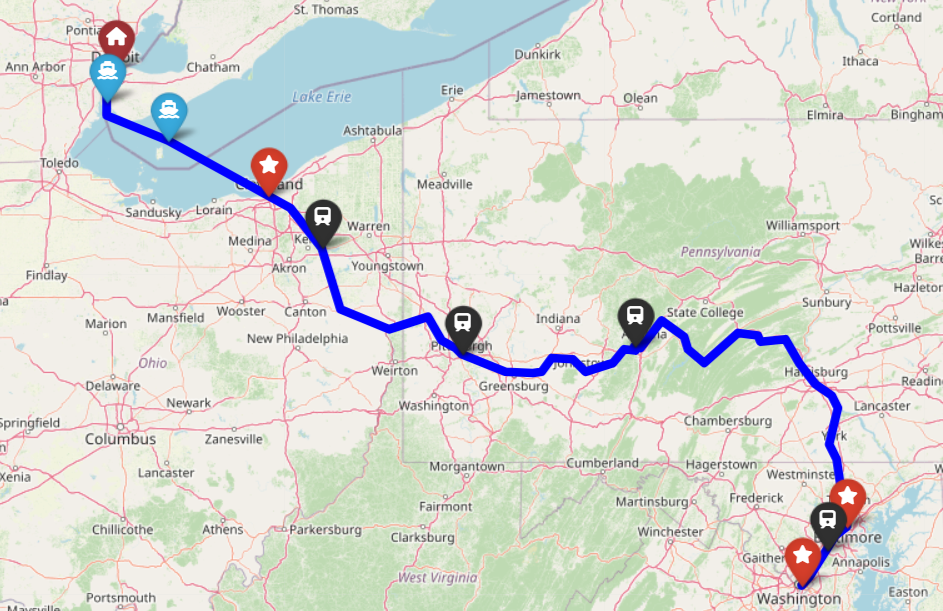
Route that 24th Michigan from Detroit to Washington D.C. by train

The 24th Michigan left Detroit (red house) on the 28th and went by boat across Lake Erie towards Cleveland on the ships named the Cleveland and the May Queen. When they arrived in Cleveland on the 29th of August, they boarded trains and rode the rails eastward. The regiment arrived into Pittsburg on the 30th, and went through the Horseshoe Curve in the early morning of the 31st. They continued towards Baltimore and arrived later that day. On September 1st, they boarded cattle trains and took a short rail trip down to Washington D.C. and arrived later in the day. When the 24th Michigan arrived into Washington D.C., they walked to different camps from September through November.

Meanwhile, the Iron Brigade consisted of the 2nd, 6th, and 7th Wisconsin, and the 19th Indiana. They consisted of less than 1000 soldiers. At Antietam, this was the Union regiment order of battle:
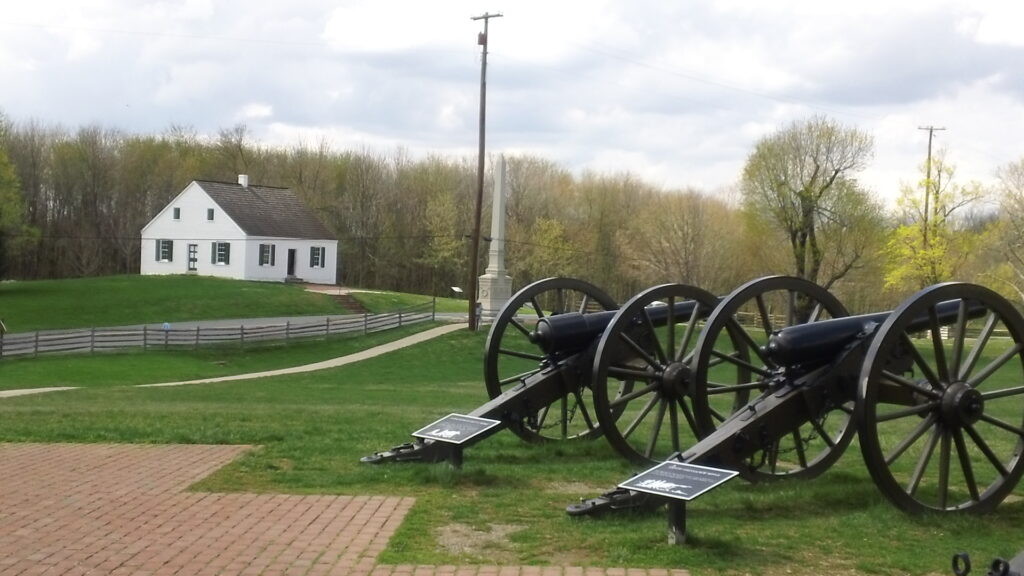
Dunker Church at Antietam
  • 1st Corps commanded by Major General Joseph Hooker and Brigadier General George G. Meade
    • 1st Division commanded by Brigadier General Abner Doubleday
      • 4th Brigade commanded by Brigadier General John Gibbons
        • 2nd Wisconsin – Lt. Col. Thomas S. Allen (w) and Captain George Ely
        • 6th Wisconsin – Lt. Col. Edward Bragg (w) and Major Rufus R. Dawes
        • 7th Wisconsin – Captain John Callis
        • 19th Indiana – Lt. Alois O. Bachman (k)

At the battle of Antietam, the Iron Brigade had some 348 soldiers killed, with having the 6th Wisconsin losing 150 of their 280 soldiers. Their fight at Antietam mainly consisted within the Corn Field and near the Dunker Church. The 24th Michigan did not participate at Antietam.

@ 2026 Gettysburg Chronicles

Powered by PressBook WordPress theme