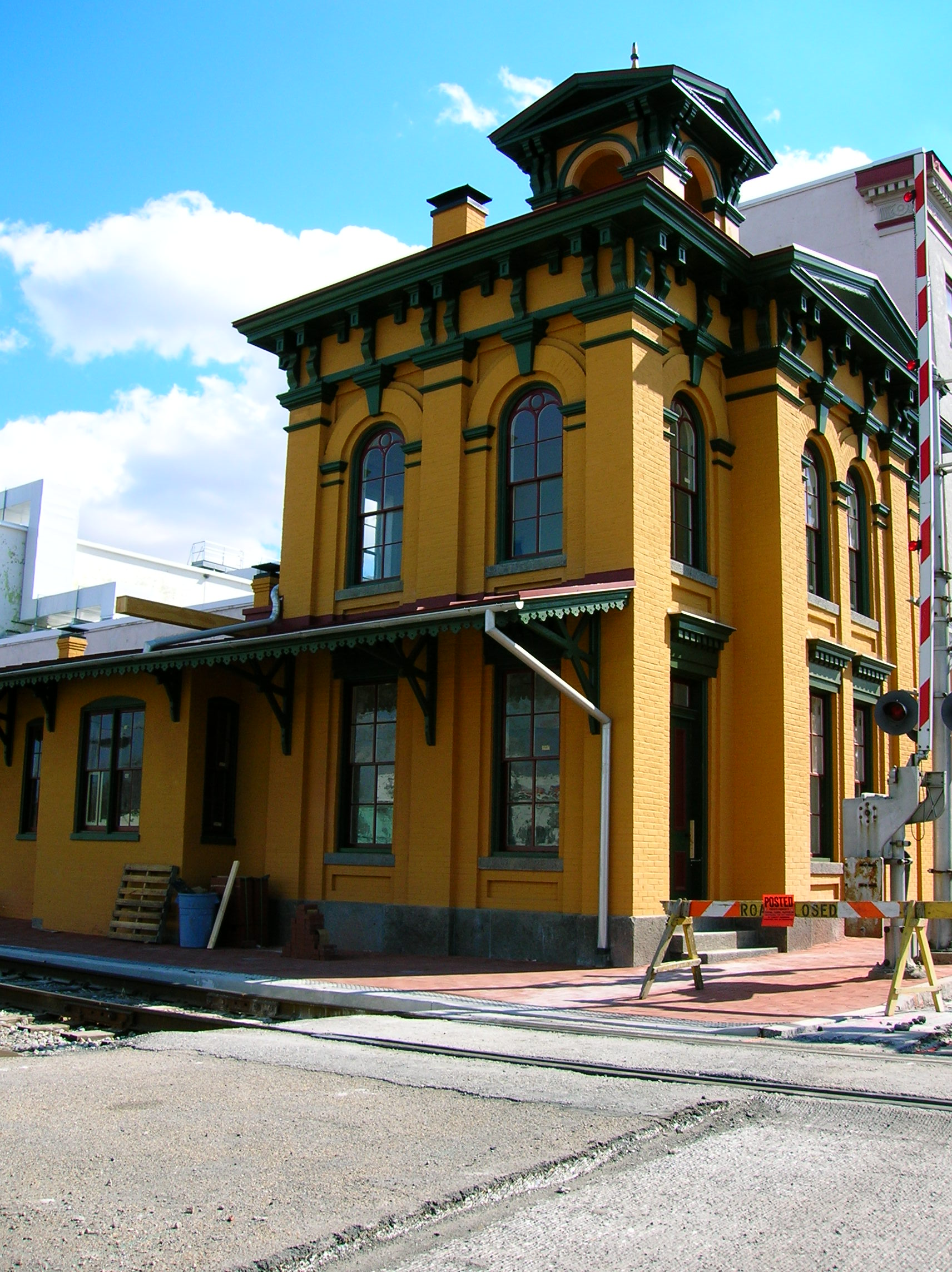
The borough of Gettysburg was developed in 1800 under the guidance Samuel Gettys. The town had only roads to transport good and supplies to and from across southern Pennsylvania. The establishment of a train service would enhance the economic and social factors to drive the businesses around the region. With the start of manufacturing, industries, and agricultural production increasing in the 1850s, there was a need for of a railroad. Starting in 1851, three Gettysburg entrepreneurs worked to get the work completed connecting the borough to any of the surrounding railroad lines. For the next few years, stocks were sold, money was raised through investments and the construction began. Railroad buildings were built along the tracks and positioned for future development. Funds from the state or federal agencies were not used in the building of the Hanover Junction and Gettysburg Railroad.
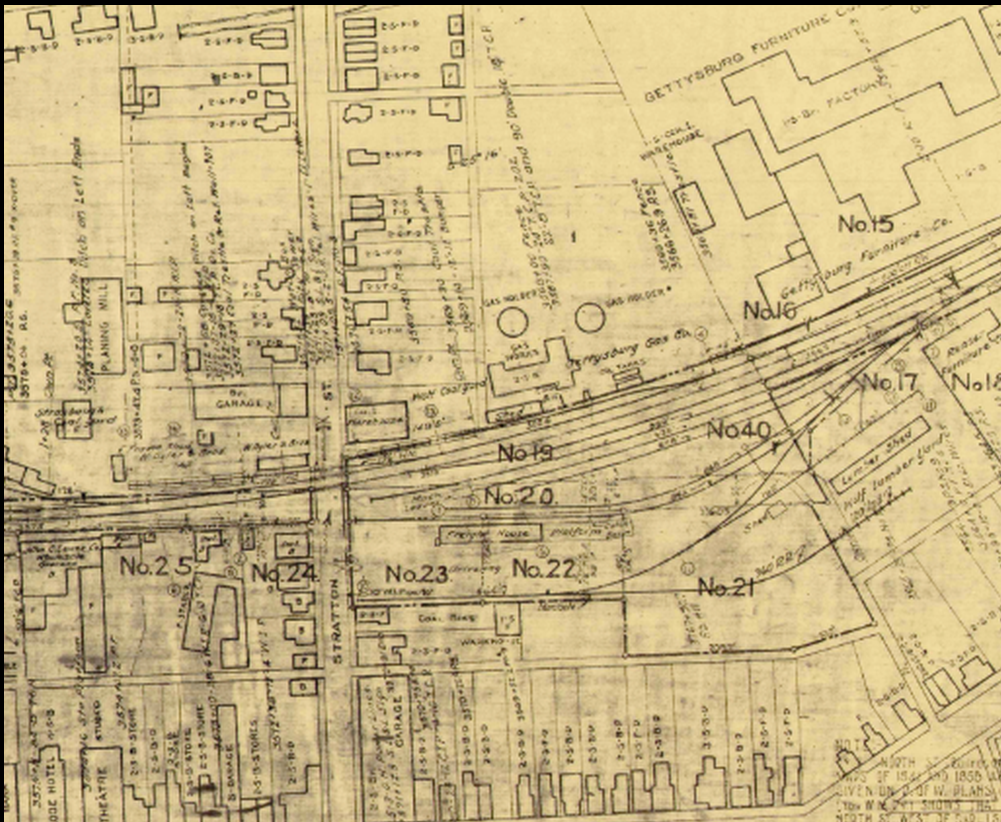
The Lincoln Train Station is located just northwest of the No. 25 on this map above. Carlisle street is on the left side of the map above. As the Hanover Junction and Gettysburg Railroad was being constructed, there was an engine house, turntable, and a freight station that was introduced to Gettysburg.
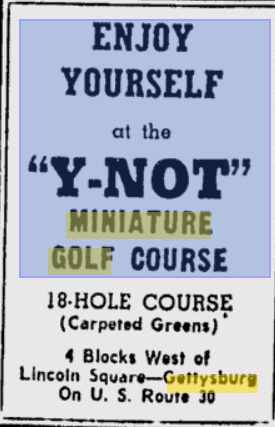
The location of this engine house and turntable may be near the location of the present-day post office near the “Spur“. It could have been the near the location of the prior “Y-Not Miniature Golf Course”, which was along Buford Avenue. The passenger station was built at the corner of Carlisle and North Streets, which was an undeveloped one-half acre lot.
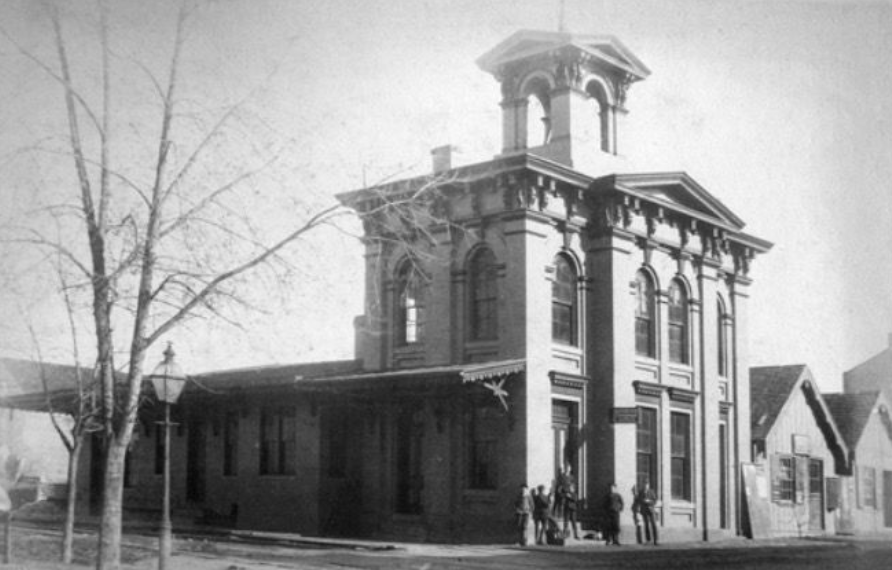
In September 1858, the passenger station was almost completed. It consisted of a two-story building with a bell cupola. The platform had a roof covering it to protect the passengers from the weather, and there was a switch that allowed the steam engine to pull the passengers along the platform. At the time of the station, there was separate entrances for the men and the woman to wait for their trains. Times have greatly changed since the 1860s.