
John Martin Study was a respectable physician in the borough of Taneytown, Maryland. He had a life to tell as he grew up though from his parents. Even though he was born in 1770 in Adams County, his parents had difficulties growing up.
His father, Martin Tschudi was born in 1718 in Switzerland. Like most Europeans at that time, passengers would get onto tall clipper ships and sail to the Americas for a better living. His wife, Anna Margaret Stonesifer was born in 1724 in Germany. They may have been married prior to their passage because they departed together on the ship named the “Crown” and they were on the passenger list at “125C” and the captain of the vessel was Michael James from Rotterdam. They arrived into Philadelphia on August 30, 1749.
Their only son, John Martin Study, would marry Hannah Sell in northern Maryland and they would have eight children together. Their lives were centered mostly in northern Maryland, while being a respectable physician in the borough of Taneytown. As they had children between 1801 and 1811, they were unaware that three of their children would have a portion of their lives centered around the Battle of Gettysburg.
Their youngest had the most important part in July 1863 at the Battle of Gettysburg. Lydia Study was born somewhere between 1809 and 1811.
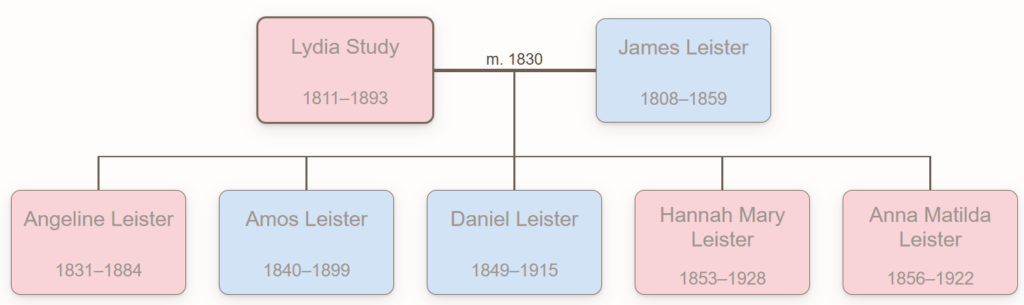
Like most of the Study and Sell families, they settled down near Silver Run, which is just northwest of Union Mills, Maryland. Their first three children were born here in Maryland, but then the family moved to Gettysburg, Pennsylvania in 1850/1851. Her husband, James, suffered from tuberculosis. Lydia wanted to be closer to her sister Catharine Study, thus the move to outskirts of Gettysburg.
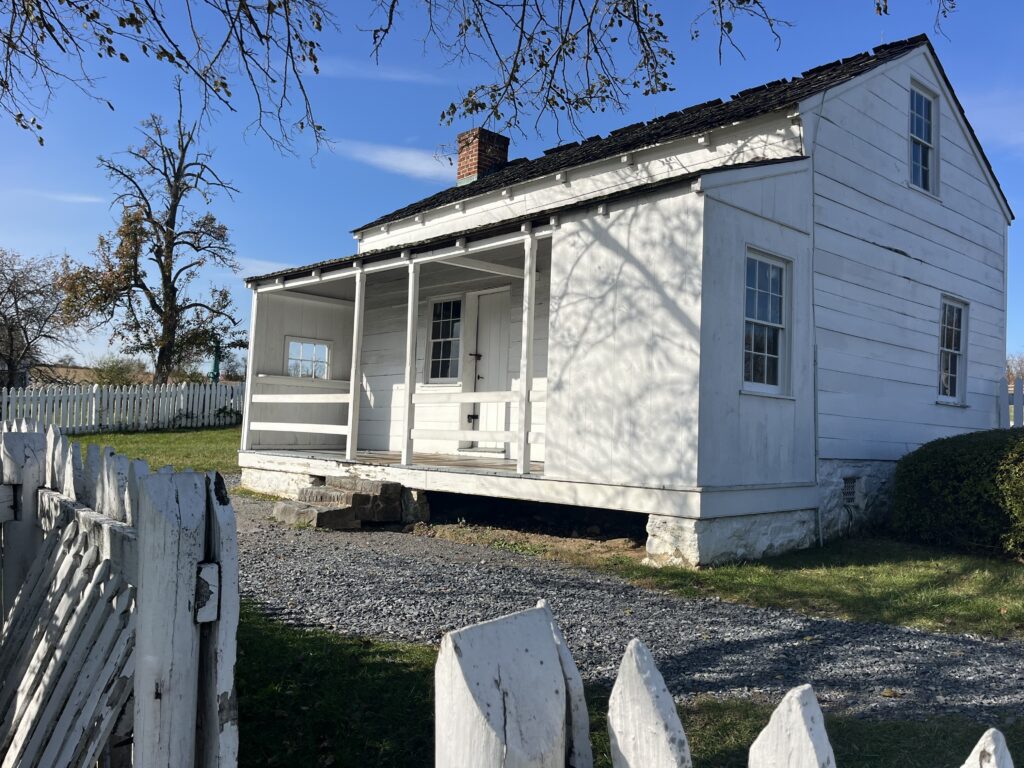
Catharine Study was born in Carroll County, Maryland, near Silver Run. She would marry her husband, John Slyder, who was a potter and a blacksmith. They would move to the southern outskirts of Gettysburg to a farm in the late 1830s. They would have four children in the house that is on the western slopes of Big Round Top.

Confederate cannons were nearby around the house shooting at Little Round Top and the Peach Orchard. The house survived the battle, but it was used as a field hospital and it was unlivable afterwards. Catharine and her husband John, and their five or six children would live elsewhere until October when they sold the house and moved to Ohio.