
The main portion of the Iron Brigade at Gettysburg was the 24th Michigan. However, they had a long journey to get here. Here is some of the history prior to Gettysburg of the 24th Michigan.
The 24th Michigan was organized in Detroit, Michigan in August 1862. At the time of the munster in Detroit as soldiers signed up for duty within the regiment, the commanders of the 24th was understanding who was signing up to serve for the Union. This regiment was full of fathers, uncles, nephews, cousins, brothers, and sons. Within this regiment, it was considered one large family. There is 135 sets of brothers. However, a set could be two sons, or three brothers, or a father and a son. Even though there was 135 sets, it doesn’t mean that there was 270 men. It was probably much larger than that.
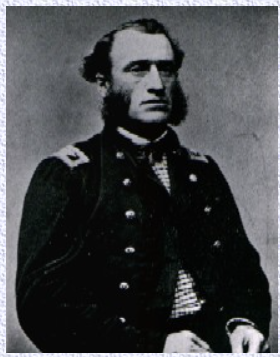
Regiments usually contained 10 companies, which consisted of 100 to 150 soldiers in each. There was approximately 1030 soldiers and officers that were recruited by July 26th within the 24th Michigan. Henry A. Morrow, who was the Judge of the Recorder’s Court in Detroit, was appointed Colonel. Colonel Morrow was to be the only Colonel of the 24th Michigan regiment. His other commanders were Lieutenant Colonel Mark Flannigan, Major Henry Nall, who was a Captain of the 7th Michigan Volunteer Infantry. The unit received their first colors on August 26th in Detroit, which was a beautiful flag donated by F. Buhl & Co. and made by Tiffany & Co. of New York City. The regiment departed for Washington D.C. on August 28th, 1862.
Below is a map of how the 24th Michigan left Detroit and arrived in Washington D.C. four days later in early September 1862.
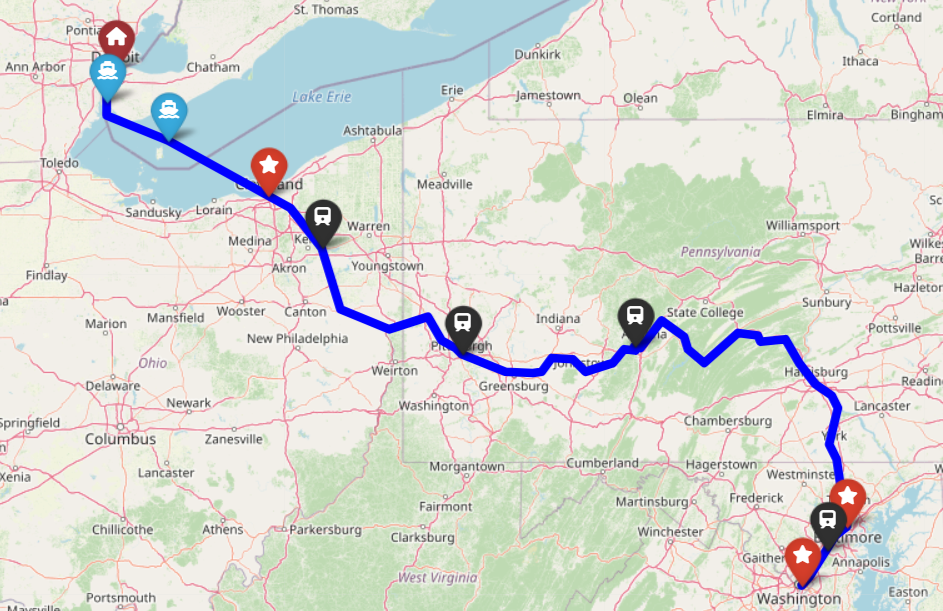
The 24th Michigan left Detroit (red house) on the 28th and went by boat across Lake Erie towards Cleveland on the ships named the Cleveland and the May Queen. When they arrived in Cleveland on the 29th of August, they boarded trains and rode the rails eastward. The regiment arrived into Pittsburg on the 30th, and went through the Horseshoe Curve in the early morning of the 31st. They continued towards Baltimore and arrived later that day. On September 1st, they boarded cattle trains and took a short rail trip down to Washington D.C. and arrived later in the day. When the 24th Michigan arrived into Washington D.C., they walked to different camps from September through November.
Meanwhile, the Iron Brigade consisted of the 2nd, 6th, and 7th Wisconsin, and the 19th Indiana. They consisted of less than 1000 soldiers. At Antietam, this was the Union regiment order of battle:
- 1st Corps commanded by Major General Joseph Hooker and Brigadier General George G. Meade
- 1st Division commanded by Brigadier General Abner Doubleday
- 4th Brigade commanded by Brigadier General John Gibbons
- 2nd Wisconsin – Lt. Col. Thomas S. Allen (w) and Captain George Ely
- 6th Wisconsin – Lt. Col. Edward Bragg (w) and Major Rufus R. Dawes
- 7th Wisconsin – Captain John Callis
- 19th Indiana – Lt. Alois O. Bachman (k)
- 4th Brigade commanded by Brigadier General John Gibbons
- 1st Division commanded by Brigadier General Abner Doubleday
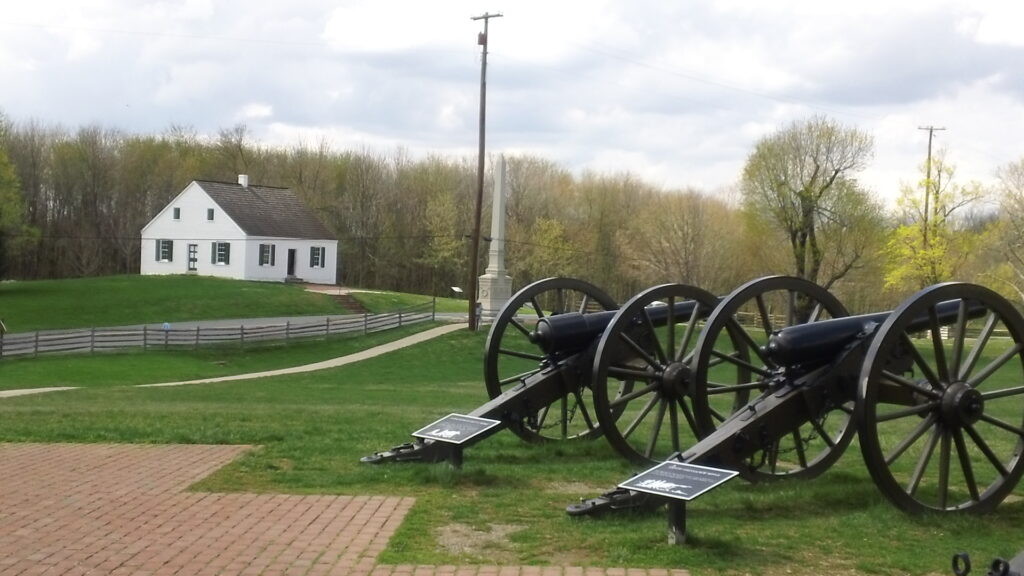
At the battle of Antietam, the Iron Brigade had some 348 soldiers killed, with having the 6th Wisconsin losing 150 of their 280 soldiers. Their fight at Antietam mainly consisted within the Corn Field and near the Dunker Church. The 24th Michigan did not participate at Antietam.