
Prior to the battle of Gettysburg, the town itself had to develop. With the town increasing in size during the late 1700s and early 1800s, land tracts, villages, and commissions were built. In 1760, Irishman Samuel Gettys settled in western York County and established a tavern. His son, James Gettys, purchased 116 acres of land, divided it up into 220 lots and sold them around town. Thus, many citizens believe he was the founder of Gettysburg. The Dobbin House Tavern which was established in 1776 sits at the southwest corner of the lots. On January 22, 1800, Adams County was created, with Gettysburg being the county seat.
Jumping ahead to 1858, the Gettysburg Railroad was completed from town to Hanover, with the Railroad Depot located on Biglerville Road opening in 1859. With the development of the railroad, the population increased in Gettysburg. In 1860, there was approximately 2400 citizens around town consisting of 450 buildings which housed carriage manufacturing, shoemakers, tanneries, churches, and houses.
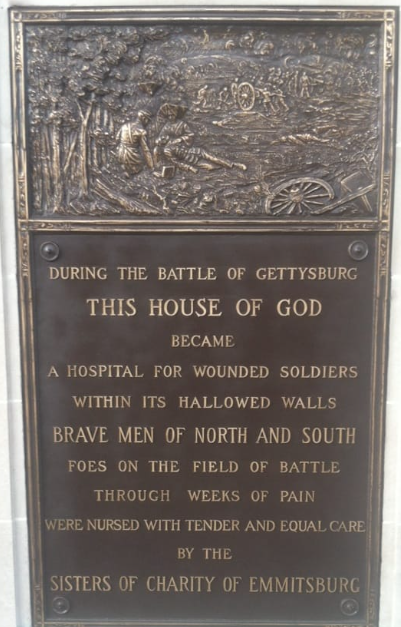
Multiple descendants were arriving into town from around the East Coast and immigrants from Ireland, Poland, Germany, and elsewhere. Churches were being built around town to serve as a meeting place to serve and live in faith, love, and supporting their community. Eight churches were within the borough limits: two Methodist, two Lutheran, and two Presbyterian churches, and one German Reformed and one Roman Catholic church. Churches were part of the social calendar and the pastors encouraged people to help other fellow residents and keep the sense of community together.
These churches were all hospitals after the battle of Gettysburg. They didn’t have services because of the wounded soldiers within the walls of the Church. Residents weren’t doctors, but they helped out as much as they could by gathering food, supplies, and saying prayers and writing letters to their loved ones.
Here are some of the stories and history from the churches that served as hospitals to help tend their wounds.