
Lydia and her husband moved to Gettysburg in 1850 with their family. Luckily, the house they moved into was fairly new. The land under the house was bought by a Thomas Nolan around 1840, and the property then sold again to a Henry Bishop in the same year. Henry built a house that is seen on the battlefield today, along with the barn and was then sold to Lydia in 1850/1851. Her husband suffered from tuberculosis and he passed away in 1859.
Lydia and her children were at the farmstead during June 1863. They knew that the Civil War was raging and that there was talk around town that the Confederates were approaching their lovely town. Lydia was nervous about her farm that contained 10 acres of land, a well and spring, along with healthy apple and peach trees. When the Union approached the town on June 30th, Lydia and her children were still in the house watching the Cavalry travel along the muddy roads towards town. A day later, the same Union forces told her that she had to vacate her home because of the closeness to the cannon-fire from the Rebels just over Cemetery Ridge and be used by Union commanders as a headquarters.
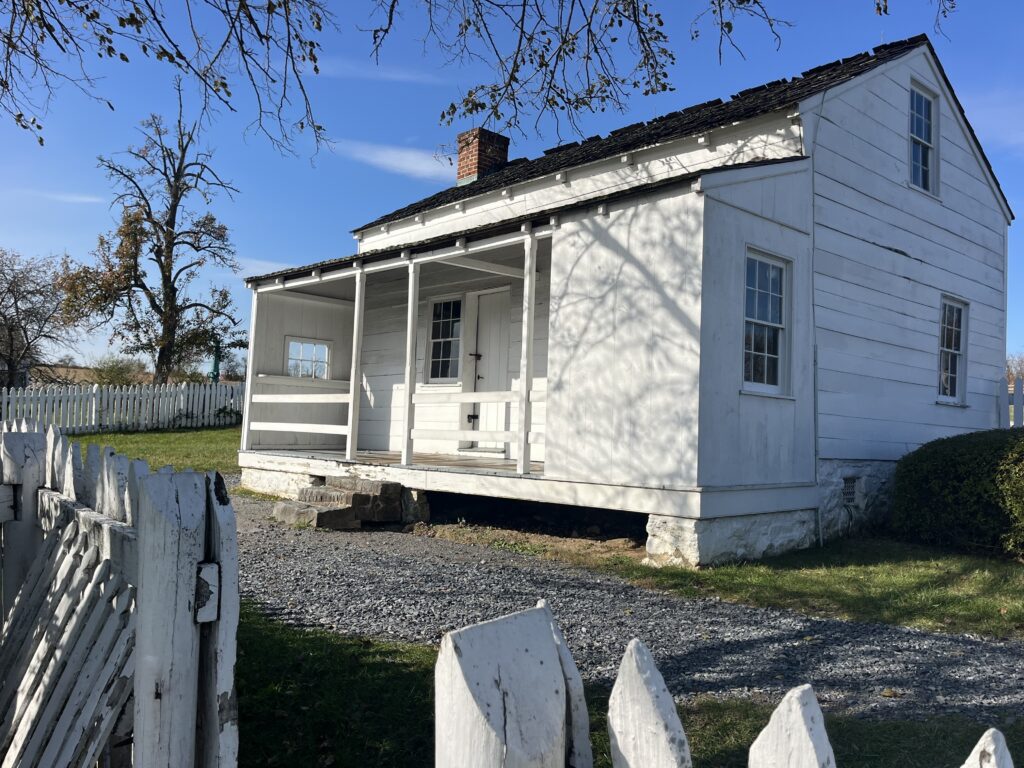
The perfect place for a headquarters might I add. Along with being near the concentration of Union soldiers, the headquarters was in a small valley and along a major pike that could transport soldiers, supplies, and wagons. Plus, it was “under the cover” within the landscape that the Confederates across the fields could not see their actions or numerous amount of supplies and thousands of soldiers.
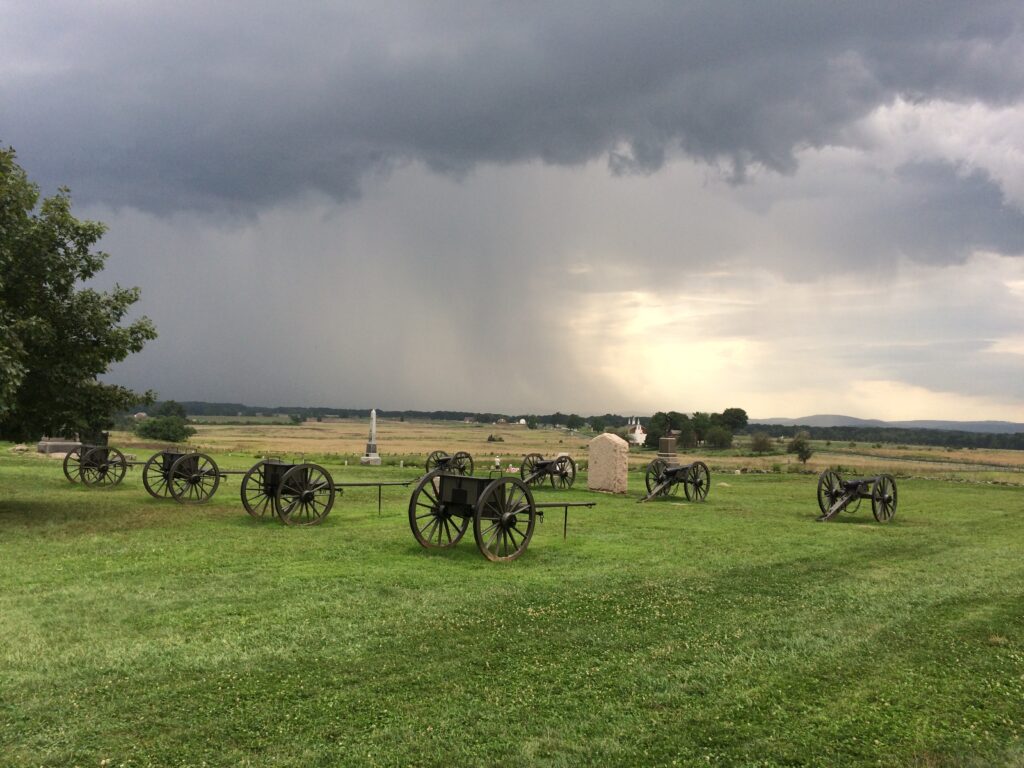
Meanwhile, over the ridge, the soldiers were preparing for battle against the Confederates and placing the artillery. They would point the cannons and place the soldiers along Cemetery Ridge before reaching the Emmitsburg Road.