
The 24th Michigan is one of the five regiments that consists of the Iron Brigade. The headquarters for the 1st Corps command under Major General John Fulton Reynolds who commanded the left wing of the Union Army, which consisted of the 1st, 3rd, and 11th Corps. The 1st Corps was just north of the Mason-Dixon line. (black flag in Pennsylvania) Meanwhile, the 11th Corps was near Emmitsburg and Mt. Saint Mary’s, and the 3rd Corps was near Manchester, Maryland.
There were three divisions within the 1st Corps in Pennsylvania. They are the following:
- 1st Division – Commanded by Brigadier General James Wadsworth
- 1st Brigade (Iron Brigade) – Commanded by Brigadier General Solomon Meredith
- 24th Michigan – Commanded by Col. Henry A. Morrow
- 2nd Division – Commanded by Brigadier General John C. Robinson
- 3rd Division – Commanded by Major General Abner Doubleday
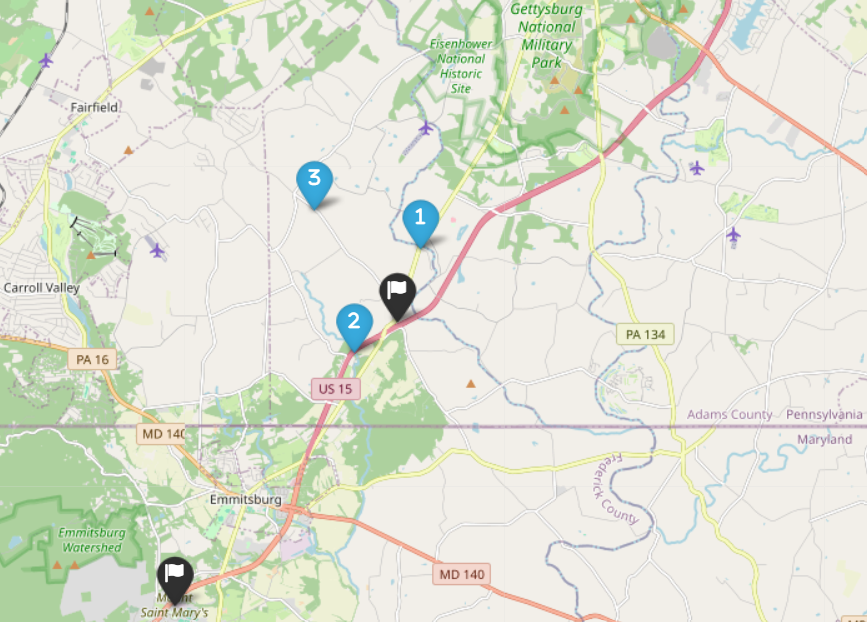
Even though the Iron Brigade was the name for the “Black Hatted” soldiers who fought strong like iron in previous battles, there were other nicknames for the regiments of the Iron Brigade. They are the following:
- 2nd Wisconsin – Raggedy Assed
- 6th Wisconsin – King’s Babies
- 7th Wisconsin – Huckleberry’s
- 19th Indiana – Swamp Hogs
- 24th Michigan – Featherbedders (Brand new fancy uniforms)
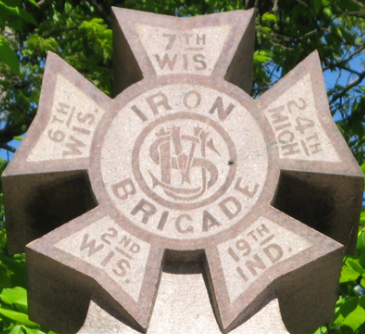
The 24th Michigan had another name for them. They were a regiment of Brothers. In fact, the regiment had over 135 sets of Brothers. A set of brothers could have been 2, or 3, or even 5 people that were related to each other. If a set of brothers passed during the Civil War, that could have been a “generational” loss to their community, family, and future lineage.
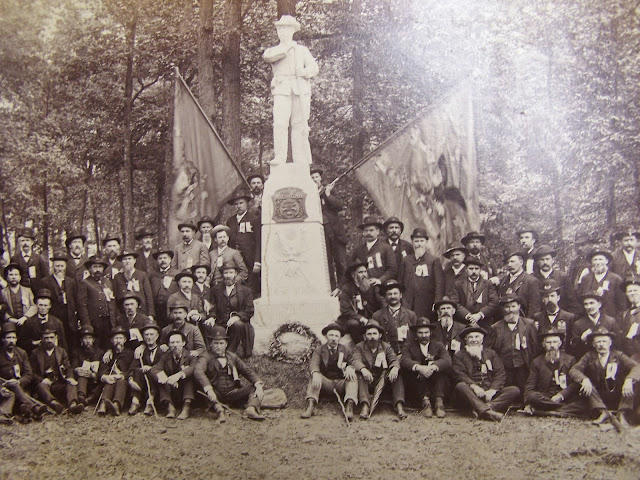
Of the Iron Brigade, the 24th Michigan was the largest of the brigades with approximately 765 soldiers and officers. They rushed from the Seminary across the fields of battle into the mix with the Confederates along Willoughby Run along McPherson’s Ridge. Most of the Iron Brigade rushed to the right, while the 19th Indiana and the 24th Michigan went off to the left. For most of the morning, they were the extreme flank. Col. Morrow wanted to reposition, but was denied, so they had to “hold at all costs”. They rushed towards the 26th North Carolina, and fought against them.
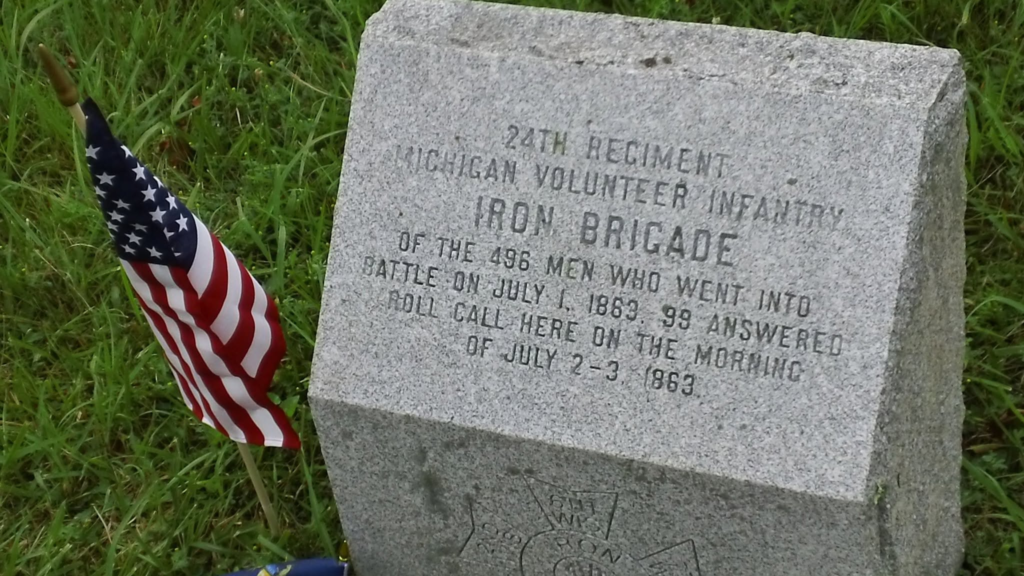
By the evening, the picture shows the gravity of the battle. Colonel Morrow was even captured, but was reclaimed on July 4th. While captured, he was able to converse with Confederate officers. They had mentioned that the Lieutenant General A.P. Hill had said that the Iron Brigade and the 24th Michigan that “he had never known the Federals to fight so well.”