
This battle that occurred in Virginia was considered one of General Robert E. Lee’s greatest battles. According to the historians, this was the fifth deadliest battle of the Civil War. However, even though this battle was a complete success against the Union, it came with a cost. General Stonewall Jackson, Lee’s right hand man, was mortally wounded by friendly fire on the evening of May 2nd.
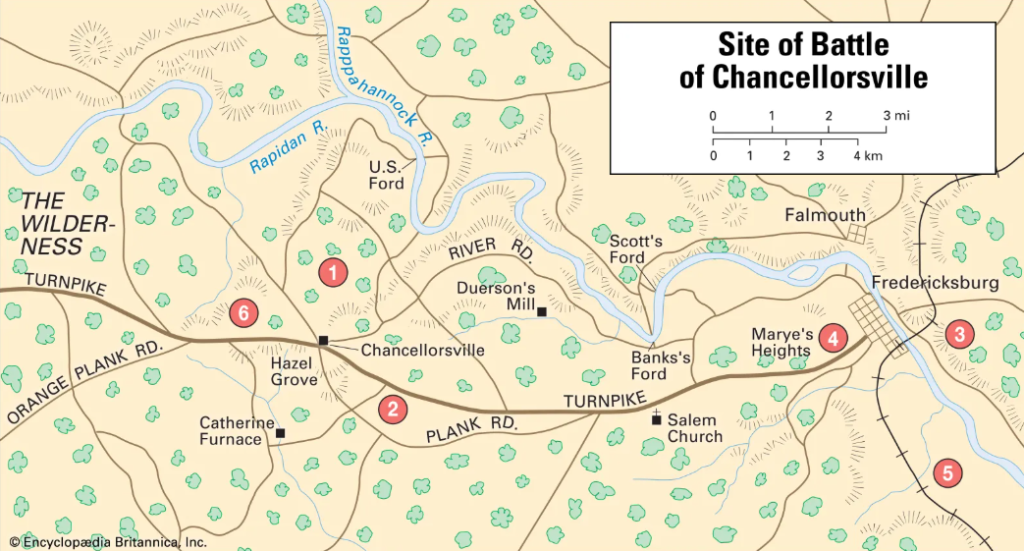
Overall at Chancellorsville, the Union army had around 97,000 soldiers with 1700 being killed, 9700 wounded, and 6000 soldiers were missing. On the other hand, the Confederates had around 57,000 soldiers, approximately 1725 killed, 9200 wounded, and 2500 missing. Across this battlefield, there is more signage and wayside markers than monuments.
The grand plan that Lee and Jackson developed was to attack the Union’s right flank. Lee had approximately 13,000 soldiers and a huge artillery battalion, while Jackson had nearly 28,000 soldiers and had to march twelve miles out of view behind the Union lines.
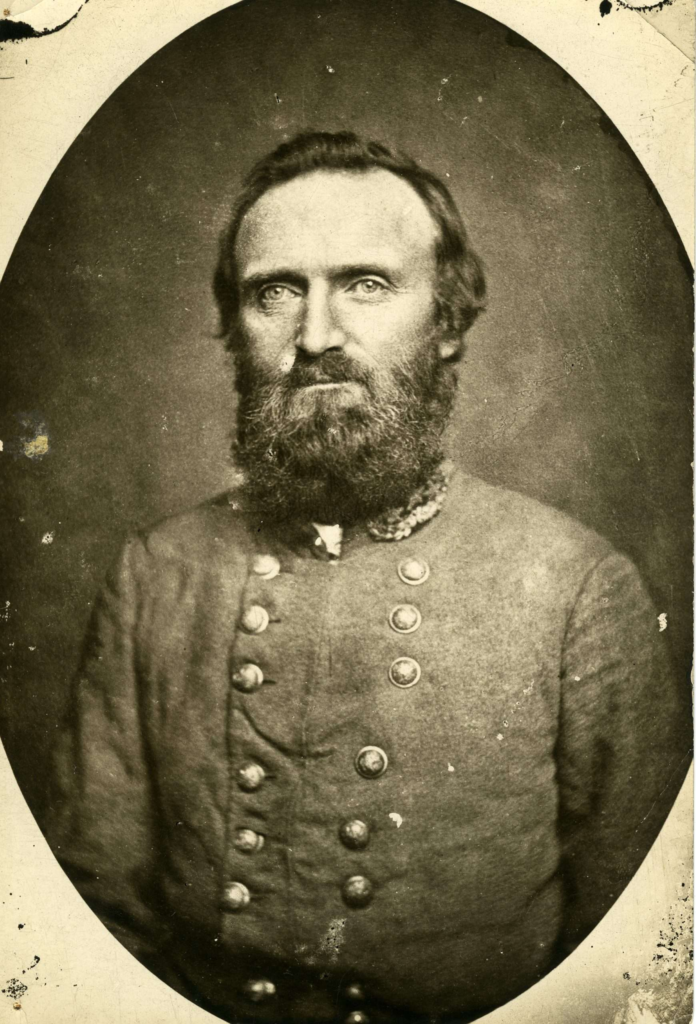
The attack began around 5 p.m. on the afternoon of May 2nd and attacked the 11th Corps, which was commanded by Union General Oliver O. Howard. As I have mentioned within the first day battle in Gettysburg, the 11th Corps were called the “Flying Dutchmen”. This is where they obtained that nickname. The 11th Corps were surprised attacked by the Confederates and fled more than 2 miles before General Hooker dug in and awaited the Confederates near the Chancellor’s House.
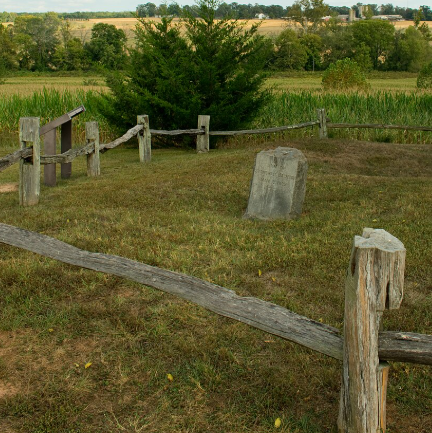
Darkness fell and around 8 p.m. General Stonewall Jackson and his commanders on horseback were possibly near enemy lines. They were unsure about their location of their troops and the enemy. The 33rd North Carolina skirmish line fires into the group. Jackson is hit three times: one in the right hand, the second in the left shoulder blade, and the other in the left elbow. Jackson’s horse runs off and Jackson is put into a stretcher and taken to a field hospital. During the shooting and the field hospital, Jackson would fall off the stretcher three times, and have bandages on his shoulder and elbow. His own physician, Hunter McGuire, would see Jackson in the field hospital. On the morning of May 3rd, his left arm was amputated. From the bullet that was taken out of his amputated arm, it was a smooth-bore bullet, which came from the 33rd North Carolina regiment. Around the same time, General Robert E. Lee learns that Stonewall Jackson was shot.
Robert E. Lee was quoted as saying, “He has lost his left arm, but I have lost my right.”