
After the formation of the Stonewall Brigade in July 1861, his fighting soldiers were one of the best brigades of the Confederate and Union forces. Each battle that the brigade fought in was a success and a win for the Confederacy. The soldiers knew their role within the battle, fought like it was their last day on earth, and wanted to surpass the Generals order to attack the enemy with the most vigorous amount of strength and effort to win without cause. With Jackson being promoted in the Fall of 1861, he was re-assigned to the Shenandoah Valley and Potomac River region, thus taking control of the northern theater within the eastern battles.
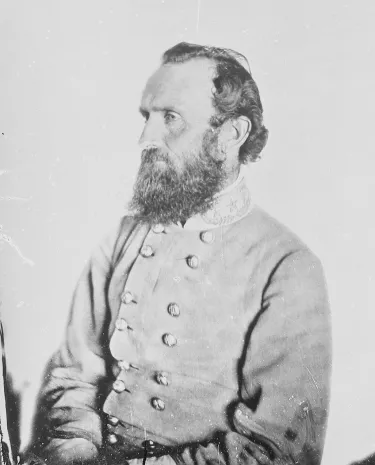
Lt. General T. J. “Stonewall” Jackson
However, even though Stonewall was in charge of the Corps, he still insisted on hearing about the success of the Brigade he formed. The Stonewall Brigade fought in the following battles from the Fall 1861 through March 1862. Here are some of those battles:
- Second Battle of Bull Run – 1st Brigade, 1st Division under Jackson
- Battle of Antietam – 1st Brigade, 3rd Division under Jackson
- Battle of Fredericksburg – 1st Brigade, 4th Division under Jackson, 2nd Corps under Jackson
- Battle of Chancellorsville – 1st Brigade, 4th Division under Tremble, 2nd Corps under Jackson
- Battle of Gettysburg – 2nd Brigade, 2nd Division under Johnson, 2nd Corps under Ewell
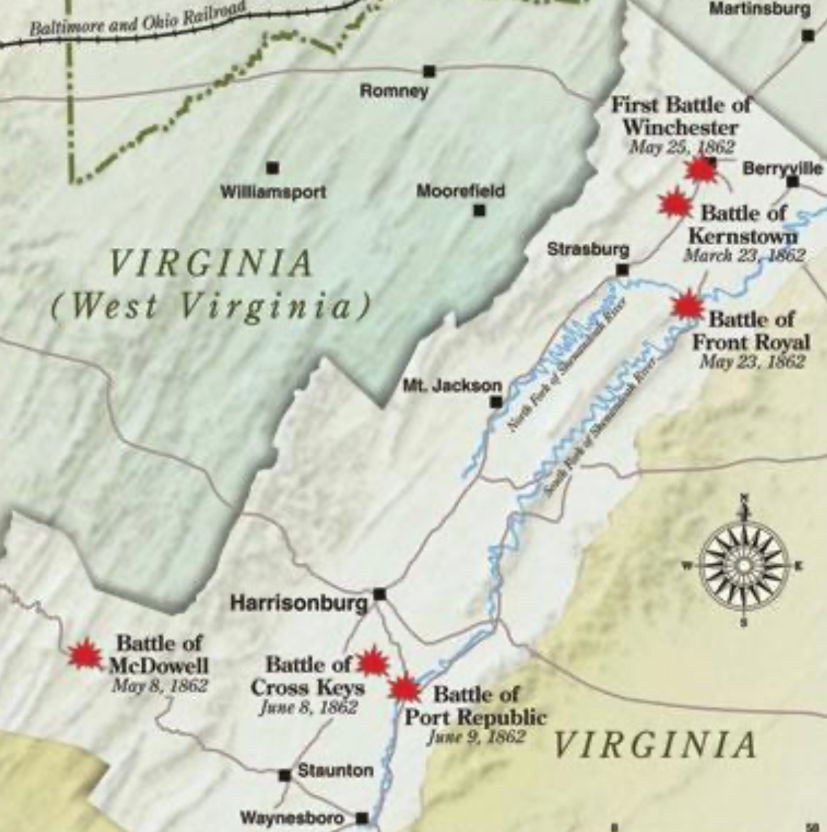
Between the battle of Kernstown in March 1862 and the battle of Winchester in May 1862, Stonewall Jackson headed home to see his wife. From that visit home, his wife Mary Ann became pregnant. Stonewall would make it back for the huge success at the battle of Winchester where his army corps surrounded the Union troops. At the beginning of the battle, Stonewall Jackson had approximately 16,000 soldiers at his disposal while the Union commander Nathaniel Banks had a small group numbering 6500 soldiers. In the end, the Confederates had a huge victory losing only about 400 men, while the Union lost over 2000 men.