
A well spoken man of faith, Thomas Jonathon Jackson was born in West Virginia in the early 1820s. His childhood was extremely terrible with this parents dying due to extreme poverty. Thomas dealt with the same extreme poverty prior to being adopted by his uncle. As he reached adulthood, he applied himself to join the United States Military Academy at West Point. He graduated 17th in his class of 59 students in 1846. After fighting the Mexican War, he became a professor at Virginia Military Institute (VMI) with interests in art and culture and taught between 1851 and 1861.
Prior to the Civil War, Thomas J. Jackson married Eleanor “Ellie” Junkin in 1853. She brought a huge source of happiness to Mr. Jackson as they were married. They became pregnant soon after, and sadness hit the family. During childbirth, their son was stillborn and Eleanor died due to complications with the pregnancy on October 22, 1854. To escape the grief and sadness, Thomas Jackson high-tailed it to Europe by steamship in July 1856.
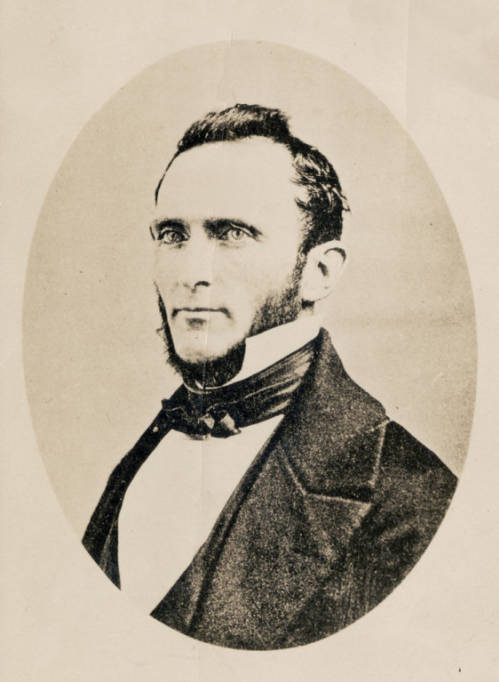
Upon returning back to Virginia Military Institute, he met a young woman Mary Ann Morrison. She grew up on a plantation in North Carolina. Her sister introduced her to Thomas Jackson and they married in the front parlor of the Cottage House on July 16, 1857. With being from the South, Mary’s father gave them three slaves for a wedding present. Sadness happened again in 1858 with their first daughter being born in February. She wasn’t healthy since birth and died three months later in May 1858.
At the start of the Civil War, the cannonade at Fort Sumter, South Carolina, occurred in April 1861. A month later, in May, Virginia seceded from the United States. He was ordered to take command at Harpers Ferry in late April. Due to his professionalism as a professor at VMI, he quickly rose up in the ranks and assembled his famous brigade called the “Stonewall Brigade”. This brigade consisted of the men that joined the Confederate Army from the Shenandoah Valley from the 2nd, 4th, 5th, 27th and 33rd Virginia infantry regiments. Jackson was known for drilling his soldiers relentlessly and teaching them discipline and being very faithful to the bible. Less than three months from joining the Civil War, he was promoted to Brigadier General in July 1861.
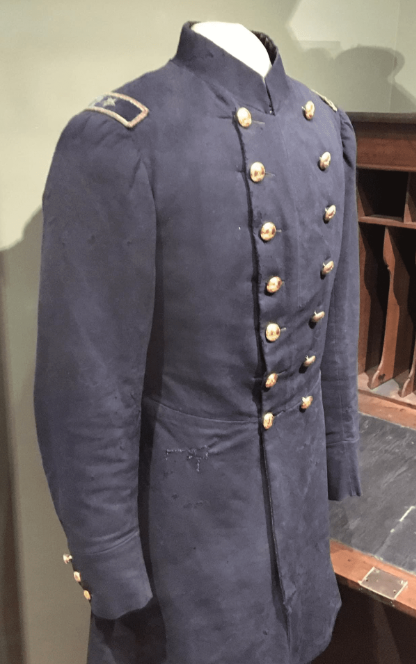
Jackson continued to wear a blue United States Army uniform up to this point, having only access to his old VMI major’s jacket, and would not be issued with a gray Confederate uniform until 1862.