
The battle of Gettysburg is finally over! The Confederates are leaving the western portions of the battlefield and heading towards Fairfield, Cashtown, and Chambersburg. However, the wounded from both armies litter the field along with their dead. The dead can be smelled before seen through the streets and alleyways of town, the battlefields, and around the local farms. Families that took shelter or avoided the town are slowly making their way towards town and probably seeing the aftermath of the dead, the things left behind such as knapsacks, muskets, wagons, and other ineffective materials. As the Thorn family returned towards the Gatehouse, they hoped for the best that their home was intact.
On July 7th, three days after the battle ended, the Thorn family returns home. Their home is not what they left it in. Their bed linens are covered in blood from the wounded soldiers, their chest of fine blankets and clothes are torn up in shreds for bandages, their furniture smashed or broken to make more room for wounded soldiers arriving. The found that the water pump was broken outside the back door. There were mounds of make-shift graves for at least fifteen soldiers near the same pump shed. In simple terms: It was hell on earth to them!
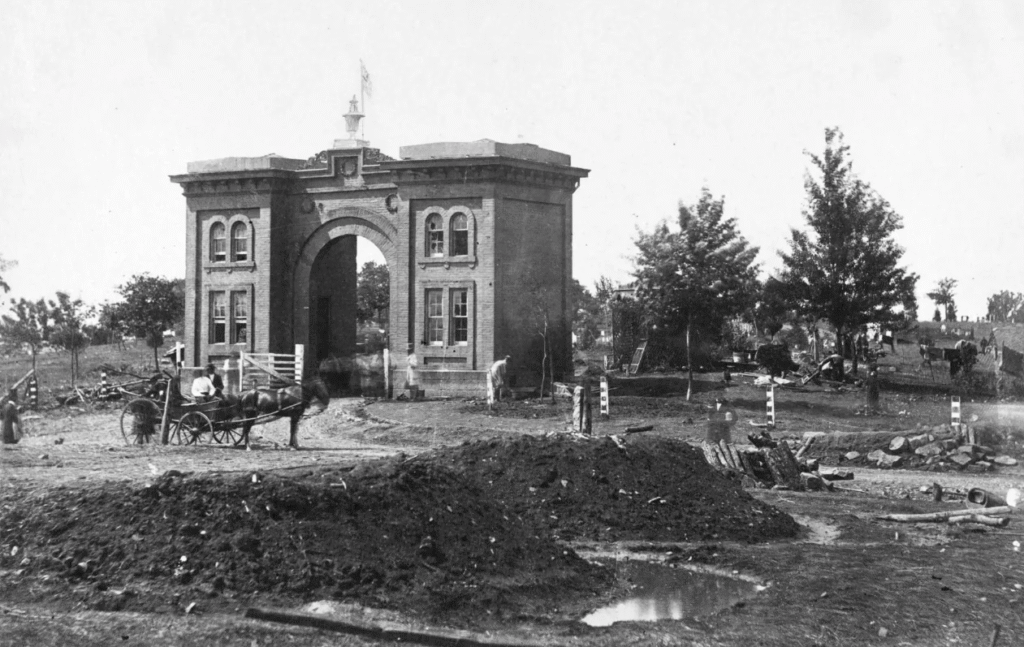
Elizabeth was still the caretaker of the Evergreen Cemetery since her husband was still away and fighting elsewhere. She had a message from Mr. McConaughy, who was the president of the cemetery, that she should, and he quoted “Hurry on home (which was the Evergreen Gatehouse and grounds), there is more work for you than you are able to do”. In total, there were 34 dead horses that strummed the grounds adjacent to the cemetery, along with several tens of soldiers. The mounds of dirt that are in front of the dirt road with the horse and wagon on it are not burial graves. These mounds are called “lunettes”. These lunettes are a semi-circle around for the cannons to hide in and not be exposed to open musket fire from the enemy approaching.
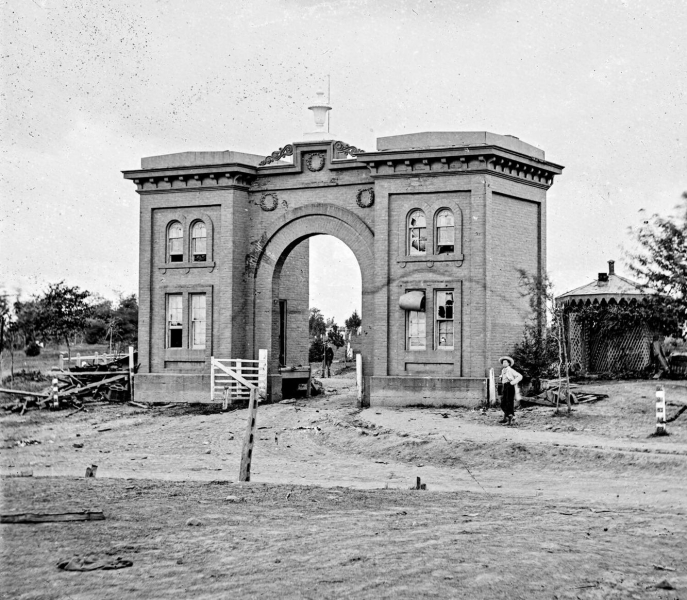
The little shed that’s behind the man standing next to the Evergreen Gatehouse is the pump shed. Behind that would be the graves of at least 15 soldiers. In between the archway of the Gatehouse in this picture, you may have to zoom in, but it’s a soldier standing on guard. You can also view that most of the windows have been blown out by gunfire or cannon fire explosions. The results of blown out windows are the following: bugs and flies flying around inside and out with the smell of the blood and the stench of the bodies, the heat and humidity making everything sticky, the rain blowing into the house during thunderstorms. The good news with the windows being blown out: new windows and the wind blowing the stench in or out.
In the end, Elizabeth enlisted through the telegraph system to have helpers to dig graves in the cemetery. Only two would show up to help her and her father dig the graves. One of the two persons lasted two days and then the other one lasted five days. When the second person left, there was 40 graves dug. Three weeks after the battle, there were 91 graves dug for soldiers who died during the battle. Even with dealing with the soldier graves and regular graves of citizens of town needing to be buried, Elizabeth was paid the normal rate for the month: 13 dollars!
The Thorn family stated to the United States War Department that they had about 395 dollars of damages from the battle, whether if it was linens, furniture, food, or animals that were taken. They got more than most, but they had to wait twenty years to receive it. They obtained forty one dollars in compensation.
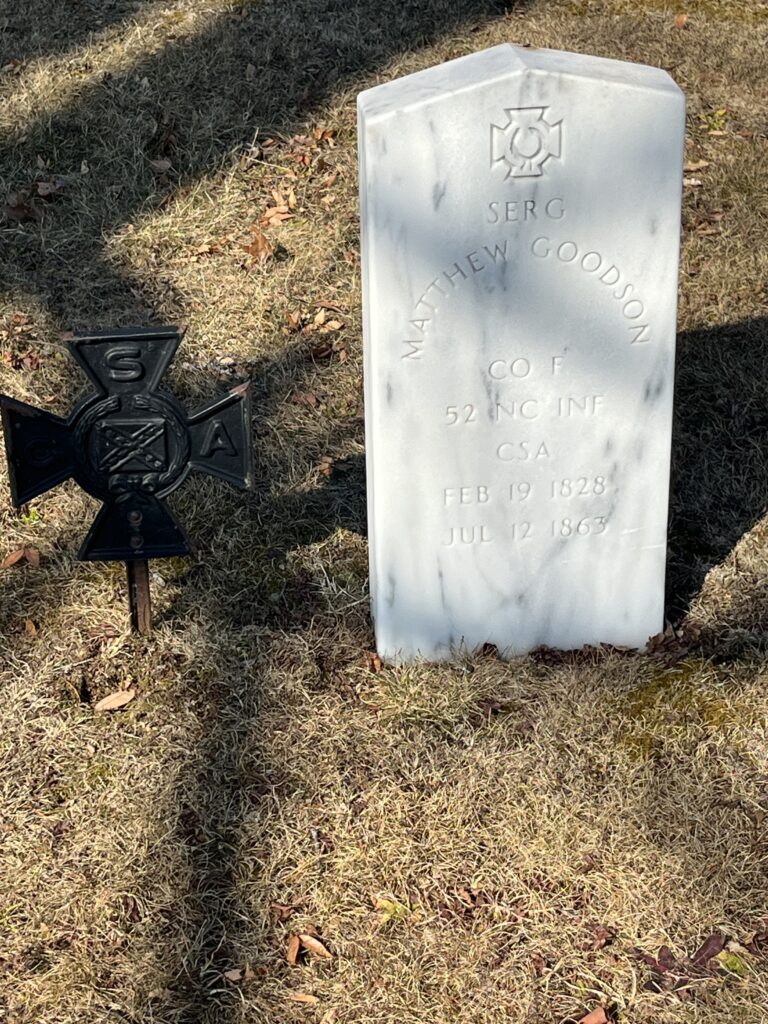
There is one folk-lore of Union and Confederate graves and that is evident with Evergreen Cemetery as well. There are two Confederate graves that Elizabeth Thorn and her father dug and buried. Their gravesites are shown here.
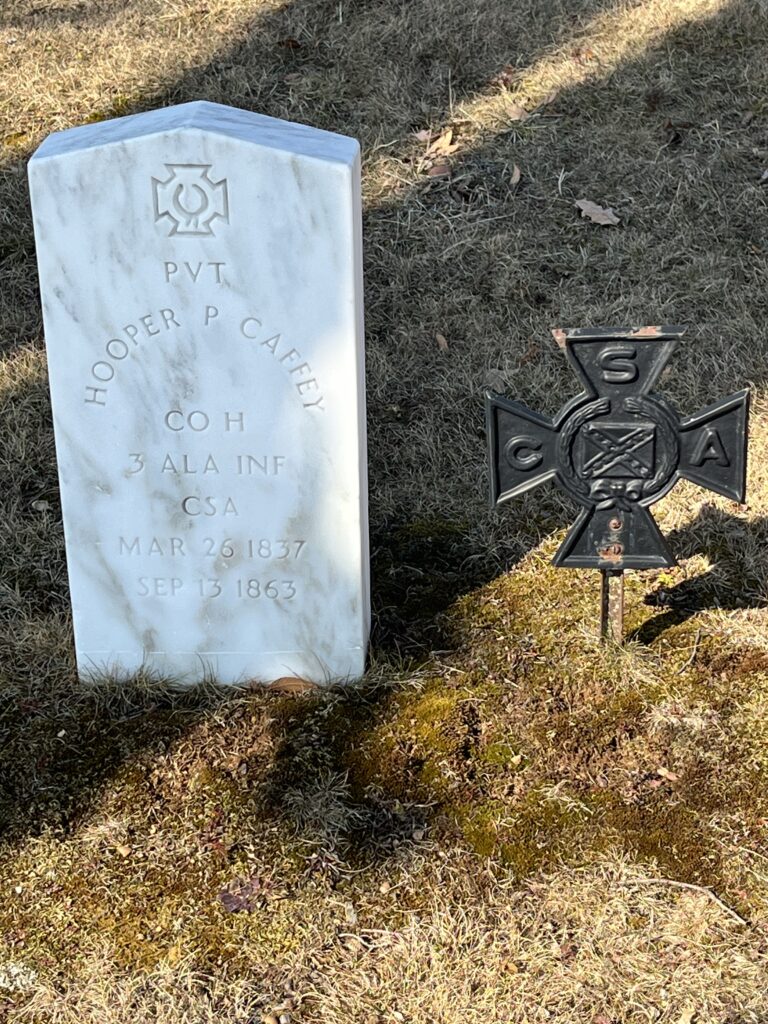
The Union graves shown here in the row behind them are round at the top. The Confederate graves are pointed at the top. The folklore states that the Confederates didn’t want anyone to sit on their graves, so they had them pointed.