
Skip to content

Gettysburg Chronicles

History Explained

  • Home
  • Gettysburg
    • History of Adams County
    • Call to Arms
  • Tales to War
    • July 5th: Tillie Pierce Tale
    • 57th Pa.: Letter to Mother
    • 24th Mich.: Abel Peck
    • 24th Mich.: Charles Bellore
    • 1st Rifles: Colonel Taylor
  • Confederate
    • South Carolina
    • Mississippi Monuments
    • Florida’s Involvement
    • Spirit of Alabama
    • Georgia – The Peach State
    • Louisiana Secedes
    • Lonestar State
    • North Carolina
    • Virginia Secedes
    • Arkansas
    • Tennessee – Last to Join
    • Maryland – Border State
  • Union
    • First Shot Marker
    • Michigan Joins
      • 24th Michigan Joins Iron Brigade
      • 24th MI Prior to Fredericksburg
      • March to Gettysburg
      • Farnsworth’s Last Ride
      • “Come On You Wolverines”
  • Artillery
    • Different Ammunition
    • Real vs. Fake Cannons
    • Six Pound Shot Cannon
    • Cannons at Devil’s Den
  • Civil War Locations
    • Crampton’s Gap, Md.
    • Fox’s Gap, Md.
    • Turner’s Gap, Md.
    • Andersonville, Ga.
    • Navy – Hampton Roads, Va.
  • Photographs
  • Abraham Lincoln
    • Lincoln Visits Antietam
    • Emancipation Proclamation
    • John Wilkes Booth
    • The Kidnapping Plan
  • Anniversaries
    • Battlefield Walks
    • 150th Anniversary – 2013
    • 152nd Anniversary – 2015
    • 157th Anniversary – 2020
    • 158th Anniversary – 2021
    • 162nd Anniversary – 2025
  • Buildings
    • Local Churches
      • St. Francis Xavier Church
    • Sach’s Bridge
    • Weikert Family Farms
    • Farnsworth House
    • Soldier’s Orphanage
      • Brickyard Fight
      • 154th New York
      • Amos Humiston
      • Rosa Carmichael
    • Winebrenner History
    • Welty House
    • Cashtown
      • July 1863 in Cashtown
      • Cashtown: Since 1863
  • Families
    • Thorns
      • Evergreen Cemetery: August 1862 to June 1863
      • Gettysburg: June 26, 1863
      • Evergreen Gatehouse
      • Thorn’s Family Tree
      • Descendants of the Thorns
      • Aftermath of Battle
      • Thorn Important Locations
    • Wade Family
      • Thaddeus Filby
      • Rise of the Captain
      • Trouble with the Law
      • Jennie Wade
      • Newspaper Articles
      • Gravesites of Jennie Wade
      • Samuel and Harry Wade
      • James John “Jack” Wade
    • Georgia McClellan
      • Extended McClellan’s
      • Iowa Family – Lewis
      • World War II POW
      • Jennie Wade McClellan
      • Nellie McClellan
      • John McClellan
    • Jim B. McClellan
    • Pierce Lineage
      • McCurdy to Pierce Tree
      • James Shaw Pierce
      • William H. Pierce
    • Tillie Pierce
      • Last Week of June 1863
      • Tillie’s Accounts – July 1st
      • Wounded Everywhere
      • Hospital – Pierce House
    • Garlach Family
      • Soldier Hiding with Pigs
      • Anna Garlach
    • Shriver Family
      • Weikert’s Connection
      • Union Calvary Disaster
      • Father’s Death
      • Henrietta’s New Life
  • Railroads
    • G&H Railroad
    • Western Maryland Railroad
    • Location of the Spur
    • Gettysburg Electric Trolley
    • Trolley South of Town
    • Railroad to Round-Tops
  • Paranormal
    • Paranormal Equipment
    • Spirits at the Cashtown Inn
    • Pictures on the Bridge
    • Live: Sachs Covered Bridge
    • Haunted Orphanage
    • Spirits at the Farnsworth
    • Spirits at Tillie Pierce Inn
  • Questions
  • Toggle search form

Winebrenner History

Anyone that visits Gettysburg present day, you walk through history along Baltimore Pike. As you walk south and head over the hill, you come across multiple buildings that were here during the Civil War. One of these houses is a relaxation place on hot days if you need a drink or an ice cream cup is called Mr. G’s Ice Cream Shop. However, during the time of the 1860s, it was called the John Winebrenner House and Tannery. John and his family lived within the house, but worked behind the house in a tannery building. Let’s talk about the history of the family, the battle, and afterwards.
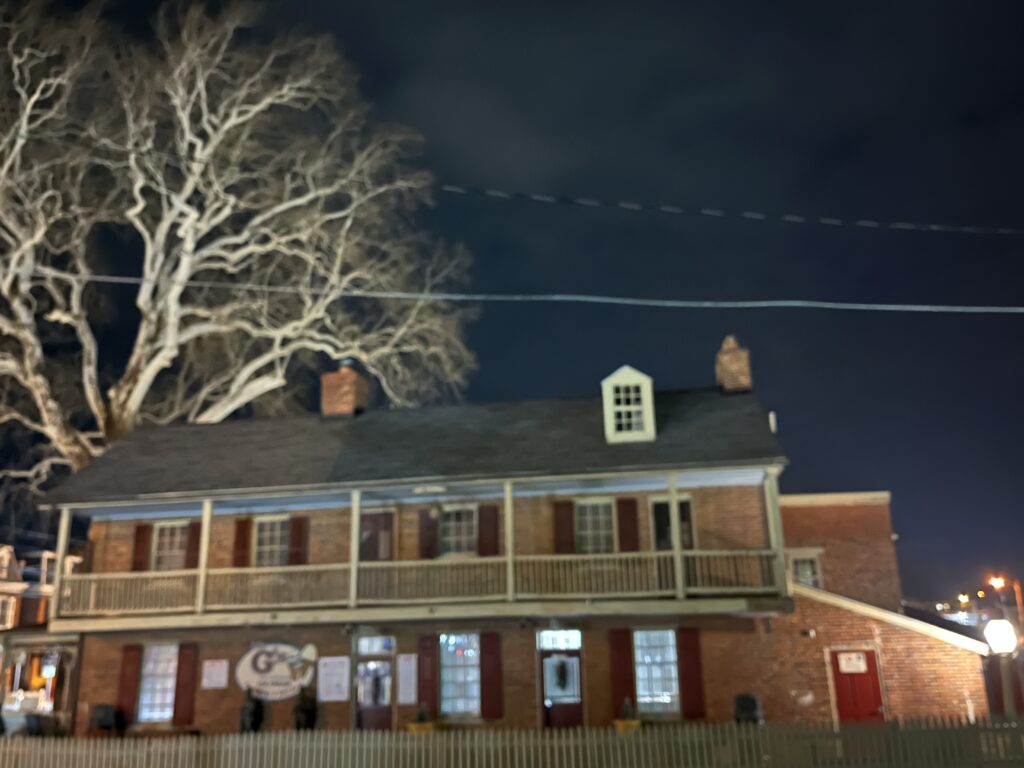
Winebrenner House – December 2025

The building was built by Mr. George Heck around the year 1825. The Winebrenner House was also called Twin Sycamores since there were two huge trees on either side of the front of the building. Sadly, only one remains since the other was taken down in the early 2000s due to the electrical lines nearby. However, there are two sycamores that remain along the road. One is in front of Mr. G’s Ice Cream shop and the other is across the street in the local park. There was a small stream behind the house that was called Winebrenner Run in 1860 that was above the ground. During the time prior to the battle, a young family was living in the building and running a tannery out back. A tannery was a process that treated skins and hides of animals that produced leather.
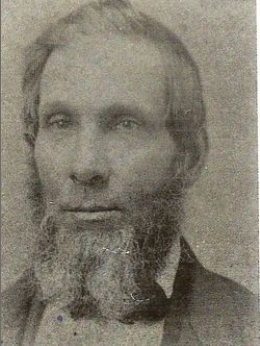
Courtesy of picture:
Find a Grave

John Winebrenner was born in 1816. His future wife, Hannah was born in 1817. The amazing thing is that Hannah’s father, Jacob, was a veteran of the War of 1812, and that the family received a pension due to his service. Hannah’s father would pass away after the Civil War in 1873. Hannah and her husband John would have two daughters. Emma would marry a month after the Civil War began and he graduated from Pennsylvania College (know known as Gettysburg College) and the in the Lutheran Seminary. Her husband was Reverend Mahlon C. Horine.
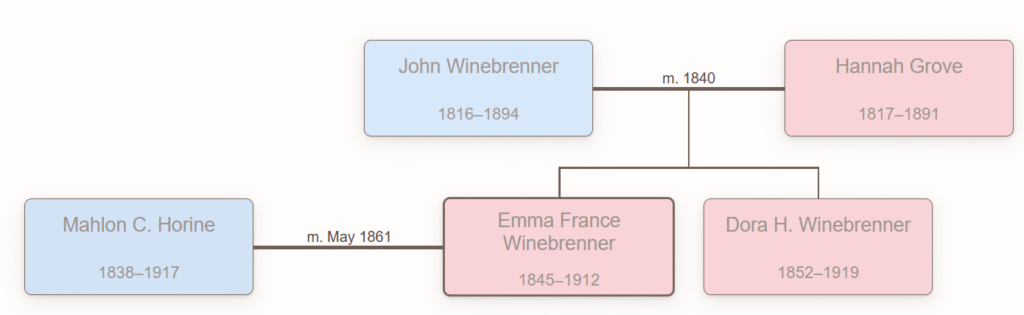
Created by Family Echo

As the battle started in Gettysburg, the immediate family gathered in the basement of the Winebrenner House on Baltimore Street. At the time, one of Mahlon’s fellow friends within the Seminary needed a place to shelter. He was allowed to stay with the Winebrenner’s during the battle of Gettysburg. His friend, Martin Luther Culler (1839-1925) left detailed accounts of their experience about the battle. Some of those accounts will be mentioned later within Civilian Accounts. All the members of the family would stay in the basement for 4 days and come out to help Union wounded soldiers after July 4th.

Some battle scars are within the southern portions of the building, mainly on the second floor. The reason for not having scars on the first floor is that the McCreary House was across the street sheltering the first floor from battle wounds. However, there are some, but not as much as the Farnsworth House across the street. The McCreary House was still standing in 1890, but was demolished in the 1900s, and is now the Unity Park across the street from Mr. G’s Ice Cream.

@ 2026 Gettysburg Chronicles

Powered by PressBook WordPress theme