
The Civil War was against the North and the South. Infantry walked thousand of miles from Pennsylvania to Florida and from the Atlantic Ocean to eastern Kentucky over and over again. However, it wasn’t just the infantry doing the fighting on the ground. There was also battles on the water that prevented trade routes to enforce the Confederates with goods and supplies from Britain or from other states. Naval battles occurred near the port cities near Norfolk, Baltimore, Savannah, Charleston, and New Orleans. Some cities, like Norfolk, had Union and Confederate ships fighting each other to control the waterways.
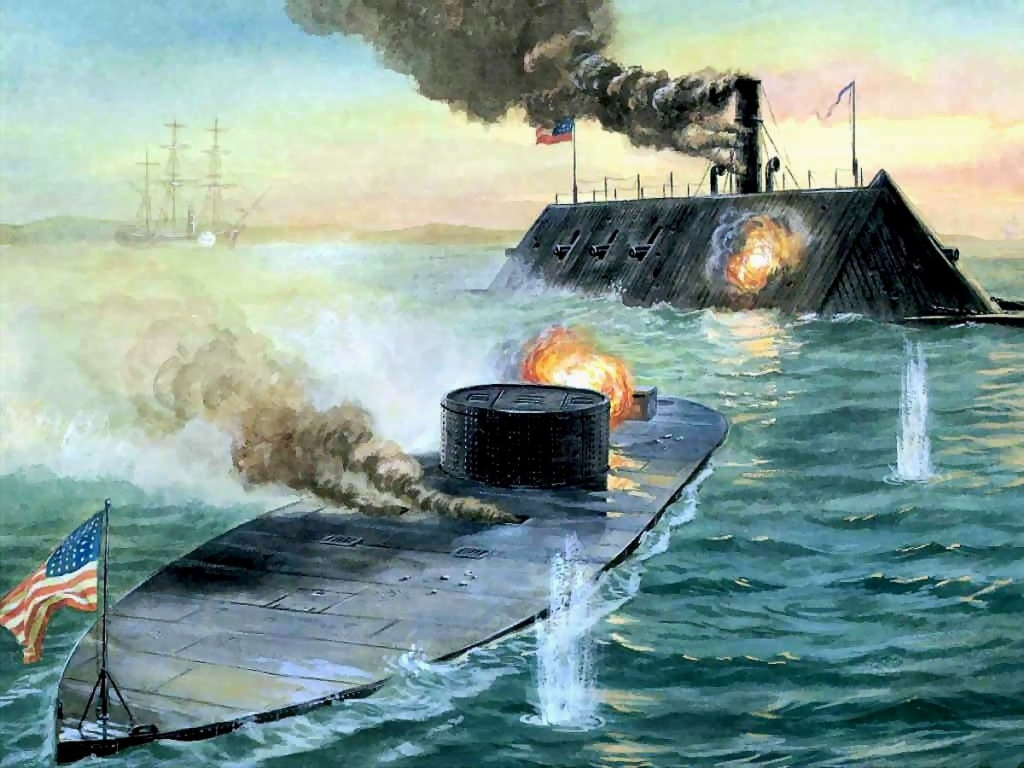
In the Battle of Hampton Roads, the ironclads of the CSS Virginia and the USS Monitor happened for first and only time between the two ships. The battle lasted four hours and it was a draw. It was the first fight for any ironclad to fight with a rotating turret. Luckily, the USS Monitor was able to use this advantage and shoot more often at the CSS Virginia since it also had a shallow draft, unlike the Confederate ship.
The USS Monitor had a draft of 10 feet, while the CSS Virginia had 22 feet. Both were a problem for each ship for different reasons. Two months after the Battle of Hampton Roads, Union troops and the U.S. Navy advanced on occupied Norfolk. The Virginia was steam-powered and was not able to enter into the Atlantic Ocean even though it could pass through the Union blockade. They could have escaped the enemy forces, but the James River was too shallow for it to pass. Even after dumping most of the coal and supplies into the river, it was still not enough to move northward. Therefore, the new caption of the USS Virginia ordered her destruction and was destroyed by scatting gunpowder and cotton on the ship’s deck. On May 11th, the fire reached the ironclad’s magazine and lead to a massive explosion and the ship sank in approximately 30 feet of water.
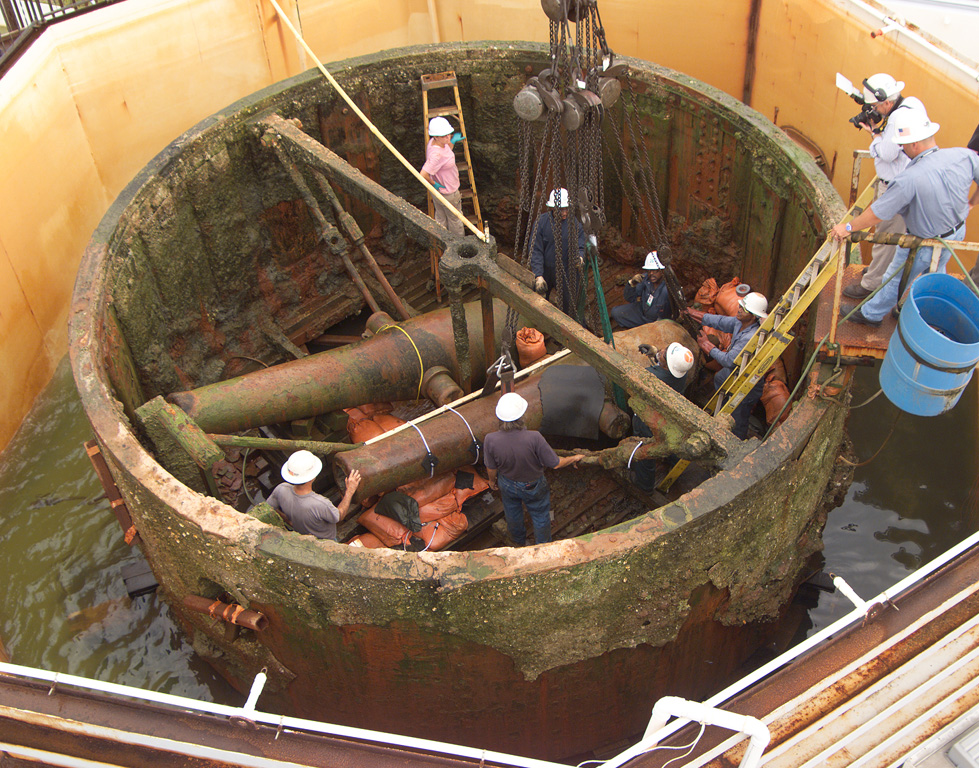
On December 30th-31st, 1862, the USS Monitor along with the aid of a tug, the side-wheeler frigate USS Rhode Island, was rounding Cape Hatteras in the Atlantic Ocean as a storm lashed it’s decks. The storm increased in intensity and it started to leak and take on water. It pitched and rolled in the swells and after awhile, sank to the bottom. Luckily, the USS Rhode Island was there to pick up as many survivors as they could, but sadly 16 sailors lost their lives and it sank into 230 feet of water.
When the turret was raised to the surface in 2002 and placed in a local museum to be studied and preserved, they found two of the sixteen inside the turret. Both of them along with a military honors for the others were given within Arlington National Cemetery. They are located near the gravesites for the Space Shuttle Challenger and Columbia.