
One of the more famous monuments at Gettysburg isn’t on the Union side of the field, but on the Confederate side. This monument shows the earth-shattering look of soldiers that may have been looking onto the field during the battle in the midst of smoke, gun-fire and or cannon fire around them, gathering the courage to push forward. This monument is along West Confederate Avenue where there is three monuments around it. One of the monuments is from the state of Tennessee and the other is from the 11th Mississippi. However, the monument for this story is the North Carolina monument. This statue and stone monument is dedicated to the 14,147 soldiers that fought here at Gettysburg. More than 6000 of them became casualties within the 32 regiments of soldiers that formed in battle lines here. Surprisingly, North Carolina was one of the last states to succeed from the Union on May 21, 1861. At the time of the Civil War, the state had about one million citizens, with about 2/3 of it’s population white, while the other third was slaves.
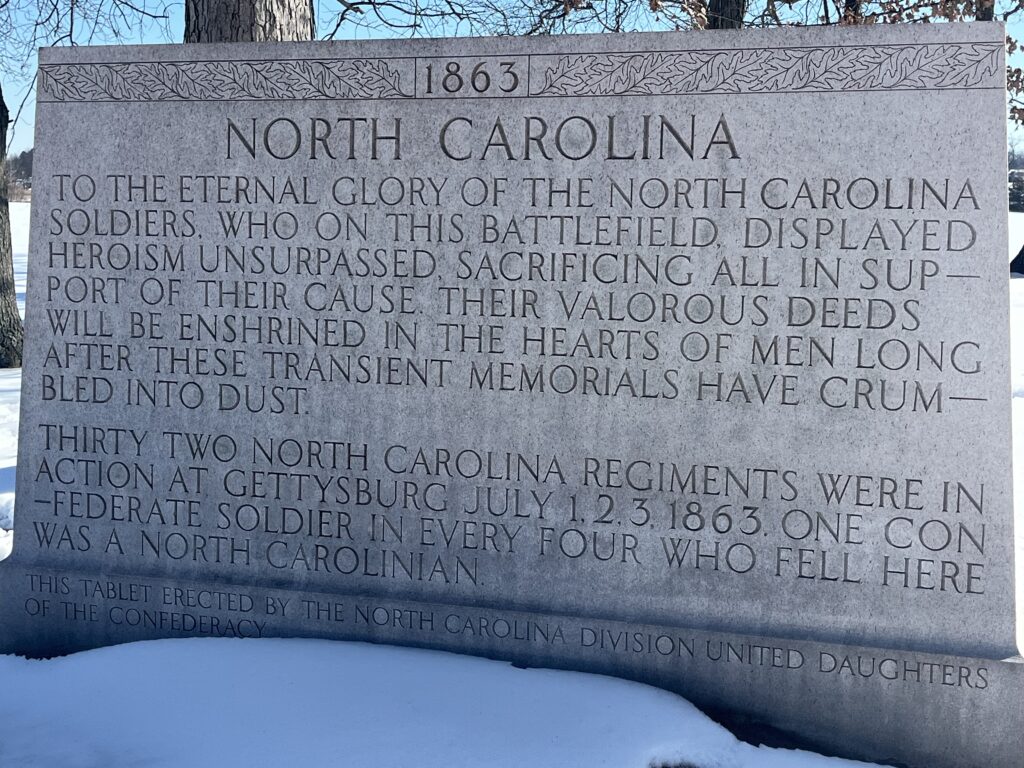
This monument was dedicated on the 66th anniversary of the third day of the battle on July 3, 1929. The more famous and intriguing history of this monument is who built it. A famous sculpture at the time was being commissioned by the Civil War veterans of North Carolina to built a statue for the state at Gettysburg. They asked John Gutzon de la Mothe Borglum to create such a monument and he agreed. John Gutzon is the same sculpturer and artist that was created Mount Rushmore in the Black Hills of South Dakota, and the idea of the graphical representation of the General Lee on the Stone Mountain in Georgia.
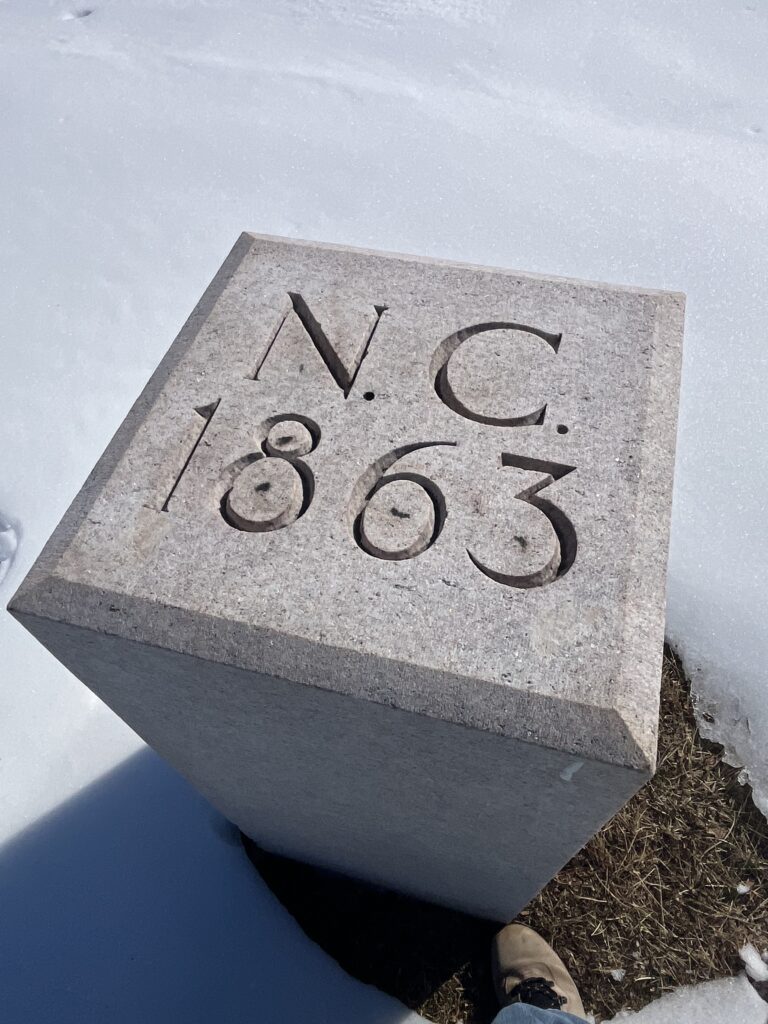
The North Carolina monument is composed of multiple sections. There are four position markers around the plot of land that the that was bought by the North Carolina United Daughters of the Confederacy and Governor Angus McLean. The four markers are two feet by two feet by one foot granite markers that are flush to the ground and located on the corners of the plot that is North Carolina. Many people make it their goal to “straddle” the line and take pictures when they are in the four corners to be in 4 states at once. Here at Gettysburg, you can be in Pennsylvania and North Carolina, which do not touch on a map.
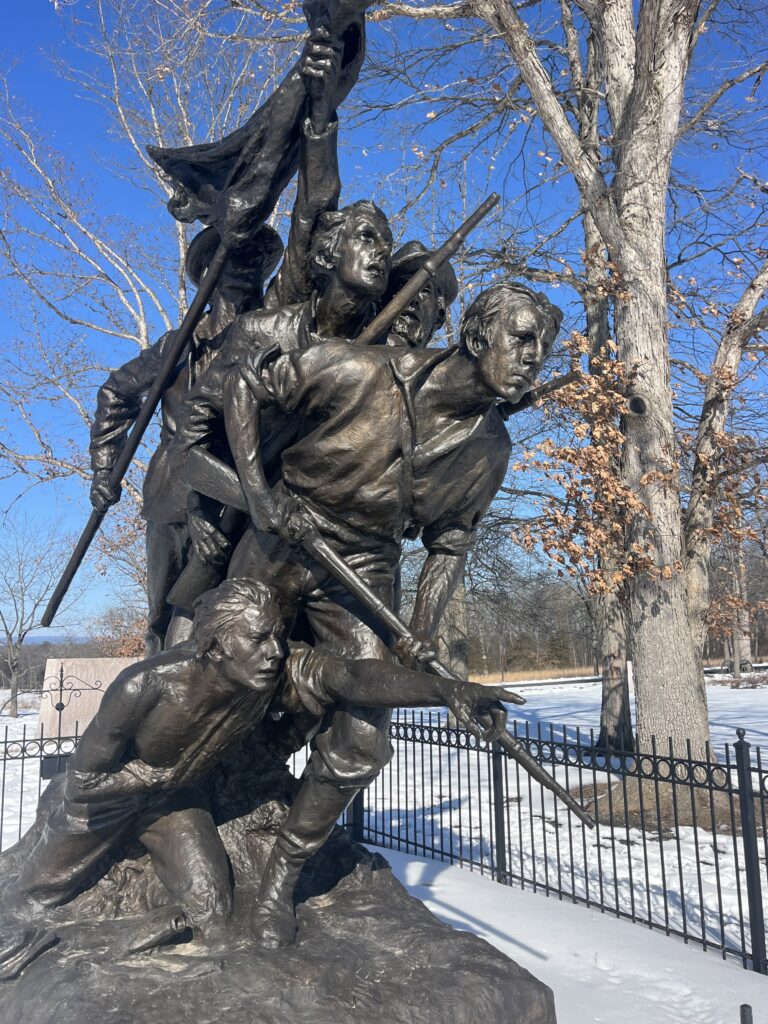
The sculpture itself is bronze and represents five figures representing North Carolina soldiers. These five infantryman were all in different sorts of battle mode. Three of the soldiers are carrying guns, one is carrying a flag and the final soldier is kneeling on the ground and pointing towards the enemy. This location is near where Pettigrew’s brigade would have left Seminary Ridge in participating in Pickett’s Charge. The brigade was commanded by Brigadier General James Johnson Pettigrew. He took over the division when the other officer, Henry Heth, was wounded on July 1st.
Pettigrew’s brigade made it almost to the Union center along the wall, and they were the last ones to return to Seminary Ridge after the fateful charge. Pettigrew’s losses are estimated to be about 2,700 casualties with around 470 killed, 1,893 wounded, and 337 soldiers captured.