
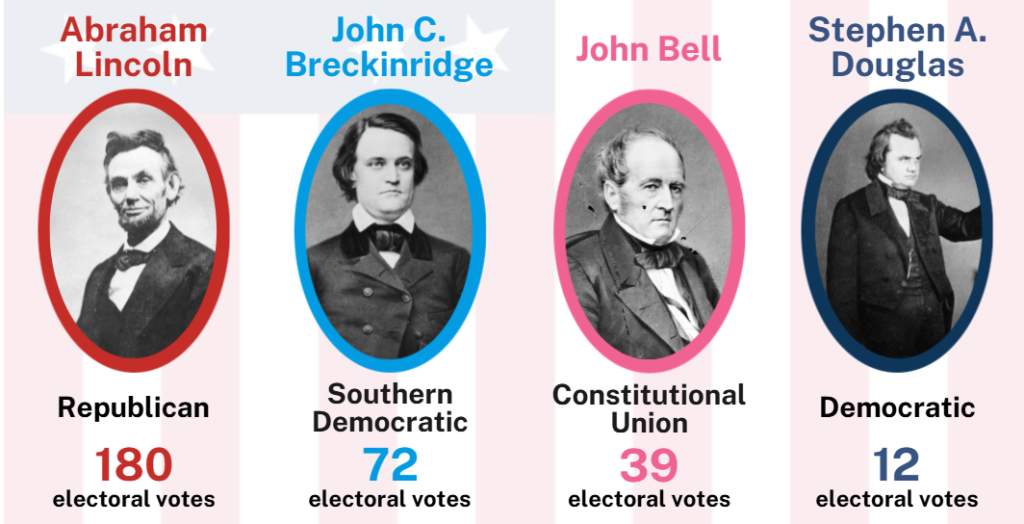
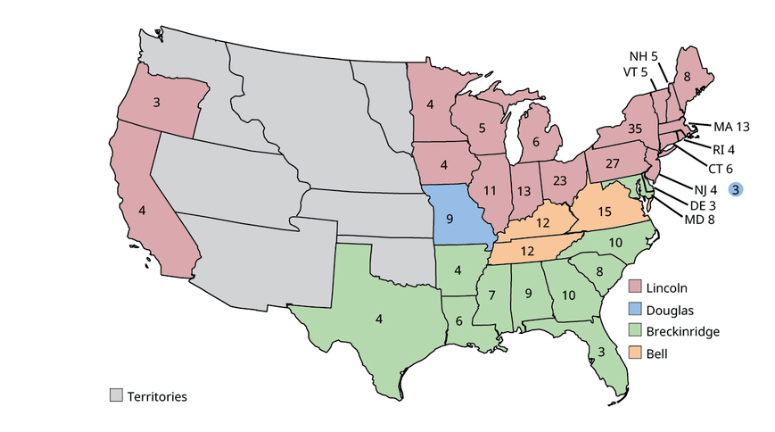
Abraham Lincoln was declared President over these three gentlemen in the 1860 elections. Below these pictures is the electoral map to show which gentleman won what state. Lincoln mainly won every state north of the Mason-Dixon line, while John C. Breckinridge south out the South. The Civil War begins in April 1861.
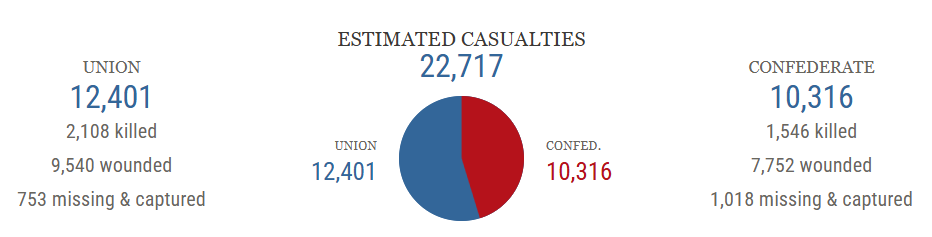
Union and Confederate soldiers battle it out with many small battles in 1861 and 1862, including the battles of the First Bull Run and Second Bull Run, Shiloh, and Harpers Ferry. The battle of Antietam was on September 17, 1862. During the battle, most people regard that Antietam was a southern victory since the Union was unprepared for the onslaught of Confederate soldiers attacking them. However, looking at the numbers below, President Abraham Lincoln thought otherwise.
Two weeks after the battle of Antietam, President Lincoln visited the battlefield. He, of course, was the first to visit this field of battle. He spent four days travelling around the battlefield with Major General George B. McClellan and met thousands of wounded soldiers of both the Union and the Confederacy. There are many photographs showing his visit around Antietam back in October 1862. Here are some of them shown below:
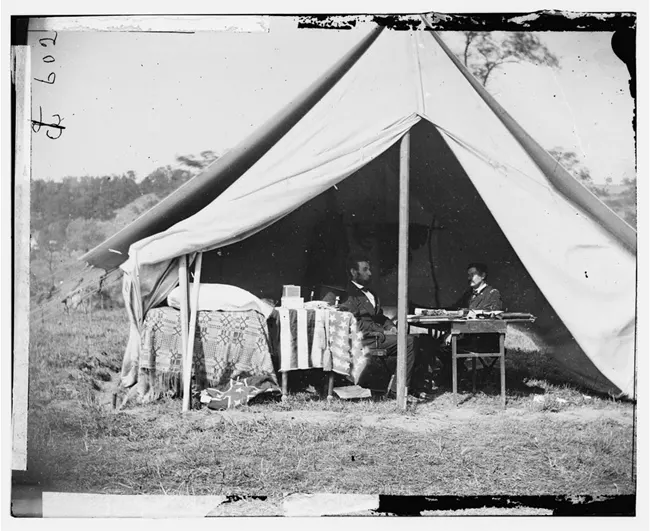
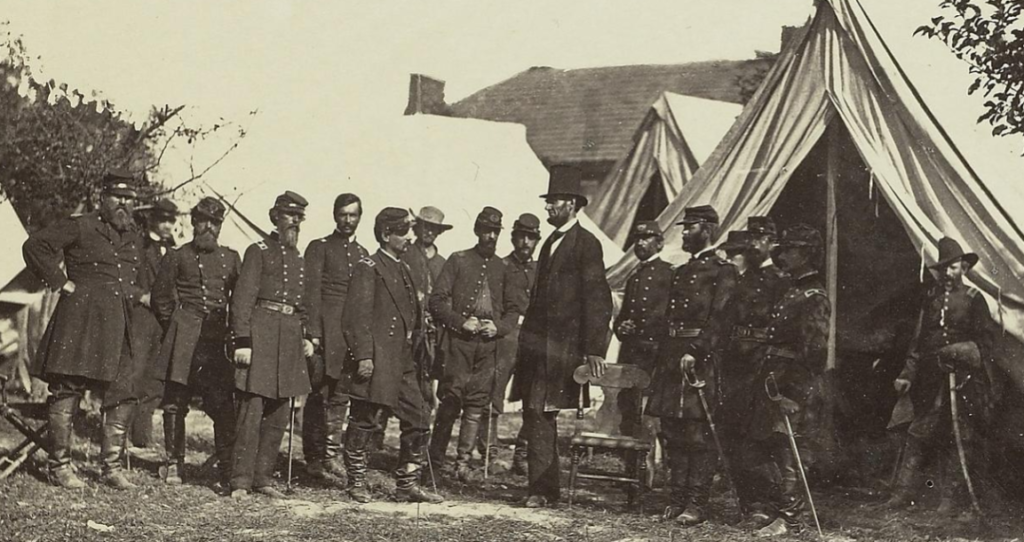

Pictured above: Allan Pinkerton, President Lincoln, and Maj. Gen. John A. McClernand
Now your thinking something: is that “thee” Allan Pinkerton?
Yes, it is. Allan Pinkerton served as the head of Union Intelligence Secret Service between 1861 to 1863, and then guarded Lincoln around Washington D.C. He later became a police task force in pursuit of train and stage coach robbers that were stealing from trains heading westward. He was hired by the railroad companies to track down the famous James Younger Gang. He never was able to capture the gang members, along with the famous Jesse James.
Back to Antietam now, Lincoln was reportedly disappointed in McClellan’s leadership since he did not pursue General Robert E. Lee and the Confederate army as they retreated southward. This was a key turning point that was faltered, and the result was him getting fired as Union commander on November 7, 1862. The same day, the next Union commander was appointed, and that was Ambrose E. Burnside.