
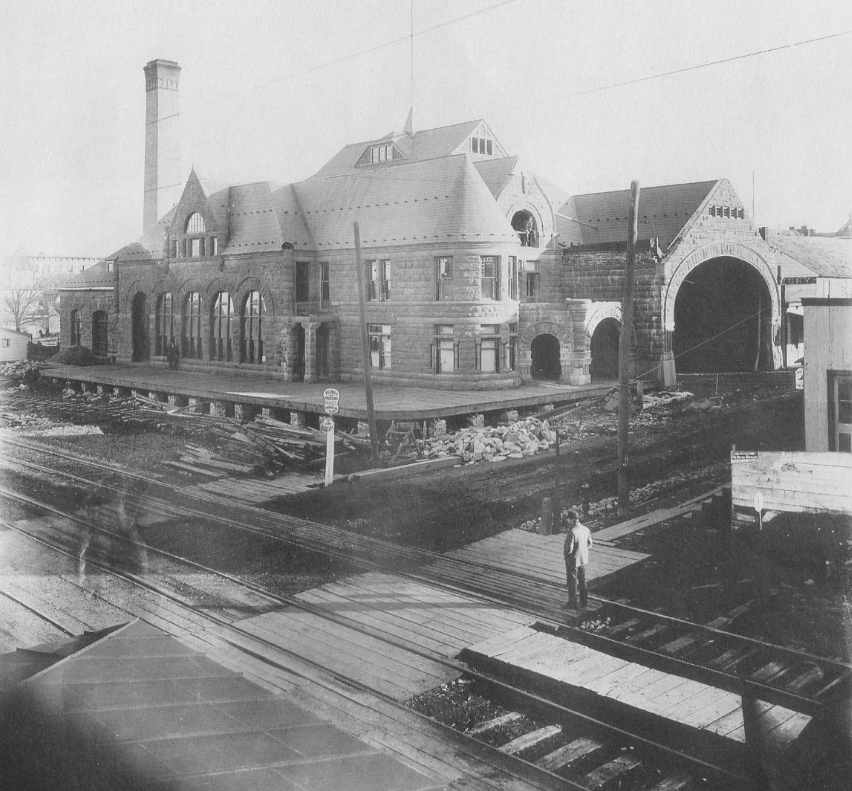
Minus the main dirt routes through Gettysburg that ran east and west, there was the Western Railroad and the Gettysburg and Harrisburg Railway to get to Harrisburg and to Baltimore. In 1891, the Gettysburg Electric Railway Company was established and by 1894, the line opened to passengers. The trolley would go from town to the battlefields towards the Round Tops. The building below is the electric powerhouse that also served as the trolley barn. This building would be the near the corner of Washington Street and Railroad Street. The electric powerhouse also served as the trolley barn. The large entrance on the right is where the trolleys entered and exited the structure.
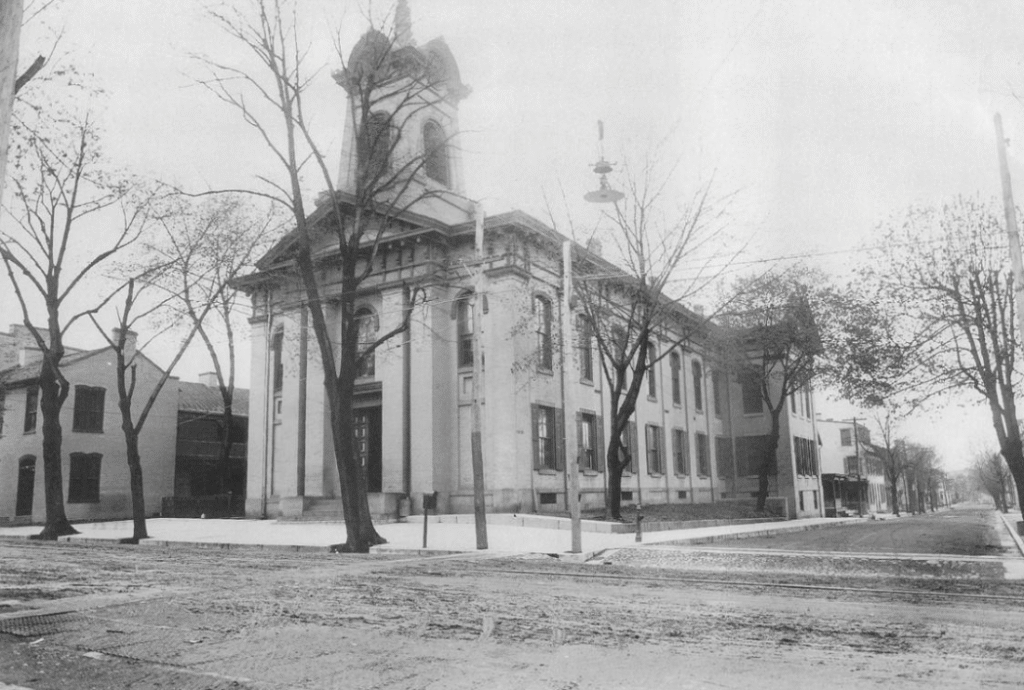
The trolley would leave the barn and take a left onto Chambersburg Street, and then continue towards the town-square. As it made the turn southward towards the Adams County Courthouse, the tracks would continue towards Evergreen Cemetery. This picture below shows the location of the tracks.
It would continue past the cannon battery of Elijah Taft just south of the Evergreen Cemetery. Just past the cemetery, there is a route through the Evergreen Cemetery on the outskirts of the southern portions of it. The slight rise of ground past the cannons shows the exact location of the tracks in the modern day Evergreen Cemetery. However, during the time of the trolley, the cemetery didn’t go this far south. The trolley tracks would continue through to the Taneytown road, and then left towards Zeigler’s Grove. Below you can see the trolly bending towards the bottom left towards the Bryan’s Farm around the grove of trees.
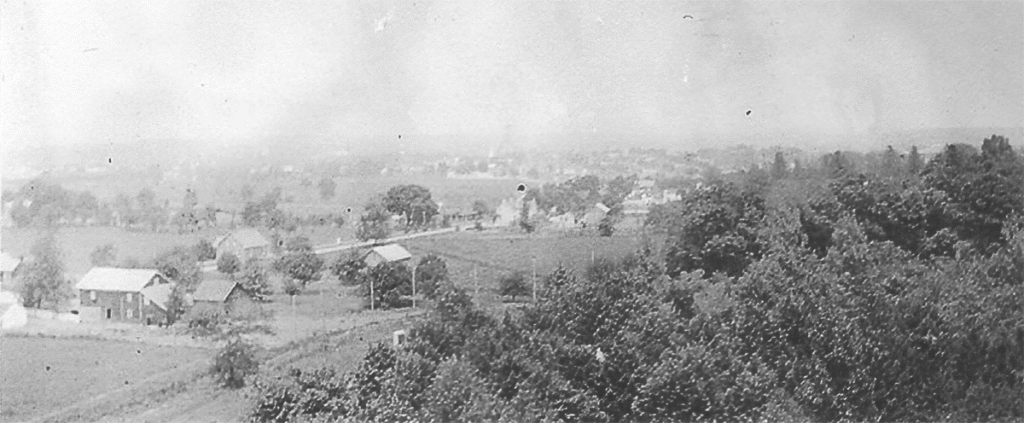
The trolley continues south of town across the battlefield with interesting features that would help with the transit back and forth from the battlefield to downtown Gettysburg.