
Skip to content

Gettysburg Chronicles

History Explained

  • Home
  • Gettysburg
    • History of Adams County
    • Call to Arms
  • Tales to War
    • July 5th: Tillie Pierce Tale
    • 57th Pa.: Letter to Mother
    • 24th Mich.: Abel Peck
    • 24th Mich.: Charles Bellore
    • 1st Rifles: Colonel Taylor
  • Confederate
    • South Carolina
    • Mississippi Monuments
    • Florida’s Involvement
    • Spirit of Alabama
    • Georgia – The Peach State
    • Louisiana Secedes
    • Lonestar State
    • North Carolina
    • Virginia Secedes
    • Arkansas
    • Tennessee – Last to Join
    • Maryland – Border State
  • Union
    • First Shot Marker
    • Michigan Joins
      • 24th Michigan Joins Iron Brigade
      • 24th MI Prior to Fredericksburg
      • March to Gettysburg
      • Farnsworth’s Last Ride
      • “Come On You Wolverines”
  • Artillery
    • Different Ammunition
    • Real vs. Fake Cannons
    • Six Pound Shot Cannon
    • Cannons at Devil’s Den
  • Civil War Locations
    • Crampton’s Gap, Md.
    • Fox’s Gap, Md.
    • Turner’s Gap, Md.
    • Andersonville, Ga.
    • Navy – Hampton Roads, Va.
  • Photographs
  • Abraham Lincoln
    • Lincoln Visits Antietam
    • Emancipation Proclamation
    • John Wilkes Booth
    • The Kidnapping Plan
  • Anniversaries
    • Battlefield Walks
    • 150th Anniversary – 2013
    • 152nd Anniversary – 2015
    • 157th Anniversary – 2020
    • 158th Anniversary – 2021
    • 162nd Anniversary – 2025
  • Buildings
    • Local Churches
      • St. Francis Xavier Church
    • Sach’s Bridge
    • Weikert Family Farms
    • Farnsworth House
    • Soldier’s Orphanage
      • Brickyard Fight
      • 154th New York
      • Amos Humiston
      • Rosa Carmichael
    • Winebrenner History
    • Welty House
    • Cashtown
      • July 1863 in Cashtown
      • Cashtown: Since 1863
  • Families
    • Thorns
      • Evergreen Cemetery: August 1862 to June 1863
      • Gettysburg: June 26, 1863
      • Evergreen Gatehouse
      • Thorn’s Family Tree
      • Descendants of the Thorns
      • Aftermath of Battle
      • Thorn Important Locations
    • Wade Family
      • Thaddeus Filby
      • Rise of the Captain
      • Trouble with the Law
      • Jennie Wade
      • Newspaper Articles
      • Gravesites of Jennie Wade
      • Samuel and Harry Wade
      • James John “Jack” Wade
    • Georgia McClellan
      • Extended McClellan’s
      • Iowa Family – Lewis
      • World War II POW
      • Jennie Wade McClellan
      • Nellie McClellan
      • John McClellan
    • Jim B. McClellan
    • Pierce Lineage
      • McCurdy to Pierce Tree
      • James Shaw Pierce
      • William H. Pierce
    • Tillie Pierce
      • Last Week of June 1863
      • Tillie’s Accounts – July 1st
      • Wounded Everywhere
      • Hospital – Pierce House
    • Garlach Family
      • Soldier Hiding with Pigs
      • Anna Garlach
    • Shriver Family
      • Weikert’s Connection
      • Union Calvary Disaster
      • Father’s Death
      • Henrietta’s New Life
  • Railroads
    • G&H Railroad
    • Western Maryland Railroad
    • Location of the Spur
    • Gettysburg Electric Trolley
    • Trolley South of Town
    • Railroad to Round-Tops
  • Paranormal
    • Paranormal Equipment
    • Spirits at the Cashtown Inn
    • Pictures on the Bridge
    • Live: Sachs Covered Bridge
    • Haunted Orphanage
    • Spirits at the Farnsworth
    • Spirits at Tillie Pierce Inn
  • Questions
  • Toggle search form

Crampton’s Gap

This was the first invasion of the Confederate army moving north into the enemy backyard near the Mason-Dixon line. Confederate General Robert E. Lee moved north with 55,000 soldiers and off to the east, Union General McClellan blocked his access through the South Mountains with nearly 84,000 soldiers. However, General McClellan nearly lost these battles with poor planning and strategy.

On September 9, 1862, General Lee arrives near the Monocacy battlefield south of Frederick, Maryland. At this general area, the headquarters of Stonewall Jackson, James Longstreet, and General Lee was conversing on the next move to attack the enemy. They were moving north into northern Maryland and southern Pennsylvania to avoid the South to let the farmers recover from trampling on their crops. The northern fields were rich with a fresh harvest.
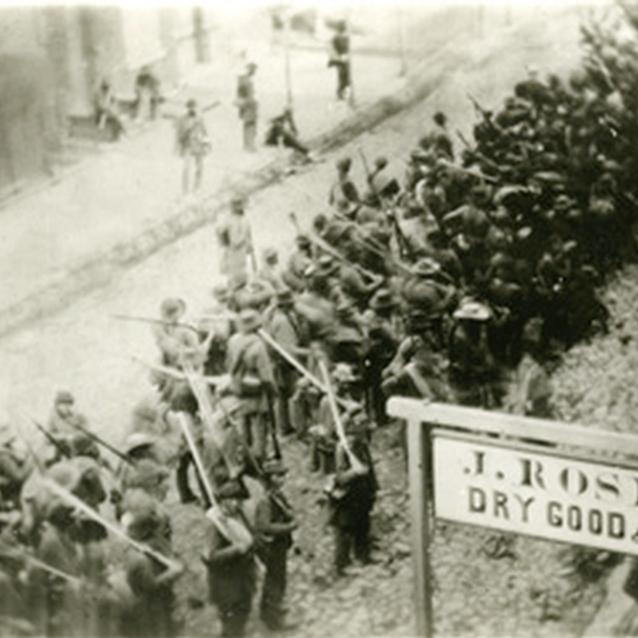
Confederate Army marching through Frederick, Maryland
Maryland Historical Society of Frederick County, Maryland

On September 10th, General Lee tells Stonewall Jackson to capture Harpers Ferry. They move westward through Boonsboro and then towards Williamsport, and ford the Potomac River the day later. They do capture Harpers Ferry with barely any losses between September 12 to 15th, 1862.

However, General Lee also tells James Longstreet to capture Hagerstown, Maryland. Unknown to him, the orders were supposed to get to A.P. Hill, one of his commanders. General Hill never received the orders from Longstreet. At the same time period, the Confederates were moving westward from Monocacy.
Courtesy of the Library of Congress

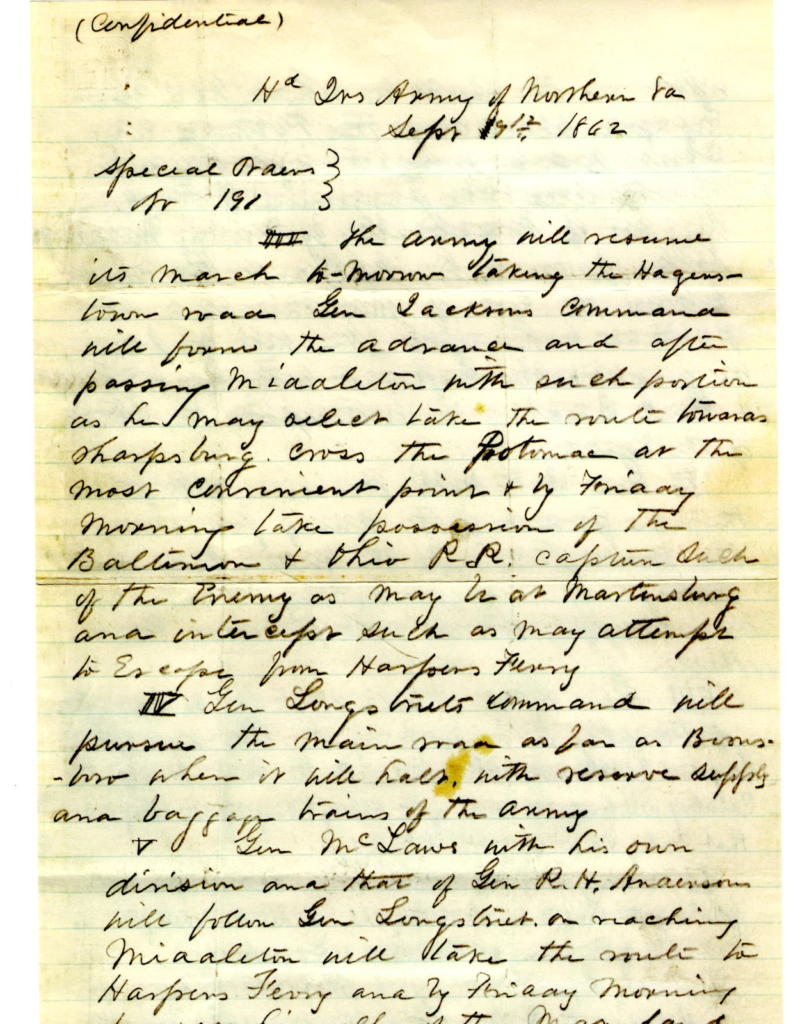
The day after, the Union is on high pursuit of the enemy and arrives into Monocacy. There is when the “luck of the Irish” occurs for the Union. Union infantry within the 27th Indiana arrives on September 13th. There, Corporal Barton W. Mitchell and First Sergeant John M. Bloss find three cigars and orders rolled up around them. He hands them to his commanding officer, and he has found the orders that A.P. Hill was supposed to receive. Corporal Mitchell found what is now considered “Special Orders Number #191”.

General McClellan splits his Union forces in two. He orders 12,000 soldiers to relieve the soldiers at Harpers Ferry, unknown of the Confederate Army heading towards the same location. Major General William Franklin of the 6th Corps is the commanding officer of the some regiments from Vermont, New Jersey, New York, Maine, and Pennsylvania. Near Crampton’s Gap, the Union soldiers charged the gap towards the Confederate soldiers on the wall. Nearly 1,000 Confederate soldiers under General McLaws division opened fire with cannons and holding the “high” ground.
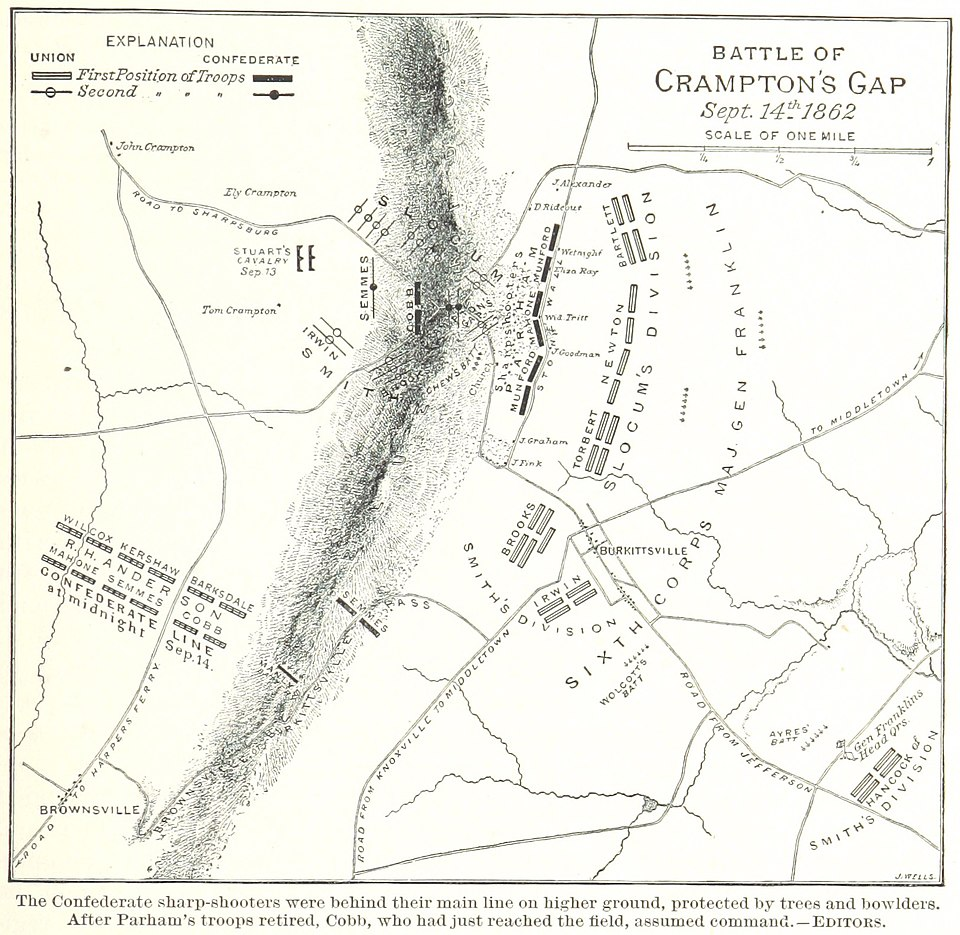
In the end, the Union assault began around 3pm on September 14th. An hour later, the Confederates were in full retreat and the Union had won the skirmish. The losses for the Union was 115 soldiers killed and 418 wounded, while the Confederates had 130 killed and 760 soldiers wounded. There are three monuments in this area.
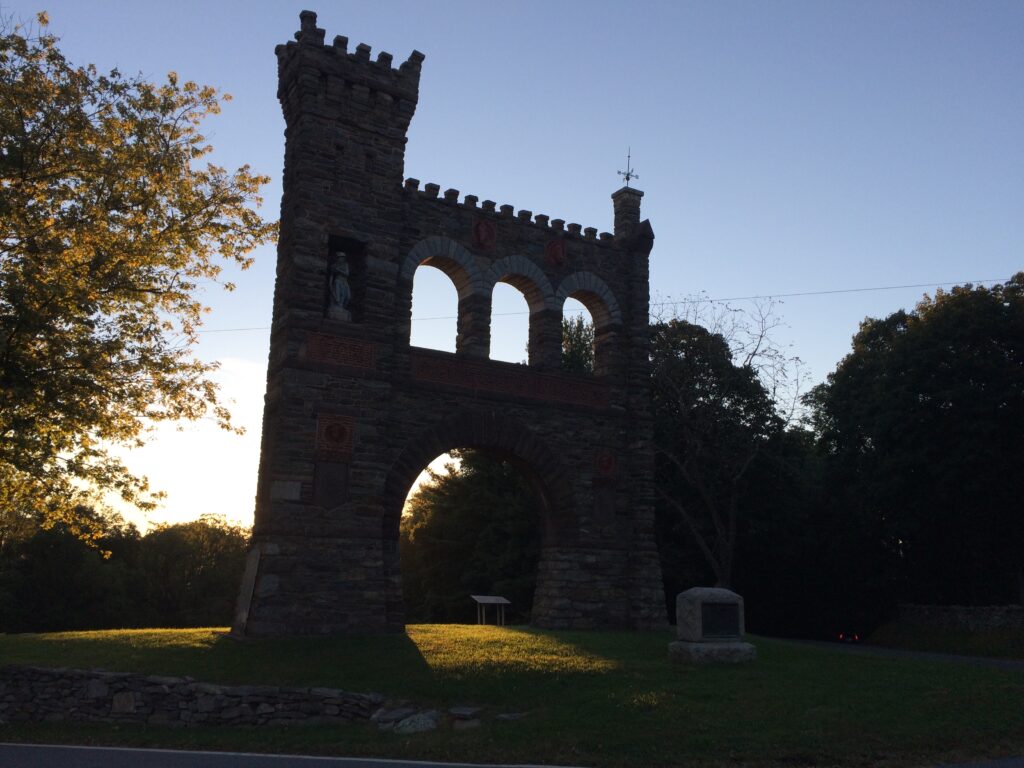
Here is the War Correspondents Memorial Arch along with a small monument to the New Jersey Brigade that consists of the 1st, 2nd, 3rd, and 4th regiments. Overall, the brigade had 40 killed and over a hundred wounded.

@ 2026 Gettysburg Chronicles

Powered by PressBook WordPress theme