
Skip to content

Gettysburg Chronicles

History Explained

  • Home
  • Gettysburg
    • History of Adams County
    • Call to Arms
  • Tales to War
    • July 5th: Tillie Pierce Tale
    • 57th Pa.: Letter to Mother
    • 24th Mich.: Abel Peck
    • 24th Mich.: Charles Bellore
    • 1st Rifles: Colonel Taylor
  • Confederate
    • South Carolina
    • Mississippi Monuments
    • Florida’s Involvement
    • Spirit of Alabama
    • Georgia – The Peach State
    • Louisiana Secedes
    • Lonestar State
    • North Carolina
    • Virginia Secedes
    • Arkansas
    • Tennessee – Last to Join
    • Maryland – Border State
  • Union
    • First Shot Marker
    • Michigan Joins
      • 24th Michigan Joins Iron Brigade
      • 24th MI Prior to Fredericksburg
      • March to Gettysburg
      • Farnsworth’s Last Ride
      • “Come On You Wolverines”
  • Artillery
    • Different Ammunition
    • Real vs. Fake Cannons
    • Six Pound Shot Cannon
    • Cannons at Devil’s Den
  • Civil War Locations
    • Crampton’s Gap, Md.
    • Fox’s Gap, Md.
    • Turner’s Gap, Md.
    • Andersonville, Ga.
    • Navy – Hampton Roads, Va.
  • Photographs
  • Abraham Lincoln
    • Lincoln Visits Antietam
    • Emancipation Proclamation
    • John Wilkes Booth
    • The Kidnapping Plan
  • Anniversaries
    • Battlefield Walks
    • 150th Anniversary – 2013
    • 152nd Anniversary – 2015
    • 157th Anniversary – 2020
    • 158th Anniversary – 2021
    • 162nd Anniversary – 2025
  • Buildings
    • Local Churches
      • St. Francis Xavier Church
    • Sach’s Bridge
    • Weikert Family Farms
    • Farnsworth House
    • Soldier’s Orphanage
      • Brickyard Fight
      • 154th New York
      • Amos Humiston
      • Rosa Carmichael
    • Winebrenner History
    • Welty House
    • Cashtown
      • July 1863 in Cashtown
      • Cashtown: Since 1863
  • Families
    • Thorns
      • Evergreen Cemetery: August 1862 to June 1863
      • Gettysburg: June 26, 1863
      • Evergreen Gatehouse
      • Thorn’s Family Tree
      • Descendants of the Thorns
      • Aftermath of Battle
      • Thorn Important Locations
    • Wade Family
      • Thaddeus Filby
      • Rise of the Captain
      • Trouble with the Law
      • Jennie Wade
      • Newspaper Articles
      • Gravesites of Jennie Wade
      • Samuel and Harry Wade
      • James John “Jack” Wade
    • Georgia McClellan
      • Extended McClellan’s
      • Iowa Family – Lewis
      • World War II POW
      • Jennie Wade McClellan
      • Nellie McClellan
      • John McClellan
    • Jim B. McClellan
    • Pierce Lineage
      • McCurdy to Pierce Tree
      • James Shaw Pierce
      • William H. Pierce
    • Tillie Pierce
      • Last Week of June 1863
      • Tillie’s Accounts – July 1st
      • Wounded Everywhere
      • Hospital – Pierce House
    • Garlach Family
      • Soldier Hiding with Pigs
      • Anna Garlach
    • Shriver Family
      • Weikert’s Connection
      • Union Calvary Disaster
      • Father’s Death
      • Henrietta’s New Life
  • Railroads
    • G&H Railroad
    • Western Maryland Railroad
    • Location of the Spur
    • Gettysburg Electric Trolley
    • Trolley South of Town
    • Railroad to Round-Tops
  • Paranormal
    • Paranormal Equipment
    • Spirits at the Cashtown Inn
    • Pictures on the Bridge
    • Live: Sachs Covered Bridge
    • Haunted Orphanage
    • Spirits at the Farnsworth
    • Spirits at Tillie Pierce Inn
  • Questions
  • Toggle search form

Cole’s Union Calvary Disaster

George Washington Shriver was elated to see his wife and two daughters during the Christmas season in December 1863. He was still a soldier of the Union Federal Army and had to return back to duty.

He reported back for duty on December 29, 1863 to Cole’s Cavalry. After the battle of Gettysburg, the Federal Army was driving the Confederacy out of major river valleys throughout the South. However, around the Shenandoah Valley and Harpers Ferry, daily skirmishers were a common occurrence with the Cavalry riding back and forth. Much of the area south of the river was under the control of Mosby’s Cavalry. This area of battle was mainly against the Cavalry sections of Cole (Union) and Mosby (Confederate) throughout the region. Luckily, Cole’s Cavalry had some of it soldiers from the region, so they knew back trails and mountain roads and hunting lanes to catch the Confederate Cavalry off guard. However, in this case, on January 1st, 1864, it backfired.

The stage was set in late December 1863. Cole’s Cavalry once everyone reported back after furlough was sent into the Valley for a two-week long raid ending in Harrisonburg, Virginia. Cole’s soldiers destroyed telegraphy lines and captured over 100 prisoners. However, as the men came into central Virginia, Mosby’s Confederate Cavalry was lying in wait.

Company C, of Cole’s Cavalry was mainly soldiers from Adams County. One of the commanders was Captain Albert Hunter, who was selected to command the raid. He enlisted in 1861 as the bugler for Company C but was soon promoted to 2nd Lieutenant and eventually Captain of the company.
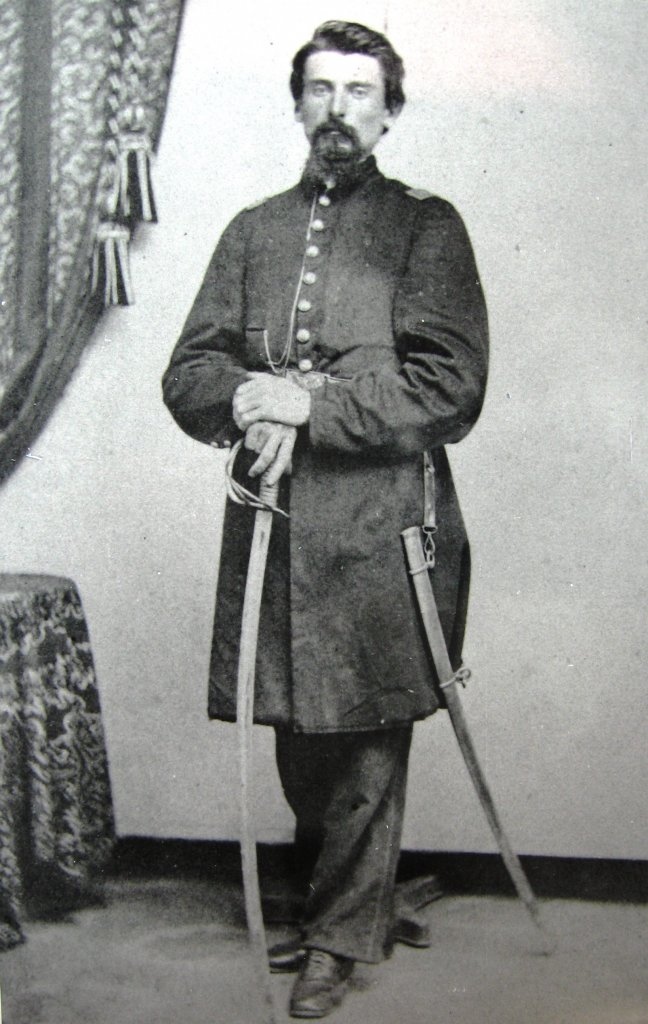
Courtesy of the United States Army Heritage and Education Center – Capt. Hunter

Remember, it’s January: The weather is cold, snowy, and an icy mix at times. Riding on horses with no shelter, the wind and the precipitation weighing down on wool uniforms. The Cavalry had to find shelter in a foreign and driven farmers protecting the Confederacy. Luckily, the Union raiding party of about 60 soldiers found shelter in a bank-barn and farmhouse. The next morning, things took a turn for the worse.

The Union suffered a major blow as they were shot at by Mosby’s Raiders and captured. In the end, the list of casualties was staggering:

  • Confederate reports show that 57 men were killed, captured, or wounded
  • Union reports show that 4 killed, 10 to 12 wounded, and 41 captured
  • Private Jeremiah Wiley of Franklin County, Pennsylvania died in the initial clash
  • Private George Young of Germany Township, Pennsylvania died in the initial clash
  • Wounded were the following: Privates John Sponcler, George Heilner, William Millholland, Sergeant Lewis Zimmerman
  • Thirty soldiers were captured in total on January 1st, including George Washington Shriver

Thus, George Washington Shriver would never see his family again. Most of these soldiers who were captured were sent to the famous Civil War prisoner camp called: Andersonville.

@ 2026 Gettysburg Chronicles

Powered by PressBook WordPress theme