
Skip to content

Gettysburg Chronicles

History Explained

  • Home
  • Gettysburg
    • History of Adams County
    • Call to Arms
  • Tales to War
    • July 5th: Tillie Pierce Tale
    • 57th Pa.: Letter to Mother
    • 24th Mich.: Abel Peck
    • 24th Mich.: Charles Bellore
    • 1st Rifles: Colonel Taylor
  • Confederate
    • South Carolina
    • Mississippi Monuments
    • Florida’s Involvement
    • Spirit of Alabama
    • Georgia – The Peach State
    • Louisiana Secedes
    • Lonestar State
    • North Carolina
    • Virginia Secedes
    • Arkansas
    • Tennessee – Last to Join
    • Maryland – Border State
  • Union
    • First Shot Marker
    • Michigan Joins
      • 24th Michigan Joins Iron Brigade
      • 24th MI Prior to Fredericksburg
      • March to Gettysburg
      • Farnsworth’s Last Ride
      • “Come On You Wolverines”
  • Artillery
    • Different Ammunition
    • Real vs. Fake Cannons
    • Six Pound Shot Cannon
    • Cannons at Devil’s Den
  • Civil War Locations
    • Crampton’s Gap, Md.
    • Fox’s Gap, Md.
    • Turner’s Gap, Md.
    • Andersonville, Ga.
    • Navy – Hampton Roads, Va.
  • Photographs
  • Abraham Lincoln
    • Lincoln Visits Antietam
    • Emancipation Proclamation
    • John Wilkes Booth
    • The Kidnapping Plan
  • Anniversaries
    • Battlefield Walks
    • 150th Anniversary – 2013
    • 152nd Anniversary – 2015
    • 157th Anniversary – 2020
    • 158th Anniversary – 2021
    • 162nd Anniversary – 2025
  • Buildings
    • Local Churches
      • St. Francis Xavier Church
    • Sach’s Bridge
    • Weikert Family Farms
    • Farnsworth House
    • Soldier’s Orphanage
      • Brickyard Fight
      • 154th New York
      • Amos Humiston
      • Rosa Carmichael
    • Winebrenner History
    • Welty House
    • Cashtown
      • July 1863 in Cashtown
      • Cashtown: Since 1863
  • Families
    • Thorns
      • Evergreen Cemetery: August 1862 to June 1863
      • Gettysburg: June 26, 1863
      • Evergreen Gatehouse
      • Thorn’s Family Tree
      • Descendants of the Thorns
      • Aftermath of Battle
      • Thorn Important Locations
    • Wade Family
      • Thaddeus Filby
      • Rise of the Captain
      • Trouble with the Law
      • Jennie Wade
      • Newspaper Articles
      • Gravesites of Jennie Wade
      • Samuel and Harry Wade
      • James John “Jack” Wade
    • Georgia McClellan
      • Extended McClellan’s
      • Iowa Family – Lewis
      • World War II POW
      • Jennie Wade McClellan
      • Nellie McClellan
      • John McClellan
    • Jim B. McClellan
    • Pierce Lineage
      • McCurdy to Pierce Tree
      • James Shaw Pierce
      • William H. Pierce
    • Tillie Pierce
      • Last Week of June 1863
      • Tillie’s Accounts – July 1st
      • Wounded Everywhere
      • Hospital – Pierce House
    • Garlach Family
      • Soldier Hiding with Pigs
      • Anna Garlach
    • Shriver Family
      • Weikert’s Connection
      • Union Calvary Disaster
      • Father’s Death
      • Henrietta’s New Life
  • Railroads
    • G&H Railroad
    • Western Maryland Railroad
    • Location of the Spur
    • Gettysburg Electric Trolley
    • Trolley South of Town
    • Railroad to Round-Tops
  • Paranormal
    • Paranormal Equipment
    • Spirits at the Cashtown Inn
    • Pictures on the Bridge
    • Live: Sachs Covered Bridge
    • Haunted Orphanage
    • Spirits at the Farnsworth
    • Spirits at Tillie Pierce Inn
  • Questions
  • Toggle search form

Battle of Hampton Roads

Everyone is going to go on google maps and find out where “Hampton Roads” is, and find out its in the water, near Norfolk, Va. That is the location of where the first battle occurred between the Union and Confederate ironclads ships on March 9, 1862. Since they were both iron-clad ships, the battle consisted of them ramming into each other or to get very close and fire their cannons hoping to get a strike within one of the gun barrels or to strike the iron off. However, there was history in the making on this day as well between the ships.

April 20, 1861 — USS Merrimack on fire in Norfolk Navy Yard

The history was within the iron-clad ships on either side. In mid-April 1863, the very day that the state of Virginia seceded, the U.S. Navy burned the USS Merrimack to the waterline and sank her to preclude any capture within the harbor. However, the Confederacy had different plans. They needed ships to fight the Union. They raised the burning ship and rebuilt her as the ironclad ram. The Union blockade of naval ports ran from the Delaware and Baltimore inter waterways southward to the Carolinas and both coasts of Florida and over towards the Mississippi River. The Union called it the Anaconda Blockade.

The Confederate Navy converted the outermost shell of the ship to two inches of wood and two inches of iron sheets on top. The gun barrels could only shoot with the navigating of ship. It was built within 9 months of getting captured. The USS Merrimack was converted and named the CSS Virginia.
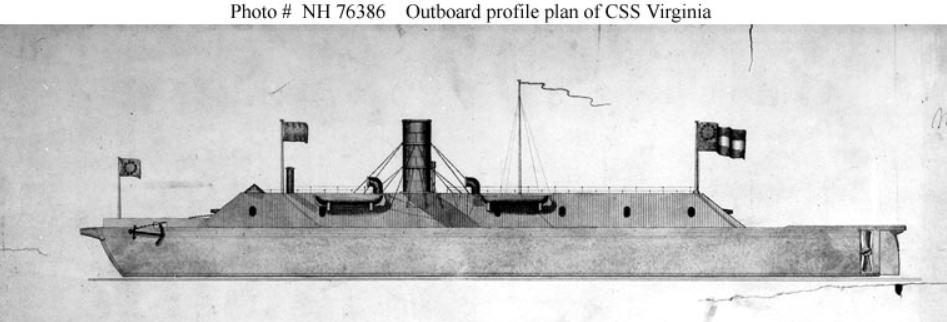
Courtesy of the US Naval Historical Group

The Union had a plan as well. They needed to match the Confederacy and build an ironclad ship. The USS Monitor was constructed in 98 days. Portions of the ship were made at eight different foundries and there was three of them were the main ones. The three Iron Works foundries were the Delamater Ironworks, Novelty Ironworks, and Continental Ironworks. This one ship changed the wars from 1862 and onward into the 21st century. It was the first ever ship that had a rotating gun turret that was separate from the ship navigation. It was also the first ship that had a first flushing toilet. Warships in the 21st century use this same concept with the rotating turret. The USS Monitor had only 18 inches above the waterline, with most of the ship under the surface. The only thing above the waterline was the gun turret and the pilot house.
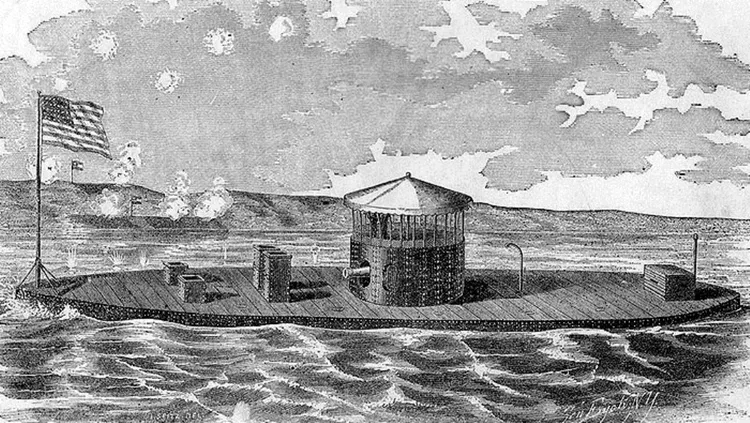
Courtesy of the US Naval History & Heritage Command

On March 8th, 1862, the CSS Virginia was involved in the Battle of Hampton Roads. The USS Monitor hasn’t arrived yet. The CSS Virginia caused over 300 casualties by destroying two ships, causing damage to two others, and running three ships aground to avoid being sunk. It was the worst naval disaster until December 7, 1941 during the bombing of Pearl Harbor which started World War II.

The USS Monitor arrived on March 9th, 1862. There was no winner to the battle that lasted four hours. It was the only battle that both ironclads fought each other.

@ 2026 Gettysburg Chronicles

Powered by PressBook WordPress theme