
Skip to content

Gettysburg Chronicles

History Explained

  • Home
  • Gettysburg
    • History of Adams County
    • Call to Arms
  • Tales to War
    • July 5th: Tillie Pierce Tale
    • 57th Pa.: Letter to Mother
    • 24th Mich.: Abel Peck
    • 24th Mich.: Charles Bellore
    • 1st Rifles: Colonel Taylor
  • Confederate
    • South Carolina
    • Mississippi Monuments
    • Florida’s Involvement
    • Spirit of Alabama
    • Georgia – The Peach State
    • Louisiana Secedes
    • Lonestar State
    • North Carolina
    • Virginia Secedes
    • Arkansas
    • Tennessee – Last to Join
    • Maryland – Border State
  • Union
    • First Shot Marker
    • Michigan Joins
      • 24th Michigan Joins Iron Brigade
      • 24th MI Prior to Fredericksburg
      • March to Gettysburg
      • Farnsworth’s Last Ride
      • “Come On You Wolverines”
  • Artillery
    • Different Ammunition
    • Real vs. Fake Cannons
    • Six Pound Shot Cannon
    • Cannons at Devil’s Den
  • Civil War Locations
    • Crampton’s Gap, Md.
    • Fox’s Gap, Md.
    • Turner’s Gap, Md.
    • Andersonville, Ga.
    • Navy – Hampton Roads, Va.
  • Photographs
  • Abraham Lincoln
    • Lincoln Visits Antietam
    • Emancipation Proclamation
    • John Wilkes Booth
    • The Kidnapping Plan
  • Anniversaries
    • Battlefield Walks
    • 150th Anniversary – 2013
    • 152nd Anniversary – 2015
    • 157th Anniversary – 2020
    • 158th Anniversary – 2021
    • 162nd Anniversary – 2025
  • Buildings
    • Local Churches
      • St. Francis Xavier Church
    • Sach’s Bridge
    • Weikert Family Farms
    • Farnsworth House
    • Soldier’s Orphanage
      • Brickyard Fight
      • 154th New York
      • Amos Humiston
      • Rosa Carmichael
    • Winebrenner History
    • Welty House
    • Cashtown
      • July 1863 in Cashtown
      • Cashtown: Since 1863
  • Families
    • Thorns
      • Evergreen Cemetery: August 1862 to June 1863
      • Gettysburg: June 26, 1863
      • Evergreen Gatehouse
      • Thorn’s Family Tree
      • Descendants of the Thorns
      • Aftermath of Battle
      • Thorn Important Locations
    • Wade Family
      • Thaddeus Filby
      • Rise of the Captain
      • Trouble with the Law
      • Jennie Wade
      • Newspaper Articles
      • Gravesites of Jennie Wade
      • Samuel and Harry Wade
      • James John “Jack” Wade
    • Georgia McClellan
      • Extended McClellan’s
      • Iowa Family – Lewis
      • World War II POW
      • Jennie Wade McClellan
      • Nellie McClellan
      • John McClellan
    • Jim B. McClellan
    • Pierce Lineage
      • McCurdy to Pierce Tree
      • James Shaw Pierce
      • William H. Pierce
    • Tillie Pierce
      • Last Week of June 1863
      • Tillie’s Accounts – July 1st
      • Wounded Everywhere
      • Hospital – Pierce House
    • Garlach Family
      • Soldier Hiding with Pigs
      • Anna Garlach
    • Shriver Family
      • Weikert’s Connection
      • Union Calvary Disaster
      • Father’s Death
      • Henrietta’s New Life
  • Railroads
    • G&H Railroad
    • Western Maryland Railroad
    • Location of the Spur
    • Gettysburg Electric Trolley
    • Trolley South of Town
    • Railroad to Round-Tops
  • Paranormal
    • Paranormal Equipment
    • Spirits at the Cashtown Inn
    • Pictures on the Bridge
    • Live: Sachs Covered Bridge
    • Haunted Orphanage
    • Spirits at the Farnsworth
    • Spirits at Tillie Pierce Inn
  • Questions
  • Toggle search form

Amos Humiston

The life of a soldier from upstate New York became a national story after the battle of Gettysburg. Amos was born in Owego, New York in 1830. He was the youngest of the three children that his mother Mary (Brunson) Humiston and his father James Ambrose Humiston raised. Sometime around his teenage years, he was a new sailor aboard a whaling ship, that made port in New Bedford, Massachusetts. The ship, called the Harrison, stayed out on the ocean for three and half years and returned to Tioga County in the early 1850s.

When he returned, he was still an apprentice from a harness-making trade and that where he met his future wife, Philinda, his only wife. This would be Philinda’s second marriage, with her first marriage husband dying a year after marriage with no children.
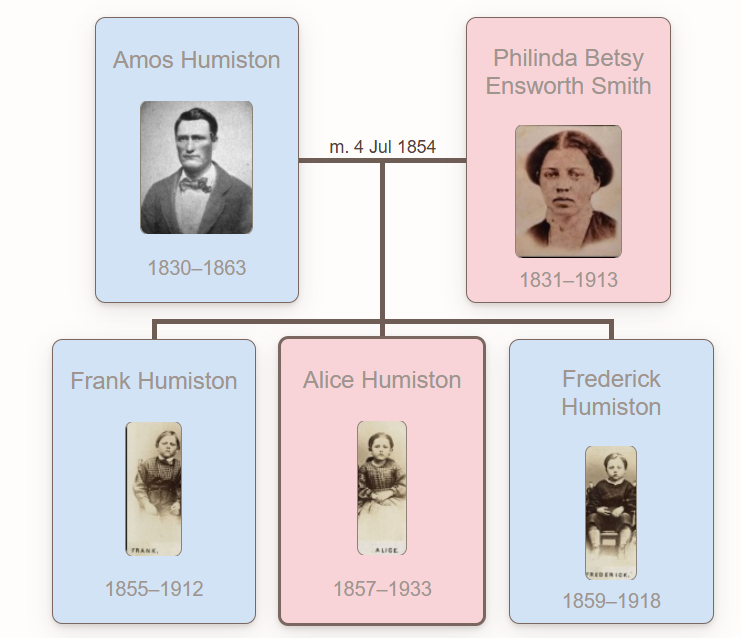
Amos joined the 154th New York on July 26, 1862, and joined as a corporal. He would then be promoted to Sergeant of Company C on September 24, 1862, due to good conduct and training. When the 154th New York arrived into Gettysburg on July 1st, 1863, they would head towards the northeast section of town near one of the brickyard foundries. Here they would be overcome by the Confederate forces under Major General Hays commanding the Louisiana Tigers, and Major General Avery commanding three North Carolina regiments.

Sergeant Humiston found a deep sense of love and support for family and country. Under heavy fire from the Confederates, the 154th New York are running from house to house in retreat northward. As they entered the fight an hour ago, approximately 250 soldiers were within the unit. By the end of the day, there would only be 18 men, with the rest being killed, captured, or wounded. Amos Humiston was shot through the lung and was mortally wounded near the location of Stratton Street and the railroad tracks. Before he passed away, he would take the ambrotype out of his pocket that was fixed in glass, and died looking at his children.

A few days later, one of the daughters of a local Gettysburg tavern owner, his body was found grasping the photograph of the children. When the daughter picked it up and gave it to her father, Benjamin Shriver, who was the owner of the Graffenberg Tavern near the he showed it one of physicians that was arriving from Philadelphia to tend to the wounded. His name was John Francis Bourns, and he realized that the ambrotype was the only way to identify the body.

A daughter of a Gettysburg tavern owner, Benjamin Schriver, found his body and took the ambrotype photo of three children. Dr. John Bourns of Philadelphia saw the photograph of the children while he was passing from Chambersburg to Gettysburg. Thinking that the dead soldier’s family should be notified of the Sergeant’s death, Bourns got the photo from Schriver. Dr. John Bourns then had the local newspapers make copies of the photograph and ran the story of a soldier that had passed clutching this photo. If you know of this man, he passed away in Gettysburg in July 1863.
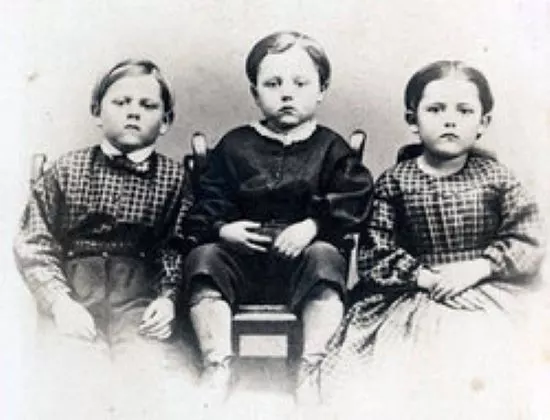
Courtesy of the Library of Congress

The local newspapers gave the photo to the national papers. A few months later, in October, the photograph was able to get to the correct family in New York. Their worst fears were confirmed since Philinda had not received any letters from her husband since May. However, Dr. Bourns presented them with the original ambrotype and the funds raised from local contributors. In the end, the funds raised was approximately 50 dollars, which was about the same amount of four months pay for a soldier within the Union army.
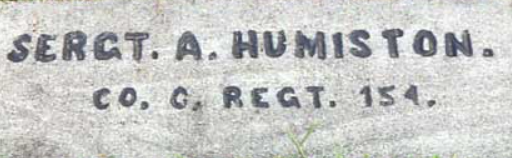
Sergeant Amos Humiston is buried at the Soldiers’ National Cemetery in Gettysburg.

@ 2026 Gettysburg Chronicles

Powered by PressBook WordPress theme