
War brings out the worst in people. The same goes for the Civil War affecting family and friends in small towns. Some families would have splits between family members who fought with the North or the South. Some families went to war with their fathers, sons, cousins, grandfathers, and brothers. After any battle, some if not all of them may be killed and a whole generation is gone. This includes the tale that most everyone knows about three civilians that lived in town. However, do you know that it goes further than that?
Prior to the start of the Civil War, a carriage shop opened in Shepherdstown, Virginia. The owner, originally from Gettysburg, asked for his workers to join him. They moved with him in 1856 away from Gettysburg and across the Mason-Dixon Line. Two of these shop workers were Wesley Culp and Charles E. Skelly. Five years later, as the Civil War started, everyone that used to live in the North moved back. Except for one person, and that person was Wesley Culp.
The battle of Fort Sumter in April 1861 began and caused a rift between the North and the South. Abraham Lincoln, president of the Northern states, asked for 75,000 volunteers to enlist and support the cause for the fight for freedom for a window of 90 days. Within Gettysburg, the newspapers printed ads for men to enlist and fight for the Federal Union Army. Most of the men that signed up to take the right to bear arms were farmers, carpenters, and laborers with no soldier experience.
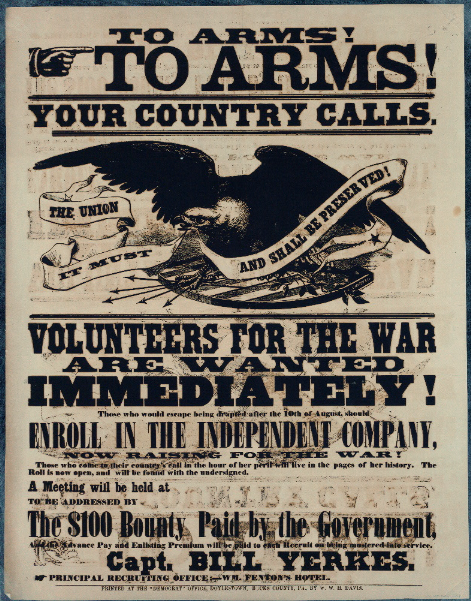
Some of the men that signed up in Gettysburg are the following and where they served within the Union Army. For the first 90 days, most men served with the 2nd Pennsylvania Volunteers. However, when the 90 day enlistment papers expired, many joined up for another 3 years of service. They were then enrolled into the 87th Pennsylvania, Company F. Some citizens of Gettysburg within this were:
- Charles E. Skelly – brother of Jack Skelly
- Corporal Johnston Hastings “Jack” Skelly Jr.
- William Culp, brother of Wesley Culp
- David Culp, cousin of Wesley Culp
- William T. Ziergler
- William Hotzworth
Meanwhile, Wesley Culp stayed with the Confederacy. He enlisted on April 20, 1863 and served with the 2nd Virginia Infantry, Company B. He enlisted in Harper’s Ferry. His company was also called the Hamtramck Guards, which was part of the Stonewall Brigade. Did Wesley ever think he might go into a battle and fight his childhood friends back from Gettysburg? Did the Skelly family or the Culp family entering the war in Gettysburg ever think they would fire on Wesley?
Would they shoot at each other across the battlefields of war? It’s possible, and strangely enough, it happened more than once.