
Soldiers were taken prisoner after fighting when left for wounded or not knowing they were surrounded by the enemy. Prisoners of war (POW’s) were usually put into the prisoner exchange program where they would be transferred back to their own army for the same number given to the other. An example is when 20 union soldiers were captured by the Confederates. All 20 soldiers would be given back to the Union army in exchange for 20 captured Confederate soldiers. Prior to July 1863, this was the case. After July 30th, 1863, the prisoner exchange program was broken, and with general order 252, all exchanges were suspended. This caused prisoner of war camps to swell in population for both the Union and the Confederates.
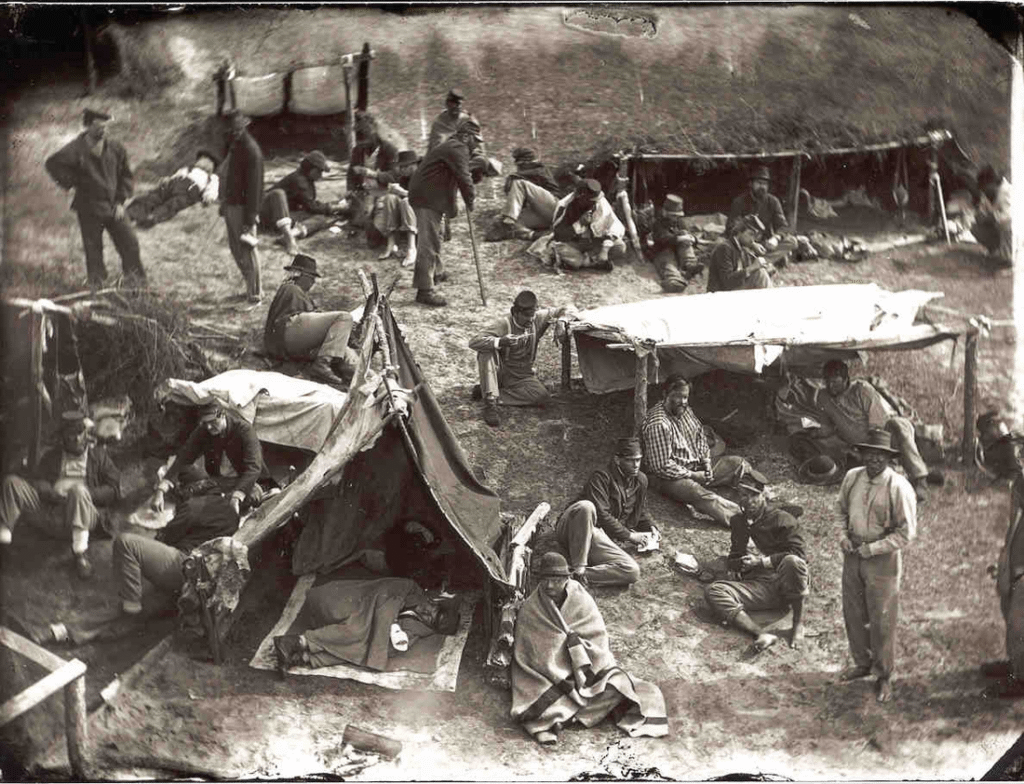
Andersonville started to be built in the later months of 1863 and early portions of 1864. The original plan for the prisoner of war camp was to construct wooden barracks for the officers and lieutenants that may get captured. However, due to inflated wood prices of lumber and delays due to the construction of the stockade, soldiers were put into harsh and dangerous conditions. Did the Confederates care? Nope! Yankee soldiers that arrived were given some small twigs and sticks and a blanket, and in the end, they created makeshift shanties called “shebangs”. These tents were seen everywhere within Andersonville. An example of the tent is shown below:
The first inmates began arriving at Andersonville after February 27, 1864, when they officially opened. It started as a stockade that was about 16 acres of land, that was increased in June 1864 to another 10 acres of land. The stockade was near the train depot, and prisoners were taken off boxcars and walked through the north gate. A small creek flowed through the stockade and that would technically provide water to the Union soldiers, however, it became full of disease and human waste as time went on.
Confederate soldiers within “pigeon” huts would dot the top of the fort. If Union soldiers crossed an imaginary line called the “dead-line”, they would be shot on sight and killed. From February 1864 to April 1865 when Andersonville was holding Union soldiers, anywhere from 300 to 400 soldiers were killed in this action. Soldiers were under harsh conditions from the start in Georgia. Warm and humid days and nights, bugs, afternoon thunderstorms, flooding, insects, and snakes in the summer. In the winter, possible chances of cold snaps with freezing temperatures, ice/snow accumulations, cold winds, and no shelter other than a tent. No added clothing minus blankets and clothes on your back or ones that were stolen.
Wait, people would steal within the confines of the stockade. Some prisoners grouped together and looted fellow Union soldiers to survive. These soldiers were steal, beat, and even kill soldiers to obtain supplies to survive. These soldiers were called the Raiders. These “Raiders” would steal food, clothing, and processions mainly at night. Andersonville was not a place full of food or shelter, it was a place without civilization. It is a place without laws and where soldiers turned on each other. After the Raiders were captured, and a trial was given to the Yankees after the Confederate captain Henry Wirz agreed to giving the Union soldiers these law breakers. In the end, six of them were hung.
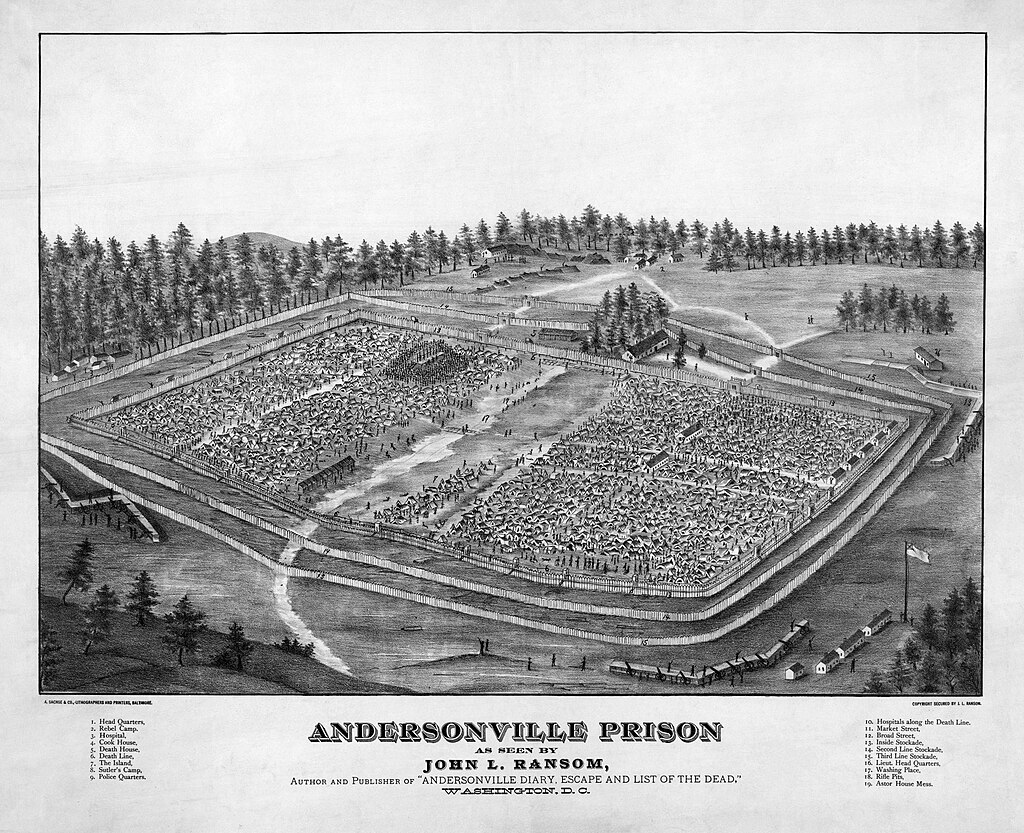
In the summer of 1864, Andersonville became the largest POW camp in the Confederacy. An empty field in February swelled to 400 to 500 soldiers a day. At the height of the prisoner population, there was over 45,000 Union soldiers inside the walls. If that was the case, it would have easily been the 6th largest population center within the Confederates States during the Civil War.