Here, on the top of what is called Devil’s Den, is a set of cannons positioned looking west. These four cannons are part of the 4th New York Independent Battery. The cannon crews are commanded by Capt. James E. Smith, thus the battery is known as Smith’s Battery. Here is where some history gets confused for new visitors and historians to the battlefield. Within this battery, there were originally six 10-pound Parrott Rifle cannons. The other two cannons are along Crawford Avenue near the road in front of what’s called Houck’s Ridge. They are shown below in the older picture. This battery was part of the Artillery Brigade within the 3rd Corps.
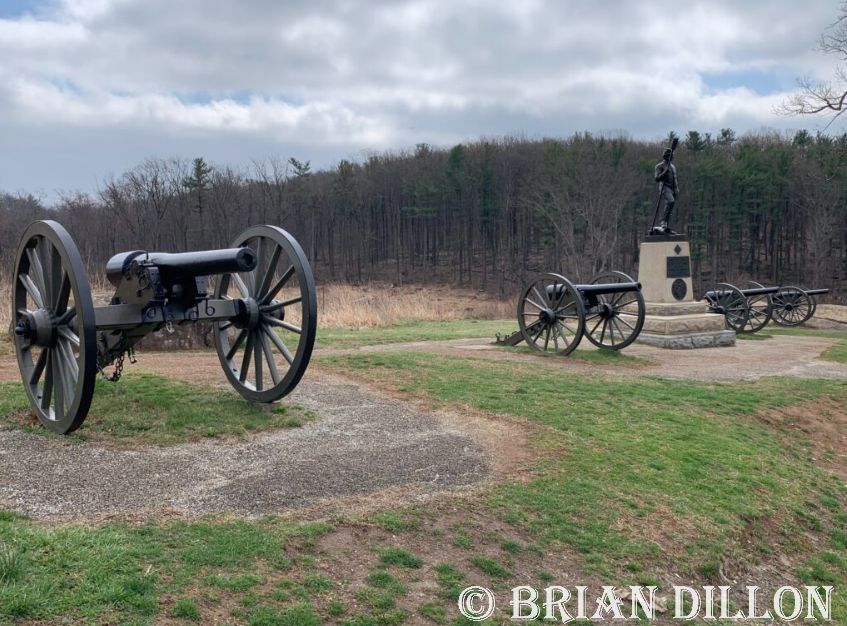
There are two cannons that are real out of the six positioned here on Devil’s Den and lower Houck’s Ridge. At the same time though, the two real cannons were used within the Civil War somewhere, but potentially not here at the battle of Gettysburg. Here are the descriptions of both real cannons:
- Cannon #248, 905 lbs, created in 1863 at West Point Foundry (WPF), Union Federal Cannon (US), Inspector who signed off for it was AM29.
- Cannon #239, 905 lbs created in 1862 at Fort Pitt Foundry (PPP), Union Federal Cannon (US)
On July 1st, this battery was moving towards Emmitsburg, Maryland, from the south. On the morning of July 2nd, they arrived into Emmitsburg around 9 a.m. Later in the early afternoon, approximately around 2 p.m., two cannons were positioned on the lower section in front of Houck’s Ridge, with the other four located on the top of Devil’s Den. As the Confederates approached them, Captain Smith asked for support from the 4th Maine to help them get the cannons away. The 4th Maine Infantry, who was commanded by Colonel Elijah Walker, brought 332 soldiers to the field on July 2nd. He was also the designer of the monument at Devil’s Den. Capt. James Smith yelled to his soldiers: “For God’s sake, men, don’t let them take my guns away from me.”
As the Confederates arrived at Devil’s Den, they drove the Union in retreat and captured three of the cannons. They would turn the cannons around and point them towards Little Round Top and fire unto the Union soldiers that occupied the Little Round Top. In total on the afternoon battle on July 2nd, Smith’s Battery of the 4th New York would have 10 soldiers wounded, one missing, and two were killed. The importance of moving cannons are not the soldiers, but the horses. In this battery alone, about 11 horses were killed and 240 rounds of ammunition were fired.
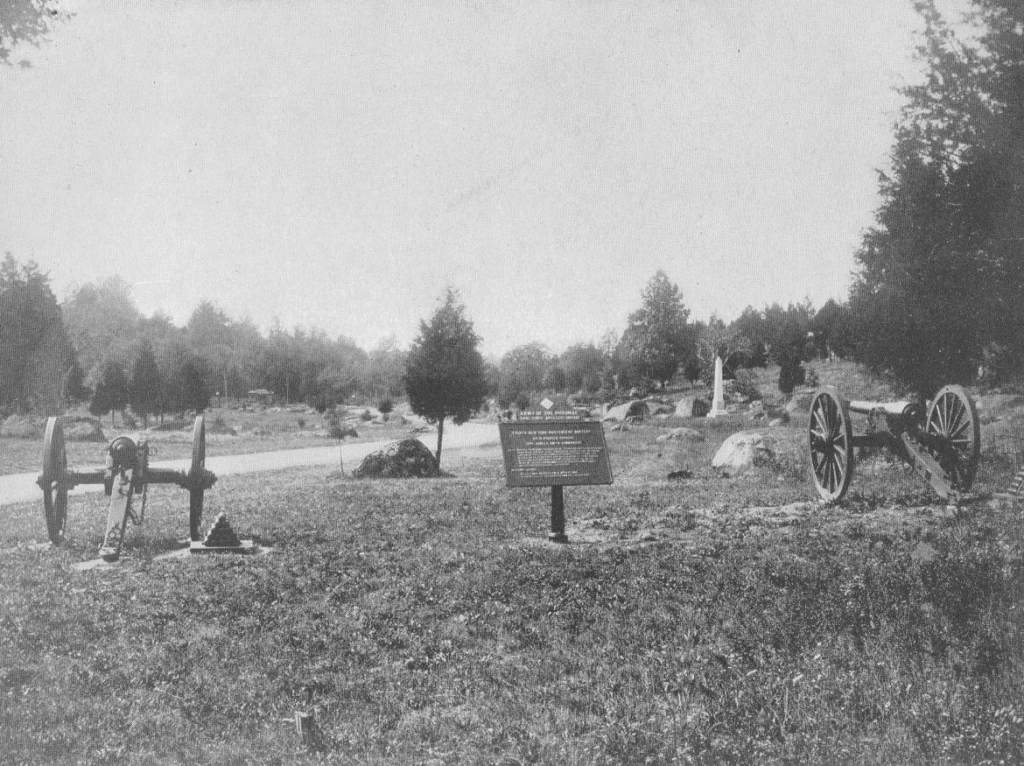
– The 1900 commission report states under the heading “Positions of Troops and Batteries Established and Marked” that “The section of Smith’s New York battery on Crawford avenue in Plum Run Valley has been marked by two 10-pounder Parrotts mounted on iron gun carriages and by a monumental tablet with an appropriate inscription.” ]
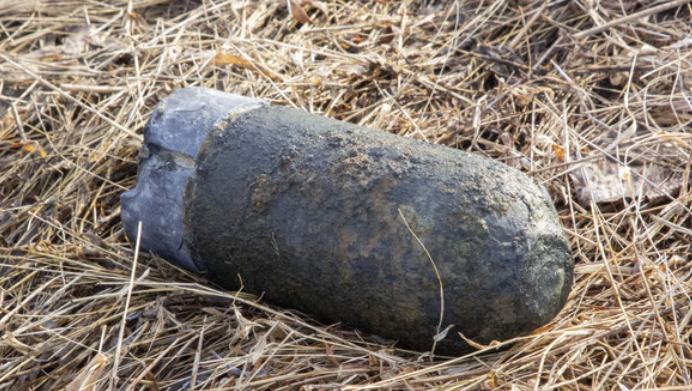
Fast forward to present day, and Little Round Top had a rehilbation of the hill between July 2022-June 2024. During the process of cleaning it up for future generations to enjoy the hill, artifacts from the past were found. Artifacts from the battle included minie balls, and percussion caps from rifles. However, a large object was carefully dug up from twenty inches below the ground level. What was found you say? It was an unexploded cannon shell from July 1863, and it was potentially from Smith’s Battery.